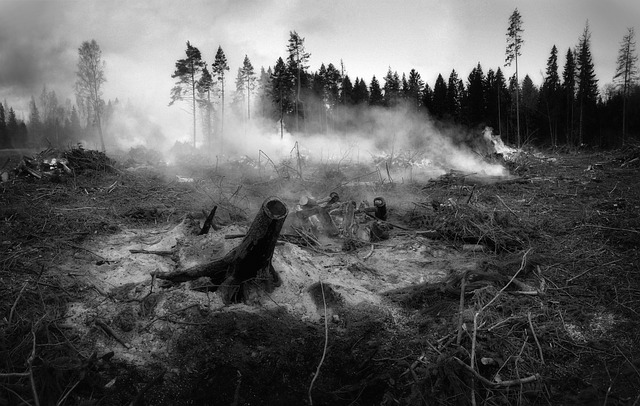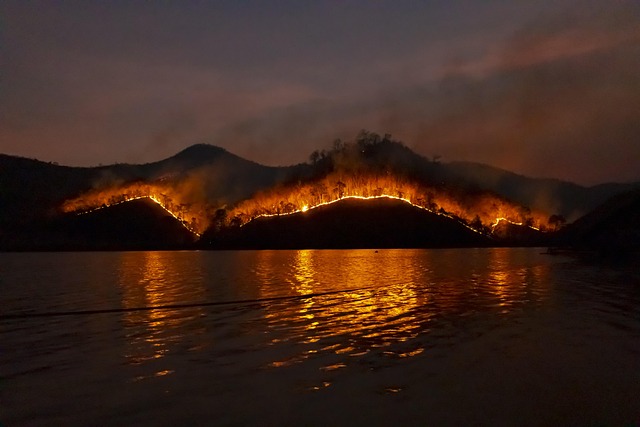
More than 267,000 people have fled their homes across Spain and France as out-of-control wildfires continued burning on Saturday. Thick black ash coated rooftop terraces in northern Madrid, where 70,000 residents were evacuated and told to keep their windows shut against throat-irritating smoke.
Spanish Prime Minister Pedro Sanchez visited the fire zone near the capital and said the priority was to "save lives" while warning that a "complex" fight lay ahead. His government declared a national emergency. Sanchez said fires had already burned 130,000 hectares of forest this year in Spain, compared to an annual average of 100,000 hectares over the past decade. He said slightly improved weather offered "a window of opportunity" for crews to make progress, but cautioned that conditions remained uncertain. "We are going to have some complex hours ahead because although the temperatures have gone down, we do not know exactly how the wind will develop, how strong it will be," he said.
According to CBS News, in France nearly 242,000 acres have been burned. French Interior Minister Laurent Nunez described that figure as a "historic record," roughly 10 times the size of Paris. Around 197,000 people were evacuated in France, which Nunez said was "probably" the biggest peacetime evacuation the country had ever seen. The total area burned across European Union countries this year is the second largest on record, according to satellite data from the European Forest Fire Information System.
The fires in both countries spread rapidly because of tinderbox conditions worsened by successive heat waves since May. Scientists say global warming is increasing droughts and making weather emergencies more extreme and more frequent, and note that Europe is the fastest-warming continent due to climate change.
Among those who fled was Jacqueline Villafranca, a 38-year-old originally from Peru who evacuated to Madrid on Friday with her husband and two daughters. When smoke filled her village of Navalagamella, she said, "I thought everything was going to burn, the house and everything." By Saturday, sitting in a gymnasium converted into a shelter, she said: "Here you can breathe normally — yesterday it was unbearable."
An audiovisual technician named Luis, who had spent the afternoon helping evacuees from the village of Pelayos de la Presa, received his own evacuation order soon after. "I cried at first because it's where I grew up. But now, it's more a feeling of anger and resignation, because there's nothing we can do as long as we're not allowed to go back and see what we'll find there," he told AFPTV.
Hundreds of firefighters have been working around the clock for two to three days on the major blazes in both countries, with no indication Saturday of when crews might be allowed to stand down.