People who watched a lot of television during middle age showed measurable differences in brain structure compared to those who rarely watched, according to a study reported by Healthline. The differences showed up more than two decades later, when participants underwent brain MRI scans.
The study used data from 1,700 adults with an average age of 53 who had enrolled in the Atherosclerosis Risk in Communities study between 1987 and 1989. That study is a long-running U.S. research project designed to investigate cardiovascular and brain health. Participants were asked how often they watched TV during leisure time, rating themselves on a scale from "never/seldom" to "very often." They were also asked how much of their workday they spent sitting.
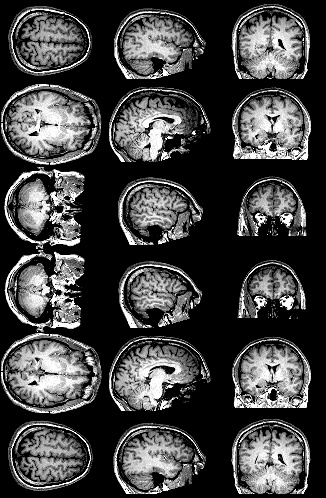
More than 20 years later, each participant received a brain MRI. Researchers compared those who "never/seldom" watched TV to those who "very often" watched. The frequent viewers showed widespread structural differences across the brain.
Those differences included smaller volumes in brain areas connected to memory and early signs of Alzheimer's disease. Researchers also found greater white matter hyperintensity volumes, which are an indicator of cerebral small blood vessel disease linked to cognitive decline and dementia. Frequent viewers also showed smaller frontal and occipital lobes, regions tied to visual processing and executive functioning.
The results held even after researchers controlled for body mass index, physical activity, high blood pressure, and diabetes.
One detail in the findings drew particular attention. People who sat for most of their workday did not show the same brain changes as frequent TV viewers. That suggests the content or nature of the activity may matter, not just the sitting itself.
"This study matters because [it] is a more practical and realistic message than simply telling people to 'sit and watch TV less,'" said Dung Trinh, MD, internist of MemorialCare Medical Group and Chief Medical Officer of Healthy Brain Clinic in Irvine, CA, who was not involved in the study.
Natan Feter, PhD, a postdoctoral research associate in the Department of Biological Sciences at the University of Southern California and one of the study's authors, said the findings should be read carefully. "Smaller brain volumes do not necessarily mean that someone will develop dementia, but they are considered markers of brain aging and have been linked to a higher risk of future cognitive decline," he said. He also noted that "It's important to emphasize that our study shows an association, not a cause-and-effect relati" — the published excerpt of the quote ends there, but the point was that the study does not prove TV watching causes brain damage.
The study was published July 10. Researchers said the sedentary behavior of watching TV may not have been the driving force behind the brain changes on its own, leaving open questions about what specific aspects of the activity, such as passive engagement or disrupted sleep patterns, might be involved.