

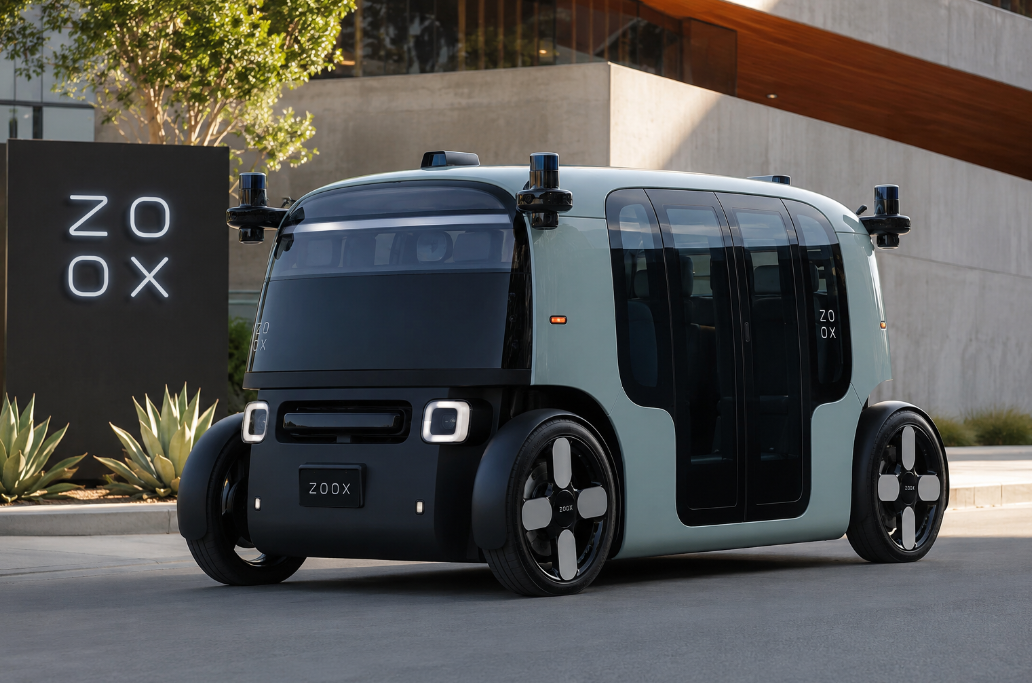
Amazon's autonomous vehicle company Zoox has received federal approval to begin charging customers for rides in its steering-wheel-free robotaxis, marking the first such clearance in the United States for a vehicle with no human controls at all.
The National Highway Traffic Safety Administration granted the approval Thursday. As part of the decision, NHTSA gave Zoox an exemption from federal rules requiring human controls on motor vehicles. The company still needs state and local approval before launching paid service, which it plans to begin first in Las Vegas.
NHTSA administrator Jonathan Morrison told Reuters that Zoox had met its safety requirements but indicated the rollout would be staggered. No Zoox vehicles would be immediately available for public sale. "We can say pretty clearly that the systems in place on the Zoox exceed the equivalent performance requirements of a compliant vehicle," Morrison said. "But we still want to make sure that the automated driving system will operate appropriately."
Morrison said Zoox had been cleared to commercially deploy up to 2,500 vehicles in each of the next two years. NHTSA also placed additional reporting requirements on the company for incidents such as crashes or vehicles stopping inappropriately on roads.
Zoox's vehicles look nothing like standard cars. They are rectangular and carriage-style, with rows of passenger seats facing each other rather than all facing forward. There is no driver's seat, steering wheel, or pedals. The cars can reach speeds of up to 120 kilometers, or 75 miles, per hour.
The company already began offering free rides in Las Vegas and San Francisco last year, according to Al Jazeera. Paid service will launch in Las Vegas first, with other markets to follow once state requirements are met.
Supporters of autonomous vehicle technology argue that NHTSA's existing safety regulations were written before self-driving technology existed and can slow the development of new vehicle designs. Critics warn that relaxing restrictions turns city streets into live testing grounds, pointing to incidents where driverless vehicles have struck pedestrians, stalled in roadways, or blocked emergency vehicles.
This month, Morrison sent a letter to autonomous vehicle developers telling them to focus immediately on fixing safety issues NHTSA had identified, adding another layer of scrutiny to an industry moving quickly toward wider deployment.