

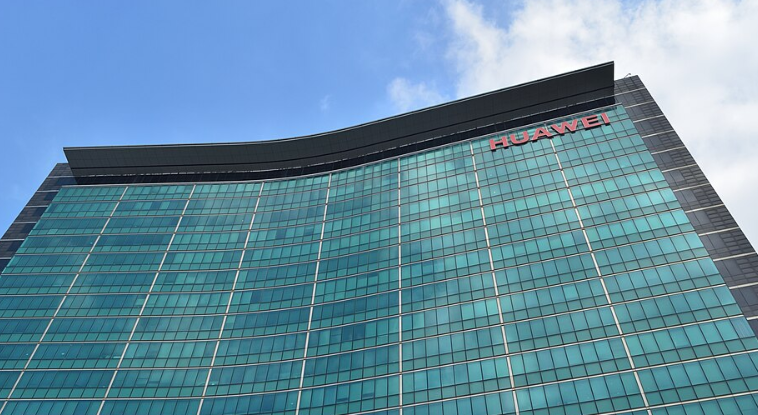
Huawei Technologies began presenting its defense in a federal criminal trial in Brooklyn, New York, on Wednesday, October 28, 2026, after prosecutors finished presenting their case. The Chinese telecommunications company has pleaded not guilty to charges involving racketeering conspiracy, bank fraud, wire fraud and the alleged theft of American trade secrets.
The trial, being heard in the U.S. District Court for the Eastern District of New York, follows nearly eight years of legal proceedings. Federal prosecutors accuse Huawei and several subsidiaries of engaging in a pattern of misconduct spanning more than two decades to strengthen the company's position in the global telecommunications market.
The indictment originally contained 16 criminal counts, although two sanctions-related charges were reportedly dropped before trial. Recent reporting has described Huawei as facing 14 counts, but the exact number remaining for the jury to decide requires confirmation against the latest court filings.
Huawei has denied wrongdoing and maintains that its commercial success came from technological innovation and substantial investment in research and development. The company disputes allegations that it built its international business through stolen technology or illegal financial transactions.
Prosecutors Finish Presenting Their Case
Federal prosecutors completed their presentation on Wednesday morning after calling 61 witnesses over nearly seven weeks, according to the South China Morning Post. The government sought to establish that Huawei participated in a coordinated effort to obtain proprietary technology and conceal business activities that violated American law.
The prosecution's case included accusations involving intellectual property belonging to major American technology companies. Investigators alleged that Huawei obtained confidential information about telecommunications equipment, computer software and specialized testing technology.
One of the most prominent allegations concerns technology developed by T-Mobile for testing smartphones. The wireless carrier created a robot known as Tappy, which simulated human finger movements to evaluate the performance and durability of mobile devices.
Prosecutors alleged that Huawei employees improperly obtained information about the robot while visiting T-Mobile facilities. The government argued that the incident was part of a broader effort to acquire competitors' technological developments without making comparable investments in research.
Another major allegation involves Cisco Systems, the American networking equipment manufacturer. Prosecutors accused Huawei of obtaining proprietary router software and other technical information that could help the company develop competing telecommunications products.
The Justice Department has also alleged that Huawei obtained confidential information from additional American companies. Prosecutors argue that these incidents demonstrate a continuing pattern rather than unrelated disputes involving individual employees.
Huawei Challenges Allegations of Corporate Misconduct
Huawei's defense attorneys have rejected the government's portrayal of the company as an organized criminal enterprise. They argue that prosecutors have taken isolated incidents and presented them as evidence of a companywide conspiracy.
During opening statements in September, defense attorney Brian Heberlig told jurors that the government's case relied on unreliable witnesses and a distorted account of Huawei's business practices. He maintained that questionable actions by individual employees did not establish that Huawei's leadership directed a coordinated criminal operation.
The defense has also emphasized Huawei's extensive research and development activities. Its attorneys argue that the company's growth reflects years of investment, engineering work and competition in international telecommunications markets.
Huawei operates in numerous countries and has developed products ranging from smartphones to wireless network infrastructure. Its attorneys contend that the government's allegations fail to account for the company's independent technological achievements.
The defense is now expected to challenge testimony and evidence presented during the prosecution's case. Its central task is to persuade jurors that the government has not proved the criminal allegations beyond a reasonable doubt.
Iran Business Dealings Are Central to the Trial
The case extends beyond allegations involving stolen technology. Federal prosecutors also accuse Huawei of misleading financial institutions about its business relationships in Iran, a country subject to extensive American economic sanctions.
Investigators allege that Huawei used a Hong Kong-based company called Skycom Tech to conduct business involving Iran. Prosecutors argue that Huawei concealed its relationship with Skycom while using international banking services to support transactions connected to Iranian operations.
The government claims that misleading financial institutions about those transactions exposed banks to potential violations of American sanctions. Huawei disputes the allegations and has challenged the government's interpretation of its international business arrangements.
Prosecutors also presented allegations concerning telecommunications surveillance activities in Iran. They accused Huawei of involvement in projects that could help Iranian authorities monitor communications, including during periods of political unrest.
Those accusations form part of the government's broader argument that Huawei engaged in unlawful conduct while pursuing international commercial opportunities. The defense disputes the suggestion that the company's overseas operations establish a criminal conspiracy under American law.
Former Huawei Executive's Case Provides Background
The criminal proceedings have connections to the earlier prosecution of Huawei executive Meng Wanzhou, the daughter of company founder Ren Zhengfei. Meng, who served as Huawei's chief financial officer, was arrested in Canada in December 2018 at the request of American authorities.
U.S. prosecutors accused Meng of misleading a financial institution about Huawei's relationship with Skycom and its business activities in Iran. Her arrest triggered a major diplomatic dispute involving the United States, Canada and China.
Meng returned to China in September 2021 after reaching a deferred prosecution agreement with American authorities. As part of that arrangement, she acknowledged making misleading statements concerning Huawei's relationship with Skycom.
The criminal charges against Meng were dismissed in December 2022 after the agreement's conditions were satisfied. However, the arrangement did not end the separate prosecution of Huawei and its subsidiaries.
The government's case against the company continued through additional motions and court hearings. In July 2025, U.S. District Judge Ann Donnelly rejected Huawei's effort to dismiss the criminal indictment, allowing the prosecution to proceed toward trial.
Trial Comes Amid U.S.-China Technology Disputes
Huawei's prosecution takes place against a wider background of disputes between Washington and Beijing over advanced technology and national security. American authorities have imposed restrictions on Huawei's access to certain U.S. technologies and telecommunications markets.
U.S. officials have raised concerns about potential security risks associated with Huawei equipment, particularly infrastructure used in wireless communications networks. Huawei has repeatedly rejected allegations that its products pose unacceptable security threats.
China has also criticized the American criminal case, describing the prosecution as an effort to undermine a successful Chinese technology company. Those political disagreements remain separate from the legal questions jurors must decide in Brooklyn.
The criminal trial is focused on whether prosecutors can prove specific offenses under American law. Huawei's status as a Chinese company and the broader competition between the two countries do not establish criminal liability.
Potential Penalties and Next Steps
A conviction could expose Huawei and its subsidiaries to substantial financial penalties and other legal consequences. The potential effects would depend on which charges, if any, result in guilty verdicts and how the court applies the relevant federal laws.
The proceedings could also affect the company's business relationships, particularly with international banks and technology partners. However, those commercial effects cannot be determined before the jury reaches its verdict.
Huawei's defense began after prosecutors spent nearly seven weeks presenting evidence concerning technology acquisitions, financial transactions and international business operations. The company now has an opportunity to introduce witnesses and documents supporting its account of the disputed activities.
Judge Ann Donnelly is overseeing the proceedings in Brooklyn, where the jury will ultimately evaluate the evidence and determine whether the government has met its burden of proof. No verdict had been announced as of October 28, 2026, and Huawei continues to deny the criminal allegations.