

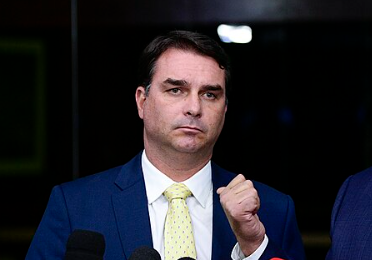
Flávio Bolsonaro, the defeated candidate in Brazil's presidential runoff, arrived in Miami on Wednesday, October 28, 2026, after leaving his country despite a Supreme Court order restricting his travel. The 45-year-old senator, whose father is former President Jair Bolsonaro, refused to accept his election defeat and accused Brazilian authorities of political persecution.
Bolsonaro traveled with his wife and two daughters through Argentina and Ecuador before landing at Miami-Opa Locka Executive Airport. His arrival came three days after President Luiz Inácio Lula da Silva defeated him in a closely contested presidential runoff held on Sunday, October 25.
Brazil's electoral authorities confirmed that Lula won 51.79% of valid votes compared with Bolsonaro's 48.21%, giving the incumbent president a margin of approximately 4.43 million votes. Bolsonaro rejected the result and called for the election to be annulled, citing a controversial decision to extend voting hours shortly before polling stations were scheduled to close.
Controversial Decision Extended Voting by Two Hours
One of the most disputed developments in the election occurred on Sunday afternoon, when Brazilian Supreme Court Justice Cristiano Zanin ordered voting hours extended nationwide. The decision was issued just three minutes before the scheduled 5 p.m. closing time, allowing some polling stations to remain open until 7 p.m.
The extension followed requests from both presidential campaigns, although the candidates cited different problems affecting their supporters. Lula's campaign reported public transportation disruptions in areas favorable to the president, while Bolsonaro's campaign pointed to heavy rainfall in southern Brazil.
In Salvador, authorities investigated reports that public buses had been prevented from leaving municipal garages, potentially affecting voters trying to reach polling stations. A state electoral judge ordered the arrest of the city's mobility secretary, Pablo Souza, in connection with the transportation problems.
Bolsonaro's campaign argued that heavy rain had prevented some voters from reaching polling places in southern regions where he had stronger support. Both campaigns therefore sought additional voting time, even though they subsequently raised different objections about how the election was conducted.
The late announcement created confusion because some polling stations had already closed when election workers learned about the decision. At a polling location in Rio de Janeiro, voting machines had reportedly been turned off and could not be restarted.
Zanin later clarified that the extension applied to polling places where voting was still underway. The inconsistent implementation raised questions about whether voters in different locations had received equal opportunities to cast their ballots.
The Associated Press reported that the decision could lead to legal challenges regardless of which candidate won. Bolsonaro subsequently argued that the extended voting period undermined the election's legitimacy and demanded that the result be overturned.
Brazil's electoral authorities maintained that the outcome was valid and that the voting extension did not change the result. Independent election observers also reported that the country's electoral system had successfully completed the presidential runoff despite the last-minute complications.
Lula Wins After Trailing in First Round
Bolsonaro had entered the runoff with momentum after receiving more votes than Lula in the first round on October 4. Official results showed Bolsonaro receiving 47.03% of valid votes against Lula's 45.16%, leaving neither candidate with the majority required for an outright victory.
The second round produced a substantial reversal as Lula improved his standing among voters who had supported other candidates. The president ultimately received 64,256,232 votes, while Bolsonaro finished with 59,826,041.
Lula's victory secured a fourth presidential term, making him the first Brazilian president to achieve that milestone. His new term is scheduled to begin on January 5, 2027, following the completion of the election certification process.
The Carter Center, which deployed an expert mission to observe the election, praised Brazil's electoral authorities for conducting the vote. Its October 27 assessment acknowledged complications during election day while emphasizing that votes were counted efficiently across more than 499,000 polling stations.
The organization also reported that participation increased by nearly three million voters compared with the first round. Its findings provided independent support for the administration of the election, although they did not eliminate the political dispute surrounding the last-minute voting extension.
Bolsonaro Leaves Brazil Despite Court Order
Bolsonaro's departure followed a Supreme Court order requiring him to surrender his Brazilian passports to federal police. The order was connected to ongoing investigations involving allegations of corruption, money laundering and other financial misconduct.
The senator has denied wrongdoing and accused authorities of targeting him for political reasons. His legal difficulties became more significant after his presidential defeat because he was also expected to lose the parliamentary immunity associated with his Senate position.
According to Reuters, Bolsonaro left Brazil less than three days after the election and traveled through Argentina before boarding a private aircraft. The plane subsequently stopped in Guayaquil, Ecuador, before continuing to South Florida.
Brazilian authorities had ordered Bolsonaro to surrender his passports by Tuesday, October 27, but he failed to comply. Reports indicated that he used an Italian passport during at least part of his journey, raising additional questions about how he traveled despite the restrictions.
The United States approved visas for Bolsonaro and his family, allowing them to enter the country. President Donald Trump welcomed his arrival and questioned the Brazilian election outcome, although he presented no verified evidence demonstrating that the vote had been manipulated.
Bolsonaro maintained that he was not attempting to escape legitimate justice and described his departure as necessary to protect his family. His statements portrayed the investigations against him as politically motivated, an allegation Brazilian authorities have not accepted.
Lula Criticizes Departure as Political Tensions Grow
Lula criticized Bolsonaro's decision to leave Brazil and rejected the suggestion that the election result was illegitimate. The president's victory was recognized internationally, placing Bolsonaro's refusal to concede at odds with the official outcome and the assessments of independent observers.
The departure also created potential diplomatic complications involving Argentina, where President Javier Milei has maintained political ties with the Bolsonaro family. Argentine officials described parts of the journey in terms sympathetic to Bolsonaro's claims of persecution.
Brazilian authorities were investigating allegations involving financial transactions and individuals linked to the senator. Those allegations remain subject to legal proceedings, and no finding of criminal guilt should be inferred from the existence of the investigations.
The situation also drew comparisons with the departure of Jair Bolsonaro after his defeat in Brazil's 2022 presidential election. The former president traveled to Florida before his successor took office, although he later returned to Brazil.
Supporters of Jair Bolsonaro subsequently stormed Brazil's Congress, Supreme Court and presidential palace on January 8, 2023. Those attacks occurred almost four years before Flávio Bolsonaro's 2026 election defeat and should not be confused with the current political dispute.
Questions Remain About Legal Proceedings
Bolsonaro's arrival in Miami does not automatically resolve the Brazilian investigations or eliminate the possibility of further court orders. Authorities may continue pursuing proceedings related to the passport restrictions and the financial allegations under examination.
His refusal to recognize Lula's victory could also influence Brazilian politics as the country prepares for the next presidential term. Bolsonaro remains an influential figure among conservative voters, particularly those who supported his father's presidency.
The central election dispute concerns whether the last-minute extension of voting hours affected the fairness of the runoff. Although the decision caused documented confusion, the official result gave Lula a margin exceeding four million votes, and independent observers recognized the election's administration.
Bolsonaro has not established that the additional voting period changed the outcome. His legal position, future residence and political activities in the United States remain uncertain as Brazilian authorities determine their next steps.