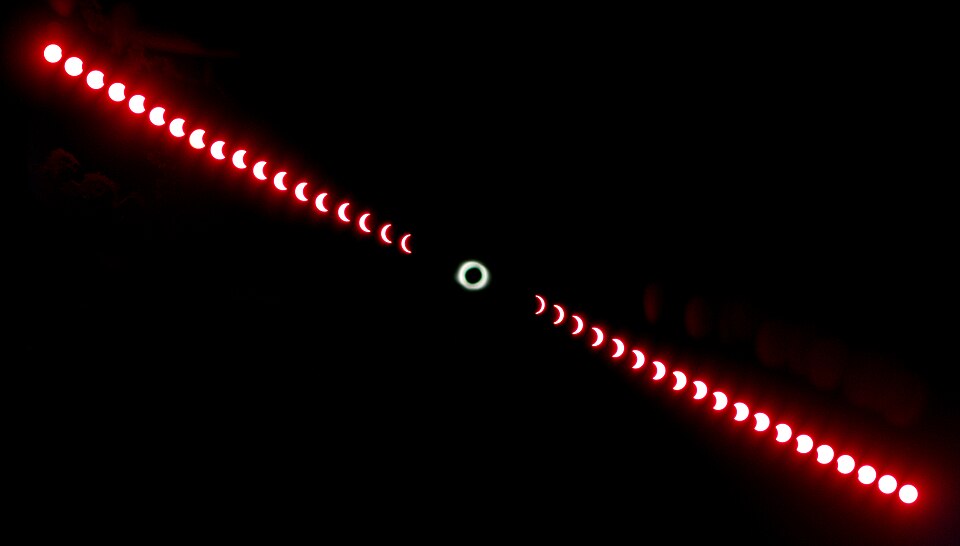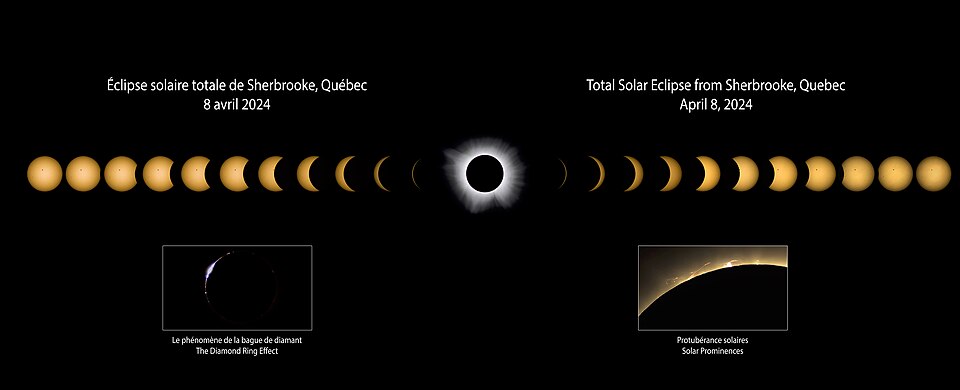
A total solar eclipse will sweep across portions of Greenland, Iceland, and mainland Spain on August 12, the first time in more than a century that totality has reached the Iberian Peninsula. The event is one of several celestial occurrences on the same day, including the peak of the Perseid meteor shower after nightfall and a six-planet arc visible before dawn.
According to ABC News, totality will last up to two minutes and 18 seconds and will begin near the North Pole before tracking south. The moon's shadow will race along a 5,130-mile course, most of it over the open Atlantic. Maximum totality will occur off Iceland's west coast. By the time the eclipse reaches Portugal and Spain, totality will have narrowed to roughly one minute. The spectacle will end in the Mediterranean.
Hundreds of millions of people outside the path of totality will still see a partial eclipse. Coverage will reach 94% in Dublin and 83% in Oslo. Montreal will see an 18% reduction, tapering to 9% in New York and 2% in Norfolk, Virginia. Parts of Alaska, Siberia, Canada, the northern United States, and much of Europe and West Africa will have partial views. Eclipse glasses are required even for a partial view.
The European Space Agency will host a live webcast from Spain's Astrophysical Observatory of Javalambre and hold a public celebration in Leon. NASA will provide its own coverage, along with the Italian-based Virtual Telescope Project.
"For me, it's not just a scientific moment. It's not just an incredible alignment of heavenly bodies. It's also a very human moment," said ESA's director of science, according to ABC News.
Eclipse mapmaker Michael Zeiler will observe from a cruise ship in a Greenland fjord. He plans to point a video camera north during totality to capture any aurora activity. "What gets me excited is viewing rare phenomena," Zeiler said.
August 12 also serves as a preview of a longer event. A 6.5-minute eclipse is expected next summer, sweeping from Spain across North Africa and the Middle East.