Skywatchers have one date to circle on their calendars: Wednesday, August 12, 2026. A daytime solar eclipse, the peak of the Perseid meteor shower, a half-lit Venus, and the Milky Way at its annual best will all fall within a single 24-hour period, making it one of the most concentrated skywatching events in years.
The day begins with a solar eclipse. The moon will partially cover the sun across Alaska, eastern Canada, and parts of the northeastern United States. A total solar eclipse will track along a narrow path stretching across eastern Greenland, western Iceland, and northern Spain. According to a report by Time and Date, approximately 779 million people across North America, Europe, and North Africa will see at least a 10 percent partial eclipse.
The coverage varies widely by location. Parts of Nunavut in the Canadian Arctic will see up to 93 percent of the sun blocked. Major eastern Canadian cities including Toronto, Ottawa, and Quebec will see between 8 and 24 percent coverage. In the United States, Fairbanks, Alaska will see 37 percent of the sun covered, while Boston will see 16 percent. Europe gets the deeper views, with London at 91 percent and Paris at 92 percent.
Anyone watching the partial eclipse from any location needs ISO 12312-2 certified solar eclipse glasses for the entire event. Binoculars, telescopes, and cameras must also be fitted with solar filters before pointing them toward the sun.
After sunset, Venus becomes the next target. The planet reaches dichotomy on August 12, the point at which it appears half illuminated. Through a small telescope or large binoculars, it will resemble a tiny half-moon as it moves closer to Earth.
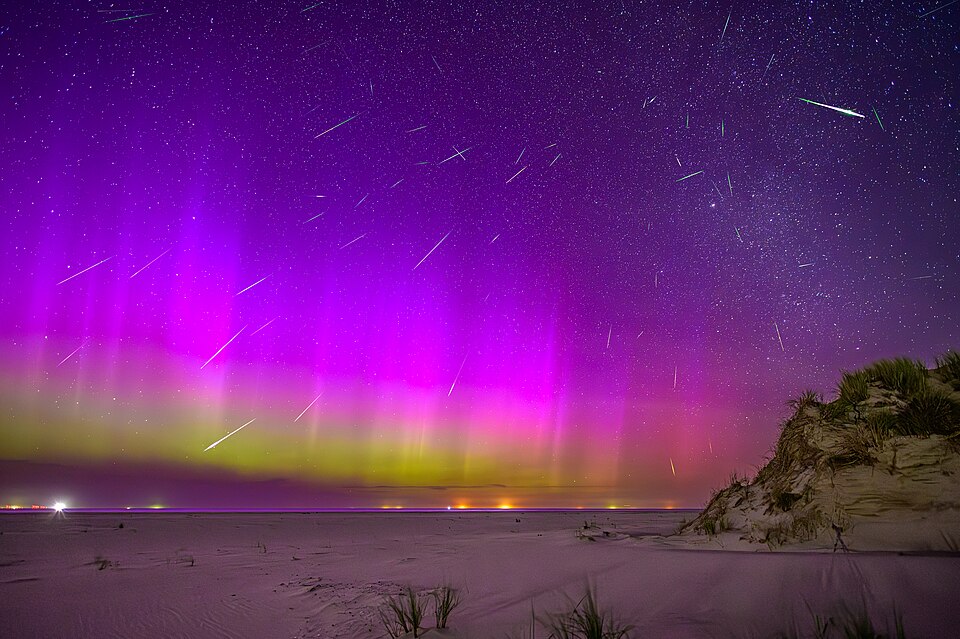
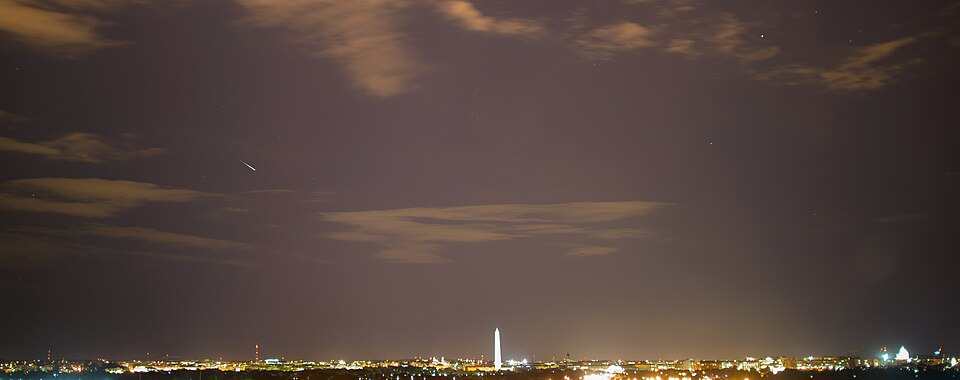
Once full darkness falls, the Perseid meteor shower takes over. This year's Perseids carry a major advantage: a new moon. With no moonlight to wash out faint meteors, observers under dark skies could see between 50 and 75 meteors per hour, according to The Planetary Society. Suburban observers should still enjoy frequent shooting stars throughout the night.
The prime viewing window runs from midnight to 2 a.m. local time, when the constellation Perseus sits highest in the sky. That same window, away from city lights, will also offer the clearest views of the Milky Way at its annual peak brightness.
The combination of a daytime eclipse, an evening planetary event, and a peak meteor shower under ideal dark-sky conditions is rare on a single calendar date.