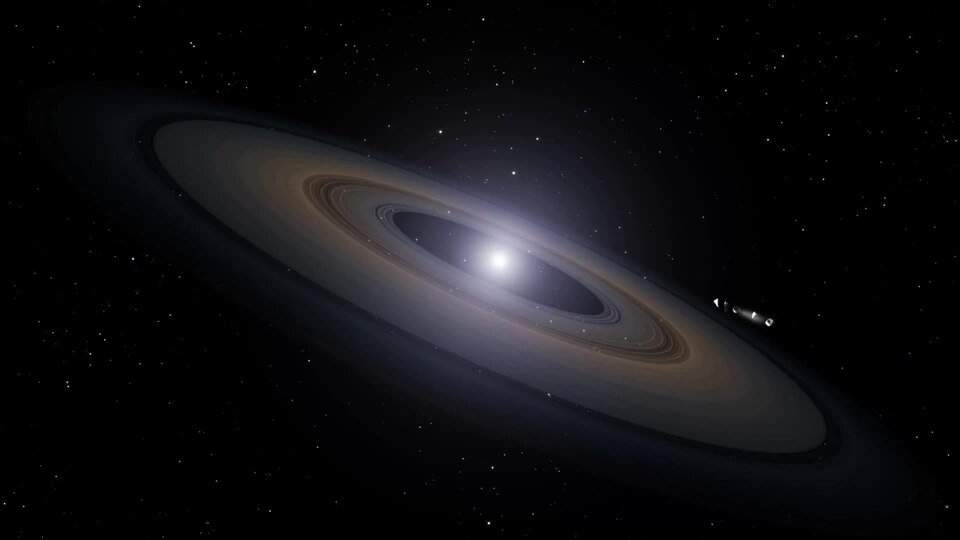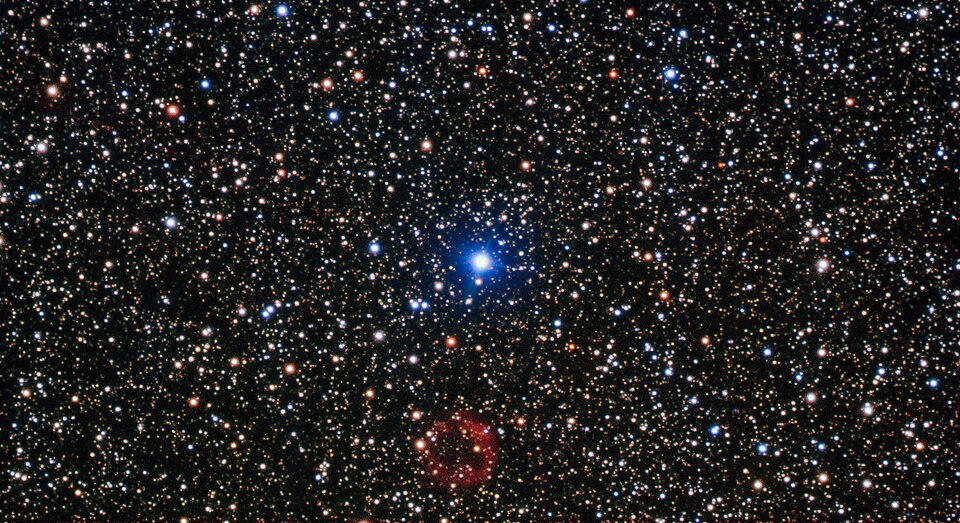
Astronomers studying white dwarf stars have found some of the clearest evidence yet that these stellar remnants are pulling in debris from disintegrating rocky planets. The findings come from an unexpected source: spare observation time on a telescope built to study something else entirely.
The Dark Energy Spectroscopic Instrument, known as DESI, sits in the Arizona desert and was designed to map the history of the universe's expansion by observing distant galaxies. But during its primary five-year survey, conditions were not always good enough for that main task. Rather than letting that telescope time go to waste, the research team turned DESI toward targets much closer to home, including white dwarf stars scattered across the sky.
According to a report published in Monthly Notices of the Royal Astronomical Society, the DESI collaboration examined the spectra of 12 highly metal-enriched white dwarfs in greater detail than previous studies had managed. White dwarfs are the dense, hot cores left behind when stars like our sun reach the end of their lives. They are made almost entirely of hydrogen and helium, but many carry traces of heavier elements in their atmospheres, a sign that rocky material from former orbiting bodies has fallen onto their surfaces.
Between 20% and 50% of the hundreds of thousands of white dwarfs that astronomers have observed show these metal signatures. Of those, just over 1,750 are known to be actively pulling in planetary debris. Only a few dozen have spectra detailed enough to give reliable data on chemical compositions, making them rare and valuable targets.
The process that delivers this material to white dwarfs begins when rocky bodies that once orbited safely at a distance get gravitationally scattered inward. Tidal forces gradually tear these bodies apart. The resulting debris eventually falls onto the white dwarf's surface, leaving behind chemical fingerprints in the stellar atmosphere.
Lead author Paula Izquierdo of the University of Warwick described how the opportunity arose. "We are lucky enough to get a lot of white dwarfs observed as a side project," she said. "Among those, we found these ones which are super metal-enriched."
One of the central goals of the new study was to compare the chemical compositions found in these white dwarf atmospheres with the known makeup of planets and asteroids in our own solar system. The results showed compositions remarkably similar to those of rocky bodies in the inner solar system, including Earth, Mars, and the asteroid belt. That comparison matters because it lets scientists ask whether our solar system is ordinary or unusual in its chemical makeup.
Izquierdo explained why this kind of analysis depends on white dwarfs. "In order to understand if our solar system is common or special in terms of its composition, we need a sizable number of exoplanets whose chemical composition is derived," she said. "Currently, this can only be done by analyzing this type of white dwarf."
The findings add to a growing body of evidence that rocky planet formation follows similar chemical patterns across different star systems. Each time a white dwarf's atmosphere is analyzed in this way, astronomers gain what amounts to a chemical inventory of a world that no longer exists, preserved in the outer layers of a dying star.