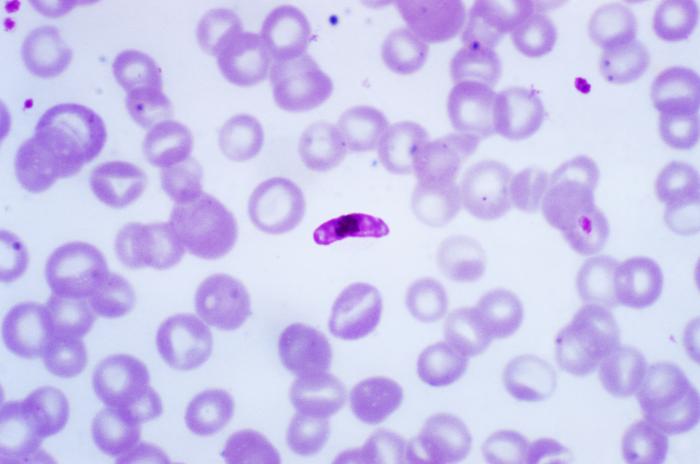
Malaria parasites do not divide the way human cells do. Instead of splitting into two daughter cells, they copy their genetic material tens, hundreds, or even thousands of times before producing a matching number of daughter parasites all at once. Until recently, scientists did not fully understand how the parasite controlled this process. Two new studies published this summer offer the clearest look yet at the molecular machinery behind it.
According to reporting based on the research, both studies involved teams from Heidelberg University's Faculty of Medicine, Harvard Medical School, and the German Cancer Research Center. The findings open new possibilities for developing drugs that could disrupt the parasite's ability to reproduce.
The first study, published in The EMBO Journal, focused on a structure inside the malaria parasite that had appeared in electron microscopy images for years but whose purpose was unknown. Researchers identified two proteins that form what they now call a molecular tether. This tether connects each of the parasite's newly copied nuclei to the tip of a forming daughter parasite. Without it, the whole process breaks down.
The research teams, led by professor Friedrich Frischknecht of Heidelberg University and professor Jeffrey Dvorin of Boston Children's Hospital and Harvard Medical School, found that genetically modified parasites missing one component of the tether could still copy their genomes but could not produce working offspring. The effect was even more severe in mosquitoes. The formation of sporozoites, the infectious stage that mosquitoes pass to humans during a bite, was nearly completely eliminated.
"Without this connecting structure, the entire process of daughter parasite formation collapses," Frischknecht explains. "The developing parasites are unable to pull their nucleus inside and cannot correctly orient cellular structures that are important for host-cell invasion. These Plasmodium parasites are not viable."
The second study, published in Nature Communications, looked at a different question: how does the parasite manage to multiply its nuclei so many times inside a single infected blood cell without running out of the materials it needs? The research group of Dr. Markus Ganter at Heidelberg University collaborated with scientists from Heidelberg University's Institute for Theoretical studies and other institutions to investigate how the parasite coordinates nuclear multiplication.
The researchers found that the parasite relies on asynchronous replication, meaning the nuclei do not all copy themselves at the same time. Instead, they stagger the process. This allows the parasite to stretch a limited supply of proteins and other molecular resources across the entire multiplication cycle without bottlenecking at any one stage. It is a strategy that makes the parasite remarkably efficient at exploiting the cramped and resource-poor environment inside a red blood cell.
Together, the two studies reveal that malaria parasites have evolved precise and specialized systems to handle a reproductive strategy that has no close parallel in human biology. The molecular tether ensures that genetic material ends up in the right place at the right time. The asynchronous scheduling of nuclear replication ensures that the raw materials needed for that process do not run dry before the job is done.
The findings matter because each of these systems represents a potential target for new drugs. Antimalarial treatments have faced growing pressure from drug-resistant strains of the parasite. Identifying mechanisms that are unique to the parasite, and essential to its survival, gives researchers new angles of attack. A drug that disrupted the tether proteins, for example, could theoretically block the formation of viable offspring without targeting anything found in human cells.
Malaria remains one of the world's most serious infectious diseases. The World Health Organization estimated hundreds of millions of cases in 2024 alone. Plasmodium falciparum, the species studied in this research, is responsible for the most severe and deadly form of the disease. The researchers say the next step will be to study whether the tether proteins and the replication-scheduling mechanisms can be targeted by small molecules in laboratory settings.