

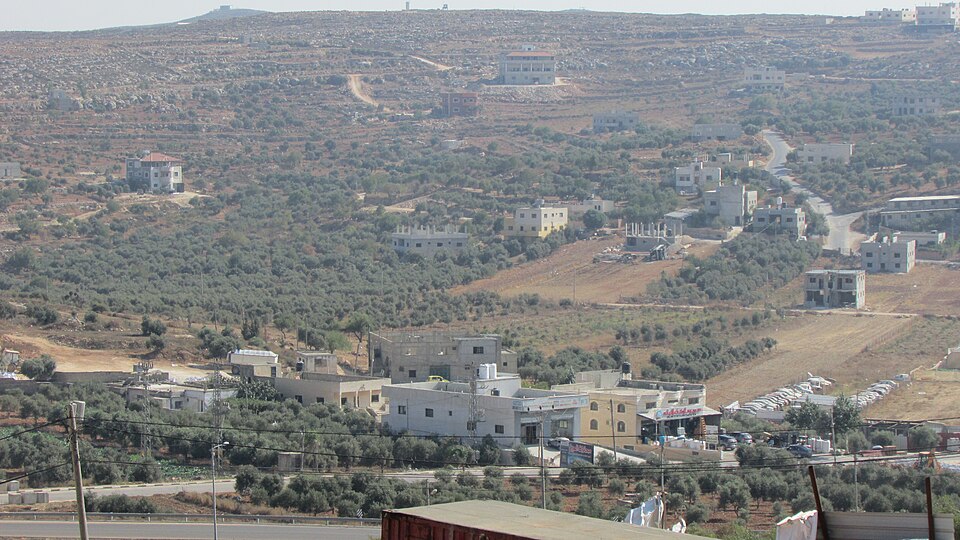
Israeli forces blocked Israeli and foreign activists from delivering food and water to Palestinian families surrounded by settlers in the West Bank town of Qusra on Friday, according to Al Jazeera. The families have been trapped for nearly a week.
The activists were attempting to reach three homes in the Ras al-Ain area of Qusra, south of Nablus, according to the Palestinian news agency Wafa. Al Jazeera's Laith Jaar reported from Qusra that Israeli forces brought in reinforcements and declared the area a closed military zone, stopping members of the Israeli group Peace Now from reaching the families.
Qusra Mayor Abdel Azim Wadi told Wafa that Israeli forces had also forced Italian activists who managed to reach the homes earlier in the week to leave.
Settlers began surrounding the homes earlier this week. They blocked roads with stones, erected a tent nearby, and prevented residents from entering or leaving freely. Water and electricity supplies to the homes have also been cut.
About 15 Palestinians, including two children, are living in the three homes. The United Nations said they were "trapped inside their homes in a state of terror, unable to attend to their basic needs and without access to water or electricity."
Israeli forces entered the area a day earlier and ordered the families to temporarily leave. The residents refused, fearing their homes could be taken over if abandoned. They gathered in one of the three houses instead.
On Friday, settlers again attempted to erect a tent and establish an outpost near the homes before Israeli forces removed it, according to Jaar.
Qusra has been identified by the UN as the occupied West Bank community with the highest number of recorded settler attacks earlier this year. Israeli Defence Minister Israel Katz has also ordered preparations to transfer responsibility for enforcing civilian law involving settlers in the West Bank from the military to the Israeli police. Political scientist Ibrahim Rabaia told Al Jazeera the proposed move appeared to be driven by political considerations and raised questions about how broadly it could be implemented.