

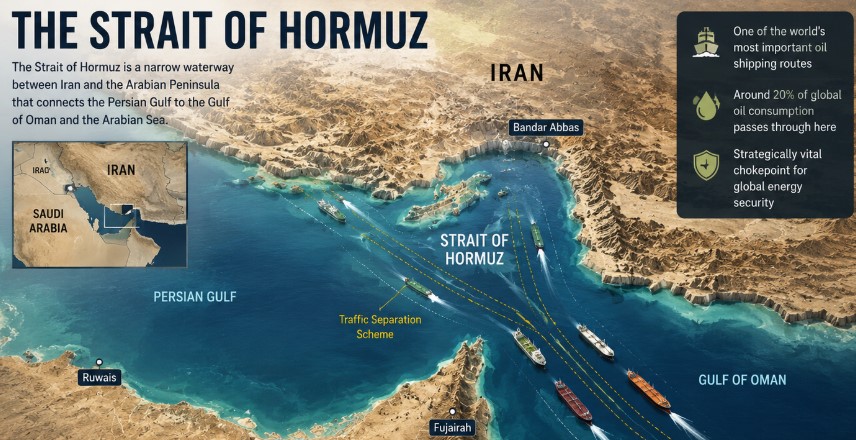
Iran's top security official issued a stark warning Saturday, telling the world that any country siding with the United States in its economic campaign against Tehran would be considered an enemy of Iran. The warning came as shipping through the Strait of Hormuz has drastically decreased and the US prepared to announce a new round of sanctions on Monday.
According to a report by Al Jazeera, Mohsen Rezaei, secretary of Iran's Supreme National Security Council, delivered the message on state broadcaster IRIB. "Any country that takes part in imposing economic restrictions on us will be regarded as an enemy," he said, warning of "serismic" retaliation. Rezaei also told Iran's neighbors that if they participated in US economic warfare, "not even a drop of oil" would leave the Gulf region, including by alternative export routes away from the Hormuz chokepoint. In peacetime, a fifth of global oil and gas exports pass through the strait.
The remarks followed a direct threat from US President Donald Trump, who pledged to carry out the "most crushing economic operation" yet against Iran and warned of "tremendous economic consequences" for any country that gives Iran "any type of lifeline." US Treasury Secretary Scott Bessent followed the next day, saying "You're either with us or against us," and pressing China to cooperate. China currently buys more than 80 percent of Iran's oil shipments.
Iran's President Masoud Pezeshkian addressed the situation on Sunday in a televised speech, describing the current situation as a "full-scale economic, military and security war" with the United States. He said Washington had incorrectly predicted that Iran would collapse under US pressure. "The enemy had assessed that if Iran falls, it will become Venezuela," he said. "Not only did it not h" — the transcript of his remarks was cut off in published reports.
The war between the US and Iran began on February 28, with the US stating that Tehran was on the verge of possessing nuclear weapons. That claim was later disputed by the US intelligence community as well as the United Nations' IAEA nuclear watchdog. Since then, Iran has attacked US military installations and civilian locations across the region.
The US operates military facilities in more than a dozen locations across the Middle East and North Africa, including in Bahrain, Kuwait, Qatar, Saudi Arabia and the UAE. Thousands of American soldiers are stationed in the region, including in Jordan. Iran's warning to its neighbors not to host or cooperate with those forces adds pressure to Gulf states that maintain both US military ties and trade relationships with Tehran.
Diplomatic efforts to end the conflict have stalled. Iran's president indicated in separate remarks that a US memorandum currently circulating represents the best available path out of the war, though no deal has been reached. The new US sanctions are expected to be announced Monday.