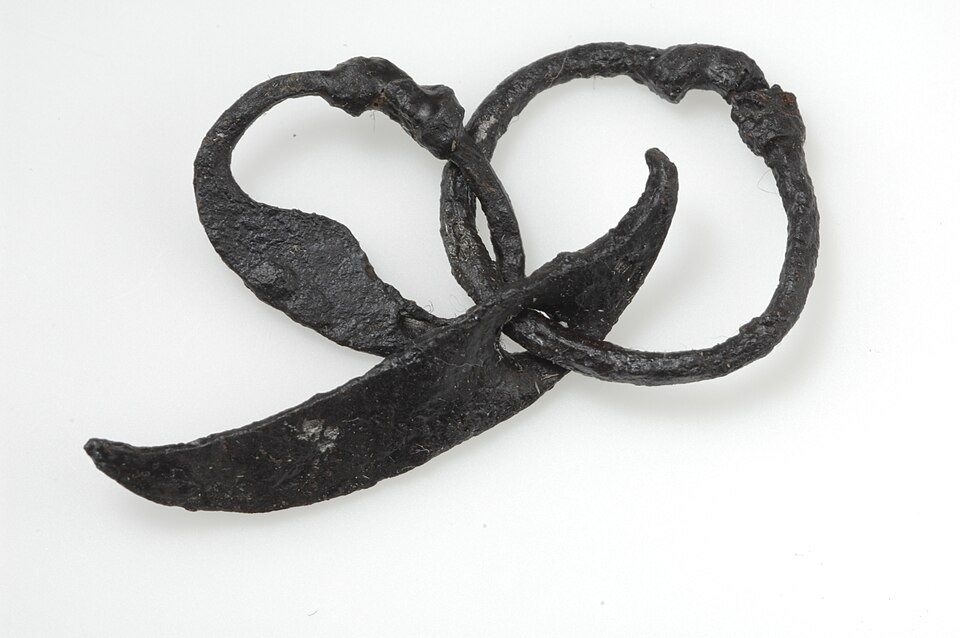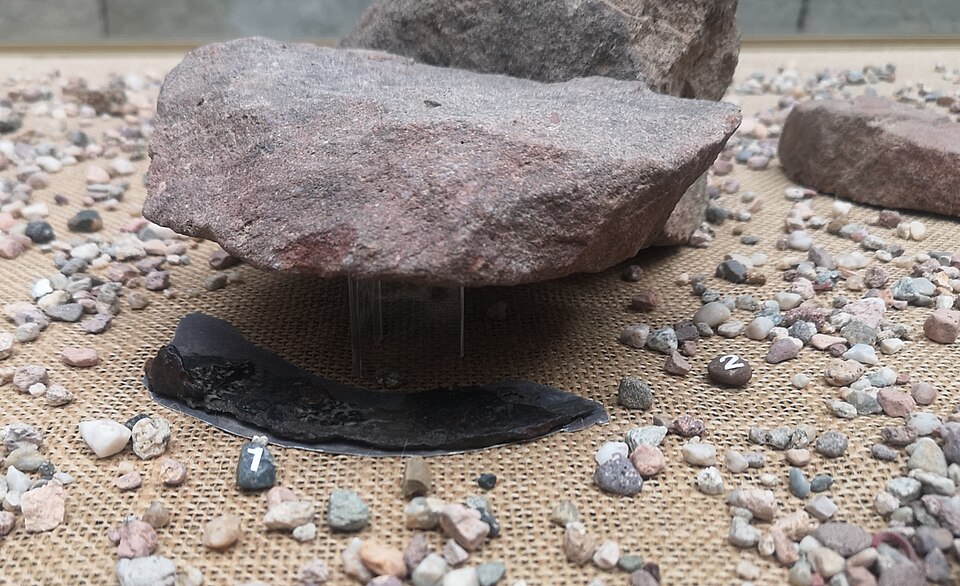
In 2022, excavators at a cemetery in Pień, Poland, uncovered a 400-year-old grave that stopped them cold. Inside Grave 75, the skeletal remains of a young adult woman lay with a curved iron sickle placed directly over her neck, its blade pointing toward her throat. A triangular iron padlock was attached to the big toe of her left foot.
A study published in the Journal of Archaeological Science: Reports, led by researchers from the Institute of Archaeology at Nicolaus Copernicus University, used both archaeological and chemical evidence to reconstruct who this woman was and why she was buried this way, according to Phys.org.
The woman was not poor. Tiny metallic threads found near her skull turned out to be pure silver and gold-gilded wire from a luxurious silk headwear cap. In 17th century Poland, materials like these were extraordinarily expensive, pointing to a family of significant wealth and social standing.
Despite her status, or perhaps because of it, she was buried in a way that signaled deep fear. The soil inside the grave was disturbed and mixed, suggesting someone dug it up before her body had fully decomposed, while her joints were still held together by soft tissue. Researchers believe someone pulled her left arm toward the northeast and placed the sickle into the grave with its blade angled toward her. The padlock at her foot was consistent with anti-demonic rituals, practices designed to keep the dead from rising.
These kinds of graves have a name. Archaeologists call them vampiric or anti-vampiric burials, and several hundred have been found across Central and Southeastern Europe, spanning from the post-medieval period into modern times. Other anti-vampiric measures found at similar sites include decapitation, heavy stones placed on the body, and iron stakes. Graves from the 16th to 18th centuries like Grave 75 have received relatively little attention in archaeological literature.
The 17th century was a brutal time in the Polish-Lithuanian Commonwealth. Disease and famine swept through communities with regularity, and the dead became convenient targets for blame. A wealthy woman who died young, who perhaps stood out in life, could easily become the focus of a community's fear and suspicion after death.
Researchers approached this grave by carefully excavating and documenting the skeleton, the sickle, the padlock, and surviving textile fragments. Radiocarbon dating helped establish the timing of the burial. The chemical analysis of the metallic threads near her skull helped confirm her social status. Together, these methods gave researchers a more grounded picture of who she was and how her community responded to her death, relying on scientific evidence rather than folklore alone.
The study represents one of the more detailed examinations of an anti-vampiric burial from this period, a window into how fear, disease, and superstition shaped the way some communities treated their dead.