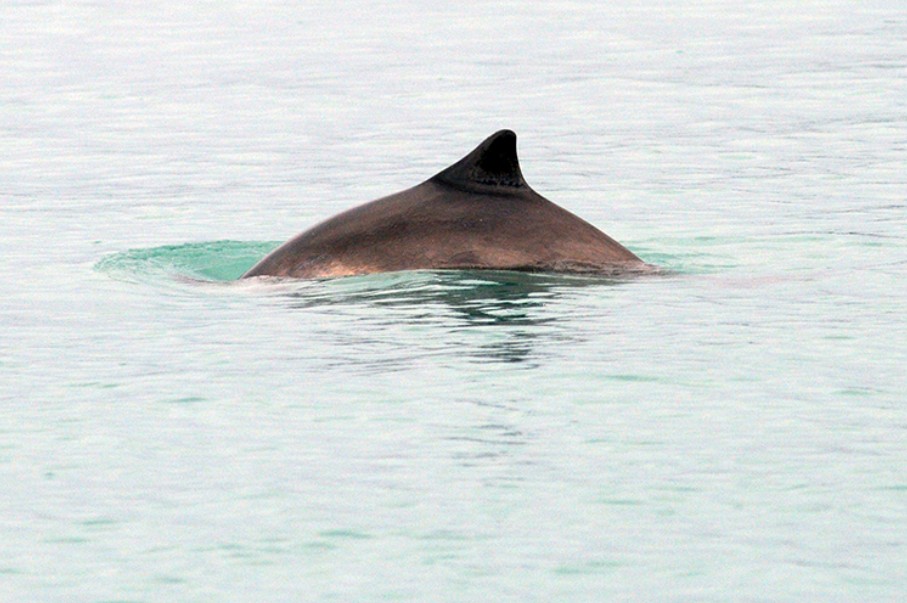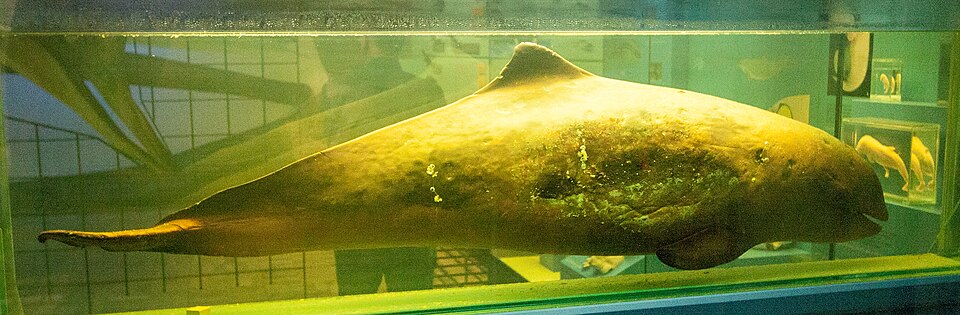
Two harbor porpoises were foraging near a static fishing net off the coast of Cornwall when one became entangled. Researchers had the whole thing on record.
Scientists at the University of St Andrews captured the event using passive acoustic monitoring devices that had been deployed on a gill net. The recordings were unintentional. The devices happened to be active at exactly the moment a bycatch event unfolded, producing what researchers believe is the most detailed real-time recording of its kind ever made. Their findings were published August 26 in Royal Society Open Science.
The acoustic and movement data showed the two animals spending several minutes foraging close to the net. They appeared able to recognize and avoid it at first. Researchers speculate that a momentary lapse in concentration, perhaps while chasing prey, led to the entanglement. Once trapped, the porpoise was able to exert enough force to lift, but not break, the net. During the event, the two animals exchanged distinct call types that may have been distress signals.
Bycatch is the single biggest direct human-induced cause of death in dolphins and porpoises worldwide. In the UK alone, an estimated 1,000 porpoises are lost every year after becoming trapped in static nets. Capturing one of these events in real time, with enough detail to study animal behavior, has been extremely difficult to do.
Lead author Dr. Jamie Macaulay, a senior research fellow at the School of Biology and Scottish Oceans Institute, described just how unlikely the recording was. "We only monitor a fraction of the thousands of kilometers of fishing nets active in UK waters, so the chances of recording these data at the same time that a bycatch actually happened is very small," he said. "Observing an event in such detail obviously brings home the harsh realities of the bycatch problem, but this is a problem that the fishing industry and conservationists all want to solve."
Macaulay said the collaboration with fishers was central to what was learned. "By closely collaborating with fishers, we were able to gain valuable insights which may help us come up with new approaches that could ultimately save the lives of thousands of animals," he said.
The recordings could inform several new approaches to reducing bycatch. Researchers said the data supports developing more acoustically reflective nets that could catch animals' attention, new net designs that allow larger or stronger species to break free, and biomimetic acoustic deterrent devices that broadcast warning sounds to drive certain species away.
Macaulay also addressed concerns about the fishing industry directly. "Static net fishing is an important part of the industry, so it's not about saying 'we must stop using these nets,'" he said.
The Sea Mammal Research Unit and Scottish Oceans Institute at St Andrews were involved in the research. The study adds a rare, granular data point to a problem that researchers and fishers alike have struggled to address due to the difficulty of observing entanglement events as they happen.