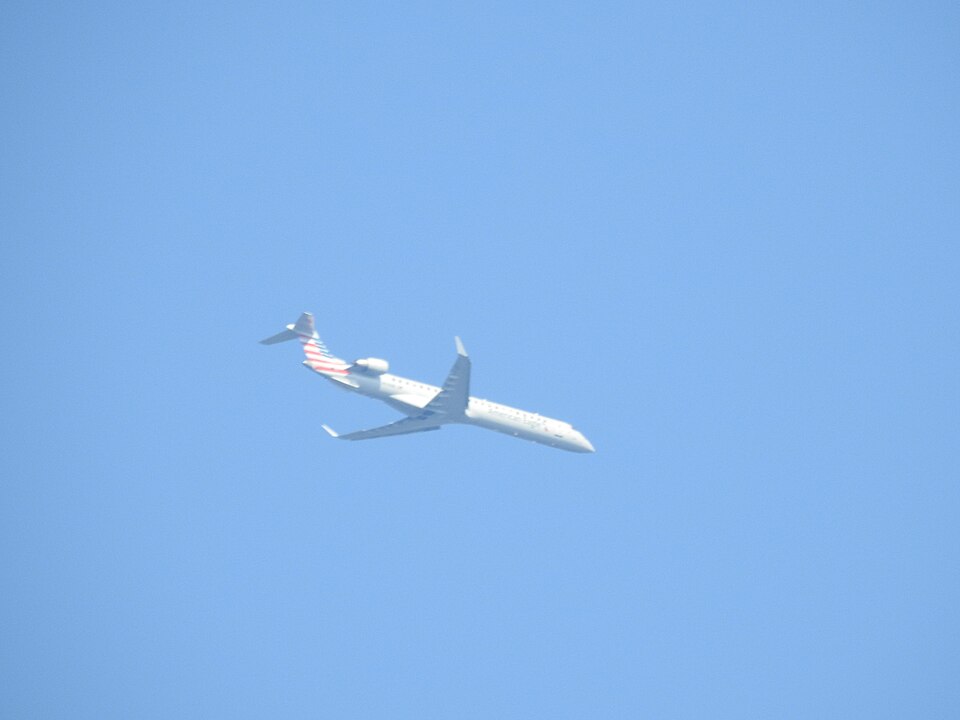
American Airlines has lost 30.5% of its stock value over five years. Over the same period, Delta Air Lines gained 103.8% and United Airlines gained 144.3%. American's market cap now stands at roughly $9.2 billion, compared with $54.6 billion at Delta and $37.3 billion at United.
All three carriers absorbed the same fuel shock this year. American's second-quarter 2026 fuel expense jumped 83.3% year over year to $4.881 billion. That compressed operating margin to 2.7%, down from 7.9%. Delta, absorbing what CEO Ed Bastian called "the highest quarterly fuel expense in our history," still delivered a 9% operating margin and $1.56 earnings per share. United posted $10.79 in trailing earnings per share. American's full-year 2026 adjusted earnings per share guidance was reset to a range of a loss of $0.65 to a profit of $0.65, according to a report by Yahoo Finance.
American also rejected a merger bid from United in 2026, citing antitrust concerns. That leaves CEO Robert Isom to close the gap through internal fixes alone. On CNBC, Isom said the "long-range plan is certainly making up the margin gap," but offered no timeline for doing so.
Chief Financial Officer Devon May identified the key measure on the second-quarter earnings call. "What we will measure over time is: Are we closing this revenue gap and closing the unit revenue gap?" May said.
Several specific gaps separate American from its rivals. On premium cabins, American runs roughly 80% domestic routes and 20% international. A long-haul lie-flat seat can fetch close to $10,000, compared with $2,000 or less in economy. Delta had a two-decade head start selling first class rather than giving away roughly 90% of domestic first-class seats as upgrades, as American historically has done.
On fleet, a new wide-body order is expected this year. Isom told CNBC, "I think that Airbus could play a big role," with deliveries expected in the early to mid next decade. On operations, American ranked sixth out of 11 U.S. airlines on first-half punctuality, with a 76.6% on-time rate, behind both Delta and United. A rebanking of operations at Dallas-Fort Worth already cut misconnects nearly 25% year over year.
On loyalty, Citi co-brand card spending rose 8% year over year, but Delta's American Express partnership is targeting $9 billion this year. On the balance sheet, American has cut debt from roughly $54 billion at the pandemic peak to about $35 billion. Shareholder equity remains at negative $3.972 billion.
The performance gap stretches back a decade. American is down 61.8% over ten years, while Delta is up 130.2% and United is up 145.0% over the same period.