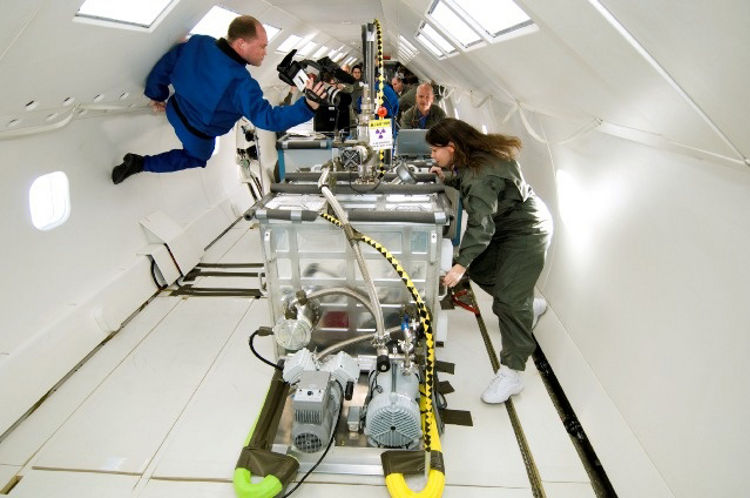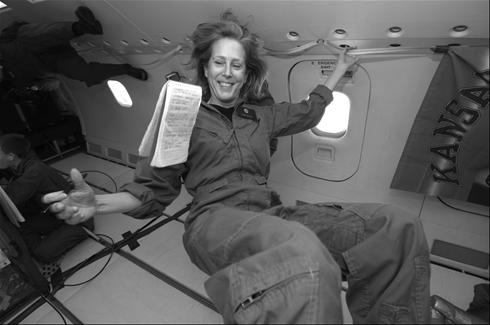
Four women strapped into a modified aircraft and flew in parabolic arcs to simulate the weightlessness of space. What researchers found in the days that followed is changing how scientists think about women's health beyond Earth.
A team led by Begum Mathyk, a physician-scientist at the USF Health Morsani College of Medicine Department of Obstetrics and Gynecology, published a study in Frontiers in Microbiology showing that simulated spaceflight conditions significantly altered the vaginal microbiome while leaving the oral microbiome largely unchanged. According to Phys.org, the study is the first of its kind to examine how altered gravity affects the vaginal microbiome specifically.
The four participants flew parabolic flights aboard a modified aircraft designed to produce short periods of microgravity and hypergravity, the same forces astronauts experience during launch and orbit. After the flights, participants showed elevated cortisol levels and measurable changes in their microbial communities. The changes were far more pronounced in the vaginal microbiome than in samples taken from the mouth.
The vaginal microbiome helps support immune function and maintain healthy tissue. When its balance is disrupted by physical or psychological stress, the consequences can include inflammation, increased infection risk, and altered immune responses. In conditions such as endometriosis, microbial disruption is already linked to chronic inflammation and disease progression.
"This study gives us an early indication that female biological systems respond differently to the unique conditions associated with space travel," Mathyk said.
The research team noted that the vaginal microbiome has gained attention in recent years beyond its traditional associations with common infections. "Over the past few decades, the clinical relevance of the vaginal microbiome has extended beyond its traditional associations with bacterial vaginosis or vulvovaginal candidiasis," Mathyk said. "It has also emerged as a noninvasive biomarker for gynecological disease detection, cancer, pregnancy and health monitoring."
Despite that growing clinical relevance, no one had studied what happens to the vaginal microbiome under spaceflight conditions before this study. The team filled that gap, but they also identified how much remains unknown. The sample size was small, and the parabolic flight environment only approximates the conditions of an actual mission to orbit or beyond.
"These findings highlight the sensitivity of the vaginal microbial ecosystem to spaceflight stressors," Mathyk said. "They underscore the need for longitudinal and mechanistic studies to determine t" the full scope of those changes over time.
As space agencies plan longer missions, including potential trips to Mars that could last years, understanding how the human body responds to spaceflight is urgent. Most of the existing research has focused on male physiology. This study adds to a growing body of evidence that female biology may respond differently to the stresses of space, and that those differences matter for mission safety and crew health planning.