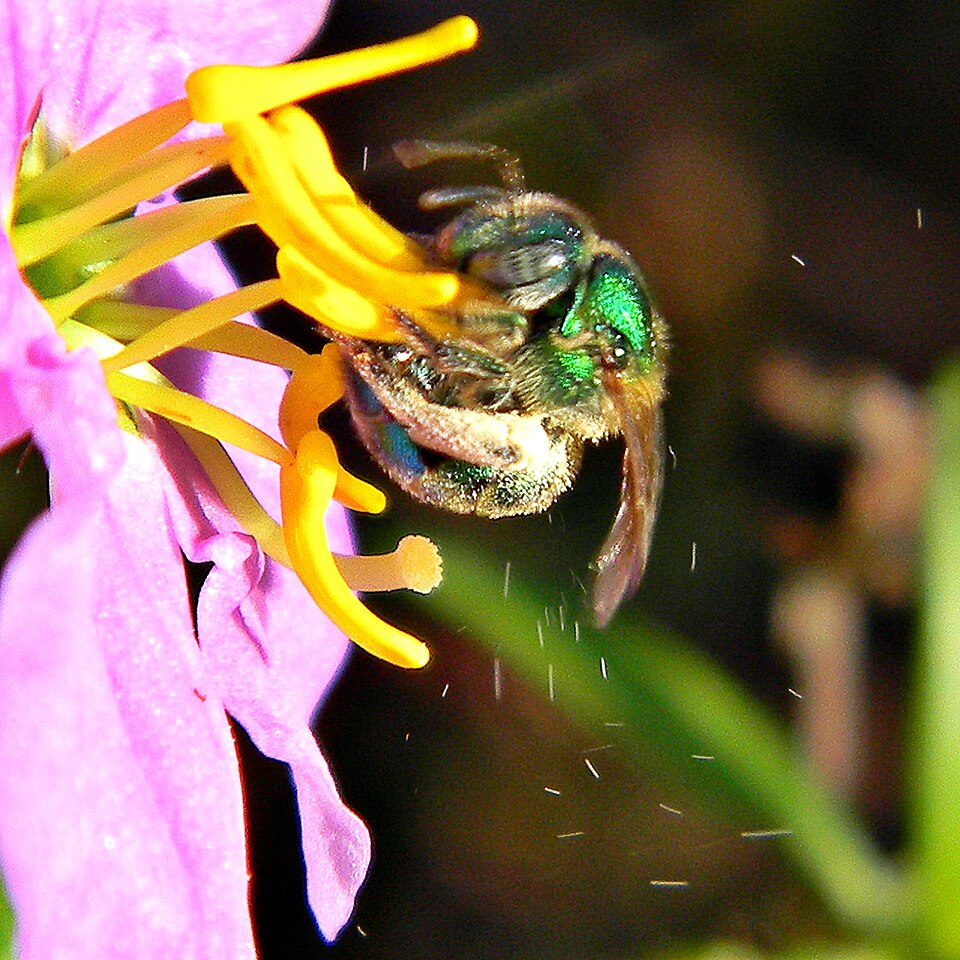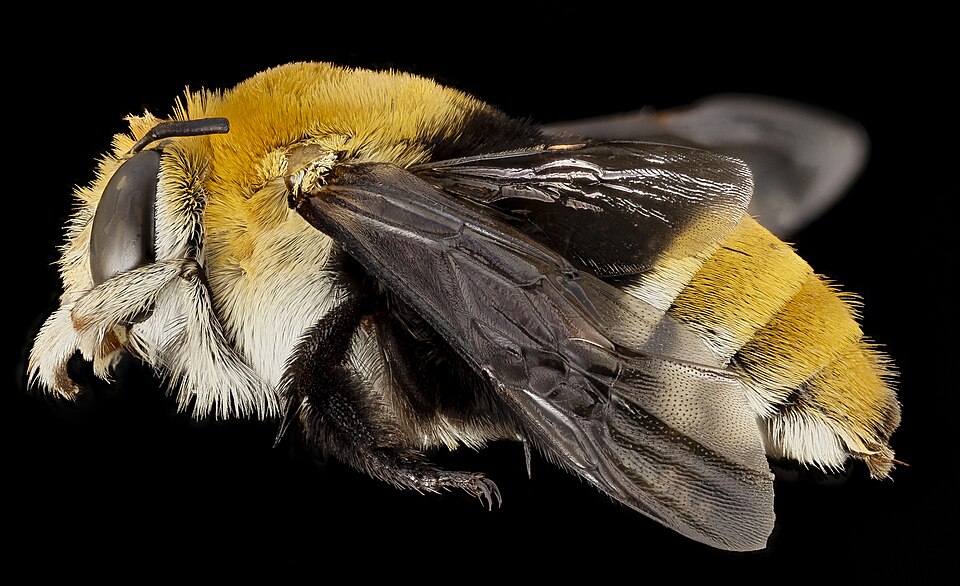
About 10 percent of flowering plants can only release their pollen when a bee vibrates them at just the right frequency. Now researchers have found that a small structural feature inside the flower's pore plays a bigger role in that process than anyone had recognized.
A team at the University of Vienna's Department of Botany and Biodiversity Research compared more than 500 plant species and found that the shape of the pore in so-called poricidal anthers determines how pollen is released, according to a study published in Nature Communications. Some anthers carry a spatula-shaped structure called a scoop. Others do not. That difference, it turns out, changes both the angle and the speed at which pollen leaves the flower.
Tomatoes, one of the most familiar buzz-pollinated crops, lack scoops. But anthers belonging to the large tropical plant family Melastomataceae commonly bear them. Buzz-pollinated plants also include eggplants and blueberries, all of which store pollen inside tight anther structures that only open under mechanical vibration.
Doctoral candidate Benjamin Lazarus conducted the experimental work. He applied vibrations to individual anthers using an artificial vibration setup constructed to mimic bee buzzing, then filmed the resulting pollen clouds with high-speed video. He measured both the scattering angles and the speed at which pollen moved through the air.
The results were clear. Anthers with scoops expelled pollen in narrower, more targeted jets. Anthers without scoops scattered pollen in broad clouds. Scoop-bearing anthers also released pollen at faster speeds.
Study lead Agnes Dellinger explained why that matters for the plant. "Accuracy in pollen placement is important for plants because it can improve pollination success and at the same time enables plants to place pollen in 'safe spots' where bees can't groom and collect it off their bodies," Dellinger said. "At the same time, faster pollen release may allow plants to eject pollen across larger distances and implant it more deeply in the fur of bees, thereby again reducing pollen loss."
Placing pollen in spots a bee cannot easily reach with its grooming legs means more pollen survives the trip to another flower. That is a direct benefit to the plant's reproductive success.
The team also found that the scoop's function is sensitive to the exact nature of the vibration applied. Targeted pollen release showed a cyclical pattern that depended on vibration frequency, suggesting the scoop does not work the same way under every condition. That finding adds a layer of complexity to how buzz pollination works and may have implications for understanding which bee species are most effective at pollinating specific crops.