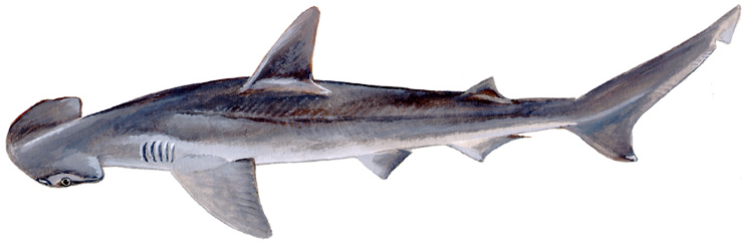
Scientists studying bonnethead sharks in Florida have overturned a leading explanation for why males and females develop differently shaped heads, and the new findings raise more questions than they answer. A study from the University of Miami Rosenstiel School of Marine, Atmospheric, and Earth Science found that both sexes start life with more pointed heads that become rounder as the sharks mature, with the change most pronounced in females.
The finding directly contradicts earlier research, which had suggested that males developed their more pointed snouts when they reached sexual maturity. According to Science Daily, the new study is the first detailed investigation of both head shape and diet in bonnethead sharks from Biscayne Bay. Researchers also studied sharks from Tampa Bay to test whether the same patterns appeared in a separate population on the opposite side of Florida.
Bonnetheads are small relatives of hammerhead sharks and the only shark species known to show clear sex-based differences in head shape. Males typically have a more noticeable point along the front edge of the head, while females tend to have a smoother, more rounded outline. Scientists refer to this kind of physical difference between males and females as sexual dimorphism.
Lead author Kathy Liu, who conducted the research while earning her master's degree at the Rosenstiel School, described the core finding directly. "Our findings show that the pointed head shape is not a feature that develops in males when they reach maturity," Liu said. "Younger males and females both had more pointed heads, but the head became rounder as the sharks matured. That change was much greater in females."
The team also tested whether diet could explain the head shape differences. If males and females were eating different prey or foraging in different ways, that could have driven their heads to develop differently. The results did not support that idea. While bonnetheads in Biscayne Bay and Tampa Bay occupied distinct food webs and showed dietary changes as they grew, males and females living within the same bay relied on many of the same local food sources.
Liu was direct about what the diet data showed. "Our findings provided no evidence that differences in diet or foraging were driving the development of the sharks' sex-specific head shapes," she said.
What does drive the difference remains unknown. The study narrows down the possible explanations, but the evolutionary reason for the sex-based head shapes is still an open question for researchers to pursue.