After eight years traveling through the inner solar system, Europe's BepiColombo spacecraft has entered its final approach to Mercury and shed a major part of itself it no longer needs. The spacecraft jettisoned the Mercury Transfer Module, the section housing its ion thrusters, earlier this week. That module had provided power and propulsion for the entire cruise phase of the mission.
According to Ars Technica, BepiColombo is a robotic science mission led by the European Space Agency with contributions from Japan and the United States. Its price tag is nearly $2 billion. The spacecraft launched in 2018 and has been spiraling inward toward the Sun ever since, using a combination of plasma propulsion and planetary flybys to adjust its speed and direction.
Getting to Mercury is harder than it sounds. Reaching the small, sun-scorched planet and then slowing down enough to enter orbit requires more energy than sending a probe on a flyby of Pluto. NASA's New Horizons took nearly 10 years just to reach Pluto, and that mission did not need to slow down and enter orbit.
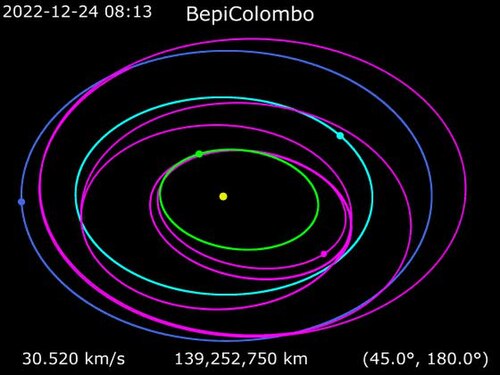
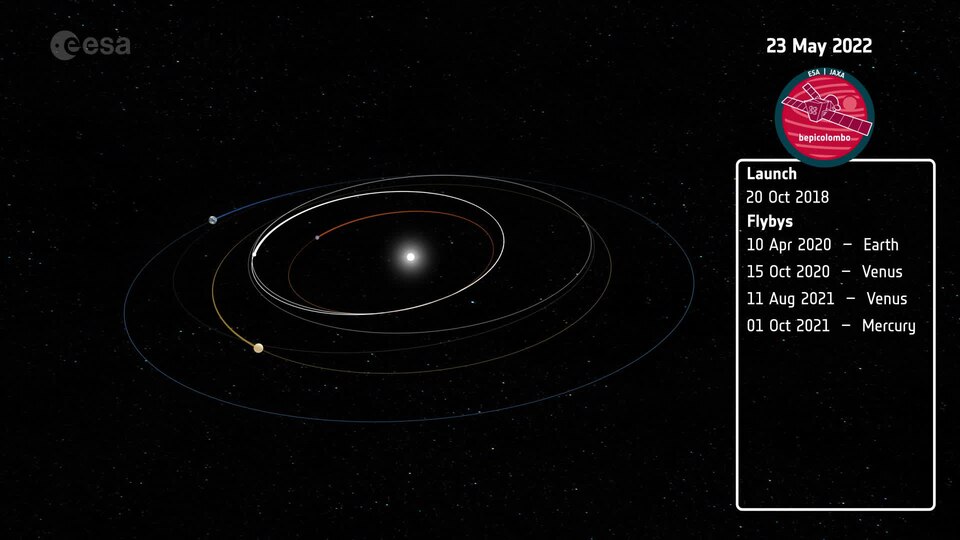
To manage the enormous energy challenge, BepiColombo required an unprecedented nine planetary gravity assists, using the gravitational pull of Earth, Venus, and Mercury itself to gradually reshape its path. The spacecraft also launched with the most powerful electric propulsion system ever sent into deep space, using four gridded ion thrusters to further adjust its orbit around the Sun between flybys.
Now, with only months remaining in the journey, the ion engines are no longer needed. When BepiColombo next reaches Mercury, it will be traveling at precisely the right speed for Mercury's gravity to pull the spacecraft into orbit. That orbital capture is expected later this year.
Scientists on interplanetary missions regularly wait years for results. The BepiColombo team has been waiting since 2018, and the scientific payoff is nearly in reach. Once in orbit, the spacecraft's instruments will study Mercury's surface, interior, magnetic field, and thin atmosphere in more detail than any previous mission.