

The United States and Iran exchanged ship strikes on Saturday in the latest round of attacks since fighting flared up one week ago following roughly a month of relative calm, according to the BBC.
The US military said it had permanently disabled two Iran-linked oil tankers, including one near Kharg Island, and completely destroyed a third vessel in the Gulf of Oman. Iran's state media confirmed the strikes and said Tehran responded by attacking three US-affiliated vessels, as well as three oil tankers traveling through the Strait of Hormuz along what Iran described as an unauthorized route.
Kharg Island hosts Iran's main oil export terminal. Approximately 90 percent of the country's crude oil passes through the island via pipelines from the mainland. Iranian state media outlet Irib reported no casualties from the US strike near Kharg Island. The crews aboard the two tankers attacked in the Gulf of Oman were taken to shore in lifeboats. One of those tankers was empty and the other was carrying a load of oil.
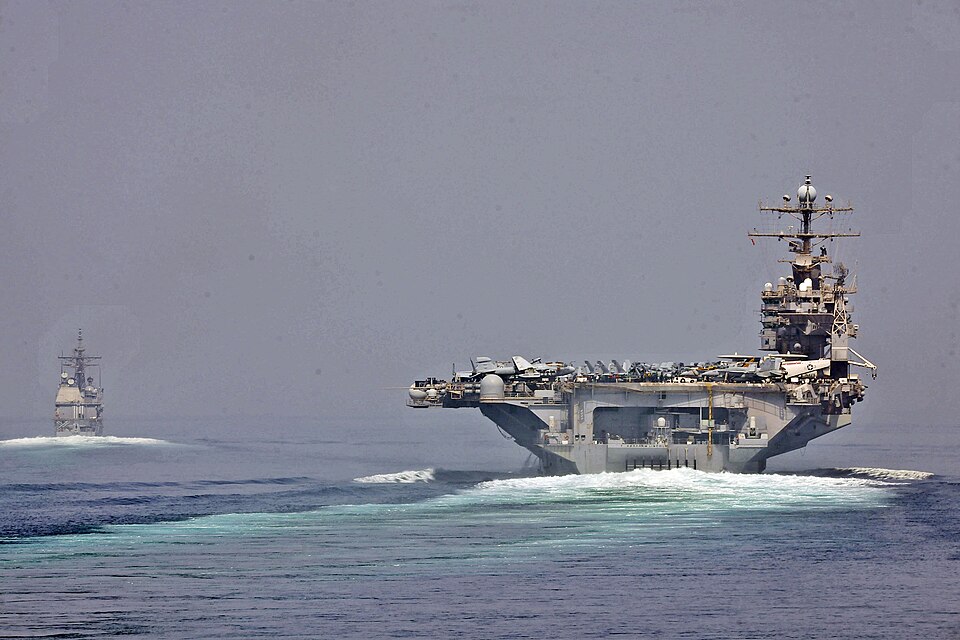
US Central Command, which oversees American military operations in the Middle East, said two US warships had been targeted by Iran before the American strikes. Centcom said it successfully evaded multiple attacks from Iran's Islamic Revolutionary Guard Corps earlier in the day. Those attacks targeted a US aircraft carrier and a guided-missile destroyer. No American troops were harmed.
Centcom claimed that the three Iranian oil tankers it struck were "part of a multi-billion-dollar shadow network that funds the IRGC and its regional proxies."
Hours before Iran's latest retaliation was reported, Defense Secretary Pete Hegseth wrote on social media: "It's simple: if Iran shoots at US ships, we will destroy (and sink) their oil tankers."
Several hours after the US strikes, Iran's IRGC said it had retaliated against six ships in the region. That included the three oil tankers in the Strait of Hormuz and three vessels the IRGC described as affiliated with the US in other areas. The IRGC said the tankers in the strait were using unauthorized routes and warned other ships not to do so.
The Strait of Hormuz has been effectively closed since the conflict began in February and has become a major point of leverage for Tehran. Iran has insisted it will not give up control over the waterway and has previously targeted vessels using a southern route through Omani waters.
The exchanges came one day after President Donald Trump dismissed the conflict as "small potatoes." He had not commented publicly on Saturday's attacks as of the BBC's reporting.