

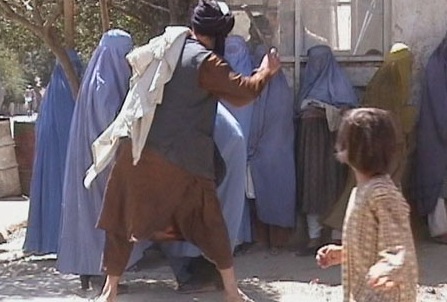
Taliban authorities have sharply increased public floggings in Afghanistan and have issued stoning sentences, although recent human rights reporting does not show that stonings have actually been carried out under the current Taliban government. The practice was previously reported in the country, but a March 2024 statement from Taliban leader Hibatullah Akhundzada signaled a return to these harsh methods. In March 2024, Akhundzada announced that the Taliban would reintroduce floggings and stonings for certain crimes, according to NPR. Since then, the Taliban has increased the frequency of public floggings.
The Afghanistan Human Rights and Democracy Organization (AHRDO) documented 2,745 individuals who were subjected to public flogging between February 2022 and April 2026, according to NPR. These figures come from the Taliban’s own public records, according to AHRDO. The United Nations also reported a sharp increase in a March 2026 report, documenting at least 1,110 public floggings during 2025. The counts were based on cases published by the Taliban's Supreme Court and social media channels. AHRDO's own report documented 634 public-flogging incidents involving the 2,745 people during the period.
Advocates believe that unrecorded events may also be occurring, such as on-the-spot floggings for violations like women not wearing proper clothing. An Afghan activist named MA shared a video with NPR reportedly showing a woman being publicly flogged in Kandahar province. MA requested anonymity due to fear of retaliation from the Taliban. Several similar videos were also posted on social media by individuals opposed to these practices. The Taliban does not allow filming in areas where such punishments occur, but some people have secretly recorded and shared the footage.
NPR was unable to independently verify the content of these videos. The Taliban did not respond to requests for comment on the matter.
According to Shaharzad Akbar, executive director of Rawadari, an Afghan human rights group, floggings are central to how the Taliban views justice and law. She said that these punishments are used as tools for controlling and repressing the population.
Samira Hamidi from Amnesty International agreed with this view. Legal experts argue that these punishments violate Afghanistan’s international legal obligations. These include the Convention against Torture and the International Covenant on Civil and Political Rights. The legal analysis was provided by a lawyer specializing in international human rights law. Amnesty International has separately said the Taliban's criminal procedure regulations institutionalize corporal punishment and torture or other ill-treatment.
She stated that any punishment that constitutes torture or degrading treatment cannot be considered lawful under international standards. Women and marginalized groups are most affected by the increase in these punishments. The AHRDO report noted that many of those punished were subjected to discriminatory charges involving conduct protected by international human rights law. These include women appearing in public without a male guardian, same-sex relationships, and extramarital behavior.
Hamidi said that women are especially vulnerable due to the wide range of restrictions imposed on them by the Taliban. Since taking power, the Taliban has issued many decrees limiting women's access to education, work, and political participation. NPR reported that the Taliban's commitment to these punishments is part of its dismantling of the Afghan legal system since taking power. Haydee Dijkstal, the international human rights lawyer who provided legal analysis for AHRDO, also said the rise in corporal punishment coincides with the lack of an independent and impartial judiciary.
Meanwhile, in another health-related development, pediatrician Rupa Narra of Doctors Without Borders discussed treating children affected by Ebola, according to a report from NPR. She highlighted the high fatality rate among young patients and the challenges involved in providing care. That separate NPR report was also published September 8.