

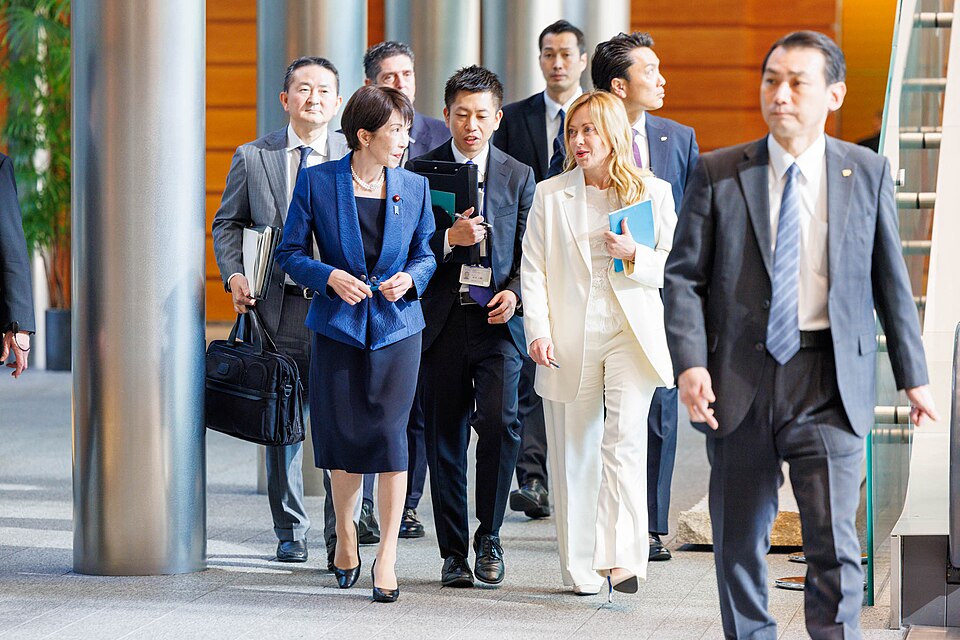
Japan’s prime minister, Sanae Takaichi, has made significant changes to the government’s top leadership following her appointment as the country's first female head of government last October. She had previously enjoyed strong public support, especially among younger voters who appreciated her direct communication style in a political landscape long dominated by men. Takaichi has kept key figures like Defense Minister Shinjiro Koizumi and Foreign Minister Toshimitsu Motegi to maintain continuity in national policy and ensure strong relationships with the United States. Both Koizumi and Motegi have previously been rivals in Liberal Democratic Party leadership politics.
She also retained Finance Minister Satsuki Katayama, who has been implementing Takaichi’s large-scale spending plans, and Economy and Fiscal Policy Minister Minoru Kiuchi, according to ABC News. In addition to these key roles, Takaichi retained veteran politician Taro Aso as LDP vice president, his brother-in-law Shunichi Suzuki as secretary-general, and several allies in senior party positions. Takayuki Kobayashi remained in charge of the LDP’s policy research council.
Maintaining strong ties with Washington is a priority for Takaichi as Japan tries to repair damaged relations with China after her comments last year suggesting that Japan might intervene militarily if China acted against Taiwan. This statement has created tension in regional economic relations and could affect trade partnerships. China strongly protested after Takaichi said in November 2025 that an attack on Taiwan could become a threat to Japan’s survival and potentially allow Japan to deploy its Self-Defense Forces.
Takaichi plans to update Japan’s security strategy documents by the end of the year to better prepare for threats from China, North Korea, and Russia. These updates include adapting to new forms of warfare involving artificial intelligence and drone technology. Japan has reached a defense-spending level equal to about 2% of GDP under government calculations, while Takaichi is pushing for further increases in defense capabilities.
A recent election victory in Okinawa by Genta Koja, a conservative candidate supported by Takaichi’s party and others, is expected to help push forward military expansion on southern islands. Koja defeated incumbent Denny Tamaki in the September 13 gubernatorial election. His victory could reduce resistance from the Okinawa government to some of Tokyo’s defense plans and the relocation of the U.S. Marine Corps Futenma air station.
Takaichi replaced ten of the eighteen ministers in her government, signaling a major shift in leadership. Hiroshi Nakatsuka from Japan Innovation Party, a junior coalition partner, was named minister of administrative reform and children policies. His appointment marked the first time a member of the Japan Innovation Party entered the Cabinet since it formed a governing partnership with the LDP.
Kazuo Yana took over as agriculture minister despite allegations that he was involved in a political funding scandal. To combat rising prices, Takaichi has proposed cutting the consumption tax on food from 8% to 1% for two years and providing direct payments to households. However, without clear funding plans, this proposal has caused division within her own party and may become an issue when parliament reconvenes in October.
The tax cut plan, which was approved by the Cabinet on Monday, has raised concerns about Japan’s already fragile financial situation. Meanwhile, U.S. Treasury Secretary Scott Bessent has urged Japan to move away from policies that contribute to low interest rates and a weak yen. Reuters reported that Bessent has also pressed Japan for greater fiscal restraint and supported higher interest rates as part of efforts to stabilize the currency.
The yen traded around 155.6 yen per U.S. dollar on Thursday afternoon, while Japanese government bonds showed slight gains, according to a report from The Japan Times.
The reshuffle leaves much of Takaichi’s foreign policy, defense and economic leadership in place while changing ministers in other areas. Japan’s official Cabinet list confirms that Motegi, Katayama, Koizumi and several other senior ministers remained in their posts.