

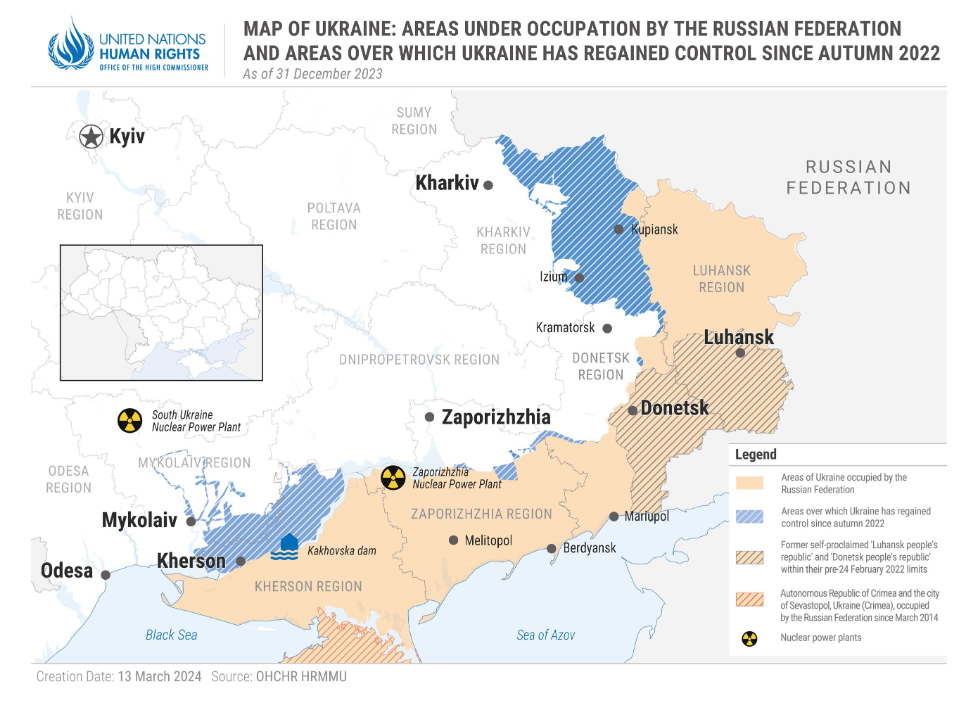
Russian authorities are holding parliamentary elections in regions that Moscow claimed to annex from Ukraine in September 2022, a move that has drawn sharp criticism from Kyiv and international observers. The voting in these areas started earlier than the nationwide election, which runs from Friday through Sunday to increase participation, with ballots already being cast since late last month. Russian authorities say the Donetsk, Luhansk, Kherson and Zaporizhzhia regions have more than 3.5 million voters, though Russia does not fully control all four regions.
Ukrainian officials and human rights groups have strongly condemned the election, calling it illegal and a violation of international law, according to ABC News. The European Commission called the voting in Russian-held Ukrainian regions another blatant violation of international law and said the European Union would not recognize the vote or its results.
In a speech on Wednesday, Russian President Vladimir Putin emphasized the importance of voting in these regions for the State Duma, the lower house of parliament. Putin also noted that Russian soldiers involved in military operations would be allowed to vote during the election.
The elections are also taking place in Crimea, which Russia annexed in 2014 in a move that is not internationally recognized. This is the first State Duma election since Russia launched its full-scale invasion of Ukraine in February 2022, and the Kremlin has presented the vote as a demonstration of national unity and support for the war.
Putin told voters that their participation would demonstrate unity and loyalty to the state, reinforcing national identity and resistance to outside pressure. Kyiv has urged other countries not to recognize the vote and warned that participation in organizing the election in occupied territory could carry criminal liability.
Russia refers to the four regions as having been reunited with Russia. Ukraine and most of the international community continue to recognize Donetsk, Luhansk, Zaporizhzhia and Kherson as part of Ukraine. Russia claimed to annex the four regions following votes held under Russian occupation in September 2022.
A coalition of nine Ukrainian human rights organizations called on residents of these areas to avoid the polls and protect their own safety. Human rights activists described how local election officials were going door-to-door in occupied areas, often accompanied by Russian troops and security forces. They reported that residents were being pressured to vote, with threats of losing jobs or benefits if they did not participate.
For example, people who rely on pensions or social assistance may be labeled as disloyal and lose access to these services if they do not vote. The conditions under which voting is taking place—amid ongoing shelling and bombardment—have been criticized as a sign of how little regard the Kremlin has for the people in these areas.
The situation has raised serious concerns about coercion and the lack of genuine democratic participation in the process. The European Union and Ukrainian authorities have said the voting conducted by Russian occupation authorities in Ukrainian territory has no legal legitimacy and will not be recognized.
The Associated Press described the inclusion of the occupied territories as part of Kremlin efforts to cement Russia's gains in Ukraine. Moscow has presented the election as a demonstration of national unity and support for Russian troops involved in the war.
Russia did not invite observers from the Organization for Security and Cooperation in Europe to monitor the parliamentary election. The European Commission said the decision disregarded Russia's commitments as an OSCE participating state.
Ukraine and the European Union have said they will not recognize voting held in the occupied Ukrainian territories or the results attributed to those areas.