

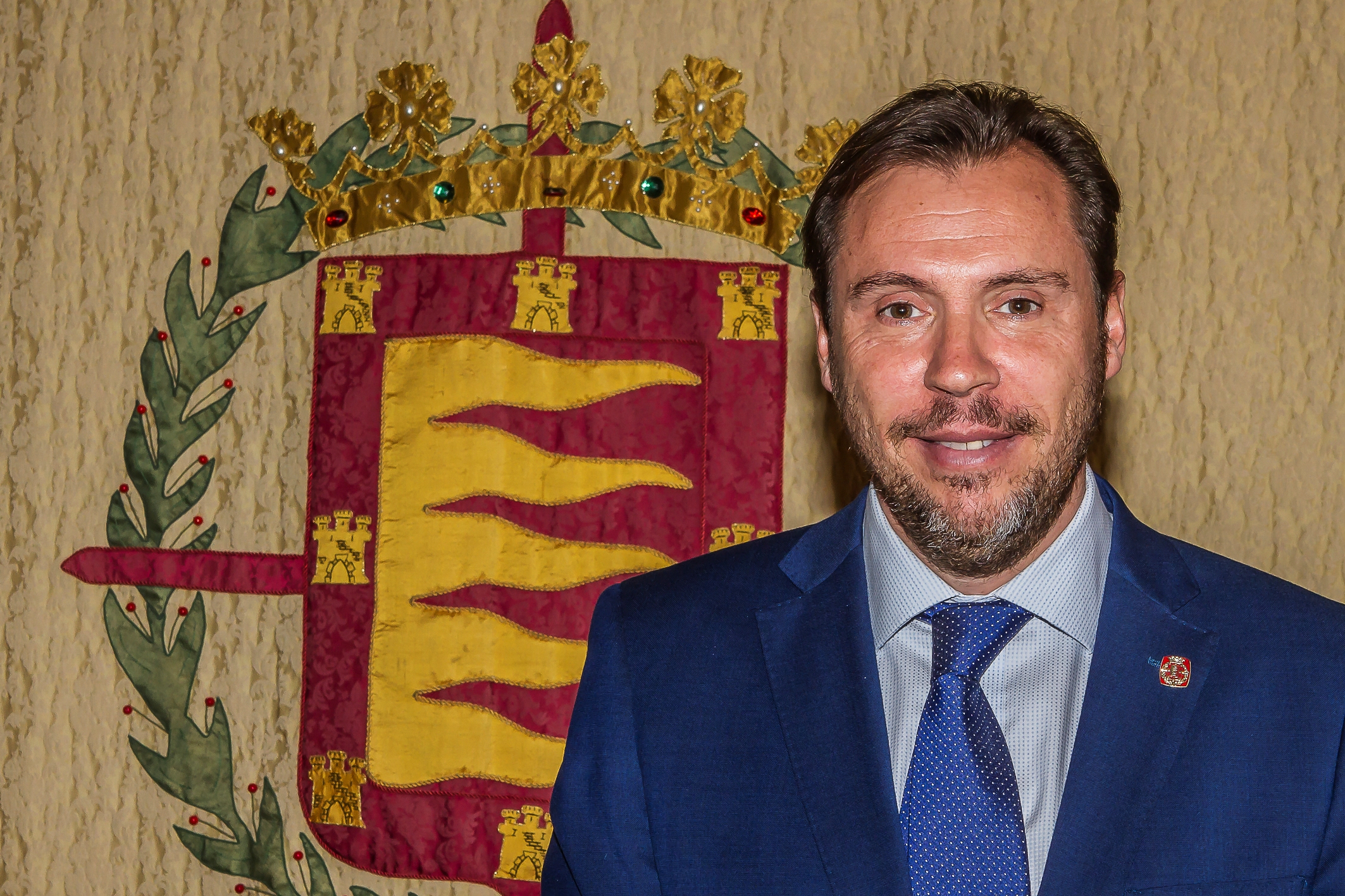
Spain's Transport Minister Óscar Puente announced his resignation on Tuesday, November 3, 2026, following a high-speed train collision that killed 69 people near the town of Urda in central Spain. His decision came six days after the disaster and followed hours of questioning by lawmakers about railway safety and the government's response.
The announcement marked a significant political development for Prime Minister Pedro Sánchez's Socialist-led government. Puente also withdrew from the upcoming parliamentary election, scheduled for November 29, saying that two deadly rail disasters in less than a year made it impossible for him to continue serving as transport minister.
Transport Minister Announces Resignation in Parliament
Puente revealed his decision during an appearance before the Permanent Deputation of Spain's Congress of Deputies. The parliamentary committee was meeting to examine the October 28 accident and the emergency measures introduced afterward.
The minister explained that he had decided to resign shortly after learning about the collision. However, he remained in office to oversee the emergency response, support victims and introduce measures intended to prevent similar disasters.
"A transport minister in a country like Spain cannot continue in office with two accidents of this severity in less than a year," Puente told lawmakers, according to Reuters.
He described his departure as a matter of political responsibility and respect for the victims. Puente acknowledged that the accidents were different and that the investigations had not established his personal responsibility for either disaster.
The minister did not specify when his departure would formally take effect. He also announced that he would not appear on the Socialist Party's candidate lists for the November 29 election.
His announcement followed demands for his resignation from opposition parties and criticism from members of the governing coalition. Prime Minister Sánchez subsequently thanked Puente for his work and praised his attention to the victims.
October 28 Collision Killed 69 People Near Urda
The latest disaster occurred on the morning of October 28 along the Madrid-Seville high-speed railway, near Urda in the province of Toledo. A Renfe passenger train struck the rear of a stationary train operated by private railway company Iryo.
The collision occurred at approximately 8:30 a.m. local time, according to information released by Spanish authorities. Both trains were traveling along one of Spain's most important high-speed passenger routes.
The two trains were carrying approximately 544 passengers. The impact caused several carriages to derail, with some falling down an embankment beside the tracks.
At least 69 people were killed, making the collision one of Europe's deadliest railway accidents in recent decades. Many others suffered injuries, and emergency services transported survivors to hospitals.
Firefighters, medical teams and rescue personnel worked through damaged carriages to reach trapped passengers. Heavy equipment was needed to assist recovery operations and remove wreckage from the railway.
The disaster prompted an extensive investigation into railway signaling, train movements and communications between drivers and controllers. Authorities have not issued a final determination of responsibility.
Safety System Failure Under Investigation
Investigators are examining a sequence of events involving the failure of a railway signaling and safety system before the collision.
According to information presented by Puente, several trains automatically stopped after a signaling failure affected the Madrid-Seville route. Controllers in Madrid subsequently assumed responsibility for authorizing train movements.
The central question concerns why a Renfe train was allowed to continue when an Iryo train remained stationary farther along the track.
Investigators estimated that the Renfe train was traveling between 160 and 200 kilometers per hour, approximately 100 to 125 mph, when the collision occurred.
The circumstances have raised concerns about procedures used when automated railway safety equipment becomes unavailable. Investigators are examining whether operators received sufficient information about the locations of other trains.
Communications between train drivers and control personnel are also under review. However, the available evidence does not establish that any individual controller or driver was solely responsible for the disaster.
Railway labor representatives have criticized attempts to blame human error before the technical investigation is complete. They argue that working conditions, equipment failures and emergency procedures must also be examined.
A union representative for Adif, Spain's state-owned railway infrastructure operator, questioned whether controllers had adequate support when safety equipment stopped functioning.
The investigation must determine how the system failed and why existing safeguards did not prevent the trains from colliding. Those findings will be important in establishing responsibility and deciding whether further reforms are necessary.
Second Deadly Rail Disaster in Spain This Year
The Urda collision followed another major railway accident in January 2026 near Adamuz, in the southern province of Córdoba.
That disaster killed 46 people when a high-speed train derailed and struck another train traveling in the opposite direction. Both incidents involved trains operated by Renfe and Iryo on the Madrid-Seville corridor.
The January accident remains under investigation. Authorities have not established that the two disasters shared the same underlying cause.
Together, the crashes have killed 115 people in less than a year, creating serious concerns about the safety of Spain's high-speed railway system.
Spain operates one of the world's largest high-speed rail networks, second only to China's. Before 2026, the network had built a strong safety record over more than three decades of operation.
The two disasters have damaged public confidence in that record and increased demands for a comprehensive review of railway infrastructure and operating procedures.
Railway workers and passenger advocates have called for stronger safety protections, improved maintenance and clearer emergency instructions for train crews.
Government Announces New Railway Safety Measures
Hours before announcing his resignation, Puente outlined a package of emergency measures designed to improve railway safety and support victims.
The government plans to restrict train operations along parts of the Madrid-Seville route until additional safety reviews are completed.
One proposed measure would limit trains to 40 kilometers per hour, or approximately 25 mph, when drivers must rely on visual observation after certain signaling failures.
The government also intends to improve working conditions inside railway control centers and increase staffing to help operators manage emergencies.
Another priority is accelerating the introduction of the European Rail Traffic Management System, a standardized technology designed to improve train signaling and supervision.
Spain has been working to expand this system across its railway network. The latest accident has increased pressure to complete the upgrades more quickly.
Puente also announced plans to introduce artificial intelligence technology that could monitor communications between train drivers and controllers.
The proposed system would identify unusual situations and potential communication problems. Officials believe it could provide another safeguard against operational mistakes.
However, the technology has not yet been shown to prevent accidents under real-world conditions on Spain's rail network. Its effectiveness will depend on testing, implementation and oversight.
The government also promised to increase compensation for victims and their families. Measures include doubling compulsory passenger insurance payments and accelerating financial assistance.
Opposition Demands Accountability Before Election
The minister's departure comes during a politically sensitive period, with Spain preparing for an early parliamentary election on November 29.
The conservative People's Party and the far-right Vox party had demanded Puente's resignation. Both criticized the government's handling of railway safety and questioned whether officials had acted quickly enough following the two disasters.
Some lawmakers from parties associated with the governing coalition also called for political accountability.
The People's Party argued that the accidents reflected broader problems within the railway system. Government representatives have emphasized that investigators must establish the facts before responsibility can be assigned.
Puente's decision to withdraw from the election removes him from the Socialist Party's upcoming campaign. It does not mean that he has resigned his membership in the party.
The accidents have become a major issue in the election campaign, placing additional pressure on Sánchez's government to demonstrate that railway safety improvements are being implemented.
Investigation Continues as Spain Reviews Rail Safety
Puente's resignation does not resolve the unanswered questions surrounding the collision. Investigators must still establish why the signaling system failed, how train movements were authorized and whether additional safeguards could have prevented the disaster.
The government must also determine how quickly the Madrid-Seville corridor can return to normal operations without compromising passenger safety.
For families who lost relatives, attention remains focused on the recovery process, compensation and accountability for the failures that led to the collision.
Spain's railway authorities now face the challenge of restoring public confidence while implementing new protections across a heavily used transportation network.
The next major developments will come from the technical investigation and the government's implementation of the announced safety measures. Puente has confirmed his decision to resign, but the date of his formal departure and the appointment of his successor have not been announced.