

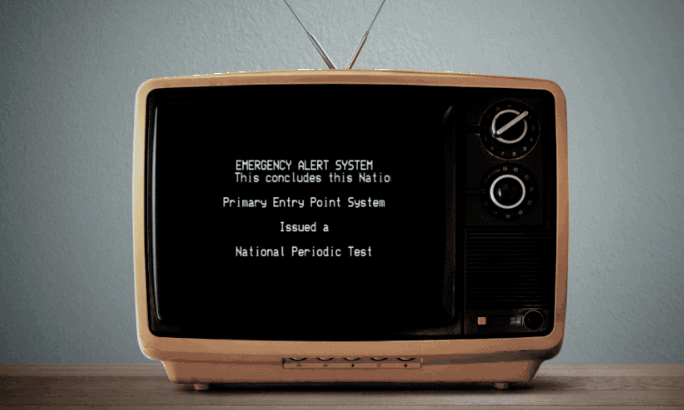
Emergency alert applications in Ukraine and Russia were targeted by cyberattacks hours apart on November 1 and 2, 2026, sending frightening but false warnings about nuclear strikes, radiation hazards and chemical attacks. The incidents disrupted digital services that civilians depend on for urgent safety information during Russia's continuing war against Ukraine.
In Ukraine, the widely used Air Alert application began distributing false notifications shortly before 11 p.m. Sunday. Russian authorities reported a separate breach of their Emergencies Ministry application early Monday, with users receiving fabricated warnings about nuclear weapons.
Authorities in both countries confirmed unauthorized interference and urged residents to rely on verified emergency information. Investigators have not established whether the two incidents were connected or whether the attackers coordinated their activities.
False Nuclear and Chemical Warnings Spread Across Ukraine
The Ukrainian incident began at approximately 10:47 p.m. local time on November 1. People using the Air Alert application received notifications claiming that dangerous radiation levels, chemical threats and street fighting had been detected in Kyiv and other regions.
One message falsely warned that Russia's Oreshnik ballistic missile was approaching. Other notifications referred to nuclear danger and urged residents to seek shelter.
The Ukrainian Air Force responded within minutes, explaining that the application appeared to have been compromised. Officials specifically denied that a radiation emergency was taking place.
The warnings were especially concerning because the application normally provides reliable information about incoming missiles, drones and other threats. Millions of Ukrainians have used it to decide when to seek shelter since Russia launched its full-scale invasion in February 2022.
The Kyiv Independent reported receiving the notifications directly, confirming that the false alerts reached ordinary users. Some warnings appeared in Russian, while others included English and Ukrainian text containing spelling and grammatical errors.
The unusual language helped raise suspicion about the messages, but the notifications appeared through a familiar application. That made them potentially more convincing than false reports circulating through ordinary social media accounts.
Ukrainian Authorities Temporarily Suspend the App
The developers of Air Alert confirmed that unauthorized individuals had interfered with the application's operation. They temporarily disabled notifications while investigating the breach and working to restore the service.
Officials also warned users not to open links included in suspicious messages. Some fraudulent notifications contained links to Telegram channels associated with individuals claiming responsibility for the intrusion.
Ukraine's Ministry of Digital Transformation said other warning methods remained available. Traditional air raid sirens and separate emergency communication channels continued operating during the disruption.
Kyiv's municipal Kyiv Digital application was also functioning normally. The distinction was important because the compromised service was not the country's only system for distributing emergency warnings.
Yurii Ihnat, a spokesperson for Ukraine's Air Force, said the cyberattack had not disrupted military command or defense operations. The affected public application operated separately from systems used to direct military activity.
By early Monday, the Air Alert developers had begun restoring normal operations. Push notifications and basic threat indicators returned, although some map functions remained temporarily unavailable while security work continued.
How Many False Alerts Were Sent?
A Ukrainian air raid monitoring service, alerts.in.ua, recorded 122 false alerts between 10:47 p.m. and 10:54 p.m. on Sunday. Its analysis included 103 false air raid warnings, five radiation warnings, five chemical threat alerts, five street-fighting alerts and four artillery warnings.
The monitoring service said none of those particular threats was genuine. It also noted that the appearance of fraudulent messages did not necessarily prove attackers had taken complete control of the underlying national alert infrastructure.
One possibility is that unauthorized individuals gained access to an administrative account capable of issuing notifications. However, investigators had not publicly established the precise method used in the intrusion.
The application's developers said they were examining the incident and implementing additional protective measures. They also stated that the application does not store users' personal information.
Air Alert was developed with support from Ukraine's Ministry of Digital Transformation and Ukrainian technology companies Ajax Systems and Stfalcon. The service had approximately 6.6 million active users in January 2026, according to information cited by cybersecurity publication Recorded Future News.
Russia Reports Similar Attack Hours Later
Russia's Emergencies Ministry reported a separate cyberattack early Monday after fraudulent messages appeared through its mobile application. Officials said the breach occurred at approximately 2:45 a.m. Moscow time and affected users across 33 Russian regions.
The notifications falsely claimed that nuclear warheads had been launched toward Russian territory. Some messages told residents to stockpile food for several weeks and shelter in basements.
The Russian ministry confirmed that the warnings were unauthorized and did not reflect an actual nuclear emergency. It described the application as a supplementary information service rather than the country's primary public warning network.
Officials said sirens, loudspeakers, television, radio and text-message warnings remained operational. The ministry began restoring the affected application and reviewing the security weakness exploited by the attackers.
Russian authorities did not publicly identify who was responsible. The incident nevertheless showed that both countries had experienced disruptions to civilian warning applications within a matter of hours.
Hacking Groups Claim Responsibility
A group identifying itself as Hitcore Corp claimed responsibility for the Ukrainian breach. Its name appeared in a fraudulent notification, and a Russian Telegram channel later reported speaking with individuals who said they were involved.
The claim has not been independently verified. Its appearance in a hacked message does not establish who actually gained access to the system.
A separate group calling itself DC8044 claimed responsibility for targeting Russia's Emergencies Ministry application. The group described itself as an independent hacking community based in Kyiv.
According to Recorded Future News, DC8044 claimed it had exploited an application programming interface, or API, used by the Russian service. The group published technical information that it said explained how the intrusion occurred.
An API allows software systems to exchange information and perform authorized functions. If attackers find a weakness in access controls, they may be able to submit information or commands that appear to originate from a trusted source.
The two claims suggest different groups may have been involved, but independent confirmation remains limited. There is no verified evidence establishing that either national government directed the attacks.
Why Emergency Alert Systems Are Sensitive Targets
Emergency applications serve a particularly important purpose in Ukraine, where Russian missile and drone strikes remain an ongoing threat. Residents often have only a short period to react after receiving warnings about approaching weapons.
A successful attack against such an application can cause disruption even without damaging physical infrastructure. False warnings may prompt people to seek shelter unnecessarily or make it harder to distinguish accurate messages from fraudulent ones.
Repeated false alerts could also weaken public confidence in a system designed to protect lives. That concern makes the reliability of emergency notifications an important part of national cybersecurity.
The November incidents demonstrate the risks of relying on a single digital service for urgent information. Ukrainian and Russian officials both stressed that other warning channels continued functioning despite the breaches.
Security specialists generally recommend protecting administrative accounts, limiting access to notification systems and monitoring unusual activity. Independent communication channels can also help authorities correct misinformation when one service becomes compromised.
Cyberattacks Coincide With End of Local Ceasefire
The incidents occurred around the end of a six-day humanitarian ceasefire in southern Ukraine. The localized agreement covered Oleshky and nearby areas of the Kherson region, rather than Mariupol as stated in some reports.
The ceasefire began October 27 following mediation involving U.S. first lady Melania Trump. Its purpose was to allow humanitarian supplies into Russian-occupied territory and help civilians leave dangerous areas.
Pope Leo XIV also appealed for humanitarian access and civilian evacuations. Ukrainian human rights commissioner Dmytro Lubinets worked with Russian representatives to coordinate the operation.
The agreement enabled the evacuation of hundreds of civilians and the delivery of essential supplies. Fighting continued elsewhere, and the temporary arrangement was not a nationwide ceasefire.
Ukraine subsequently accused Russia of using the pause to reposition military forces. Moscow did not confirm that allegation, and the two sides offered differing accounts of military activity during the agreement.
There is no verified evidence linking the humanitarian ceasefire to either cyberattack. The timing provides background to the incidents but does not establish a shared motive.
Investigations Continue After Services Are Restored
The immediate priority for Ukrainian authorities was restoring trustworthy emergency notifications while keeping alternative warning systems available. Russian officials likewise said their main public alert infrastructure remained unaffected.
Both incidents demonstrated how attackers can create public confusion by manipulating systems intended to provide authoritative safety information. The damage was informational rather than a confirmed disruption to military defenses or physical warning equipment.
Investigators still face questions about how access was obtained, whether user accounts were compromised and whether the attackers coordinated their actions. The answers could influence security improvements for emergency warning applications in both countries.
For civilians, the incidents reinforced the importance of checking official updates when unfamiliar or contradictory alerts appear. In an active conflict zone, reliable warnings remain essential even after a compromised application has been restored.