

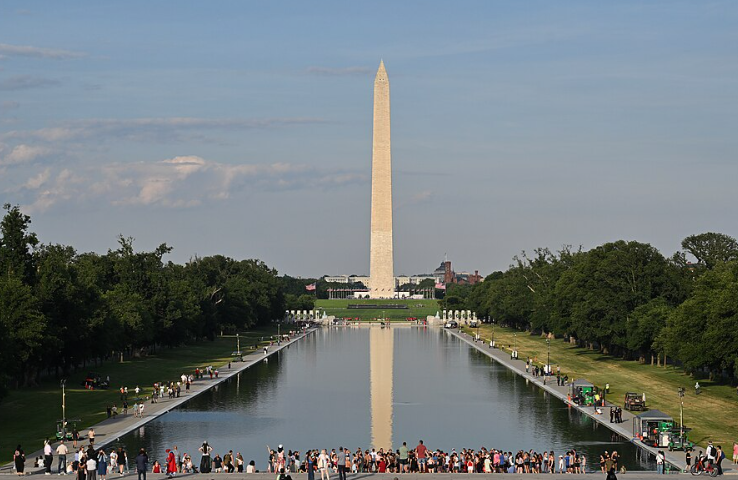
President Donald Trump delivered his closing public speech of the 2026 midterm election campaign on Monday, November 2, at the Lincoln Memorial Reflecting Pool in Washington, D.C. Speaking one day before Americans vote, Trump promoted his administration's renovation of the landmark while defending his economic record and criticizing Democratic candidates.
The appearance was an unusual choice for the final day of campaigning. Rather than traveling to a competitive state, Trump used the National Mall as a backdrop for an address that devoted considerable attention to construction projects and improvements around Washington.
The president also urged voters to support Republicans in elections that will determine control of Congress for the final two years of his current term. His remarks came after weeks of campaigning across the country, with Republicans defending their congressional majorities and Democrats seeking to gain seats.
Trump Celebrates Reflecting Pool Renovations
Trump began by discussing the restoration of the Lincoln Memorial Reflecting Pool, a major Washington landmark that had been closed for months. He praised the workers involved and described the completed repairs as an improvement to one of the capital's most recognizable public spaces.
The president had ordered renovations earlier in the year, including changes to the pool's surface and water circulation systems. He also supported a brighter blue appearance for the water, which he described as reflecting the colors of the American flag.
The project subsequently encountered serious problems. Sections of the newly installed lining began peeling, while algae blooms left parts of the water discolored and required additional cleaning.
The pool was drained again so contractors could address the damage. The extended work attracted criticism because of its cost, the speed of the original installation and the length of time the public was unable to use the surrounding area.
During Monday's speech, Trump defended the renovation and repeated his claim that vandalism had contributed to the problems. However, federal officials had previously acknowledged installation deficiencies, and the Justice Department dropped charges against a man accused of damaging the pool.
Trump described the restored landmark as evidence of his administration's commitment to improving Washington. He also discussed other projects, including a proposed triumphal arch, landscaping improvements and changes to prominent federal properties.
Although Trump announced the pool's reopening, the National Park Service had previously extended public access restrictions through November 20. The agency said additional water-quality testing and restoration work were necessary before the area could fully reopen to visitors.
President Turns to Midterm Election Message
After discussing the renovation, Trump shifted to the congressional elections and argued that Republican candidates deserved continued control of Washington. He portrayed the vote as an important judgment on his administration's policies.
Trump criticized Democratic candidates in forceful terms, describing their political positions as dangerous for the country. Those comments reflected his campaign argument rather than an independent assessment of the candidates' policies.
He also emphasized his administration's actions on immigration, taxation and trade. The president claimed that his government had accomplished more in less than two years than previous administrations had achieved over longer periods.
Those broad comparisons were not supported by a consistent measure of presidential accomplishments. Evaluating them would require comparing specific legislation, economic results and administrative actions across different historical periods.
Trump acknowledged that the party holding the White House has frequently lost congressional seats during midterm elections. He nevertheless expressed satisfaction with his party's campaign efforts and defended the administration's record.
The speech followed numerous Republican campaign events in states including Iowa and Kansas. Trump had also planned telephone-based campaign appearances to support candidates in competitive congressional races.
Michigan Senate Race Draws Attention
Michigan's Senate contest became one of the subjects of Trump's closing campaign message. The race features Republican Mike Rogers and Democratic nominee Abdul El-Sayed, a physician and former public health official.
Trump attacked El-Sayed and repeated allegations about his political associations. Claims connecting El-Sayed to extremist organizations have not been established by credible public evidence and should not be treated as verified facts.
The Michigan campaign had already experienced significant controversy before Trump's remarks. Democratic Representative Haley Stevens, who lost the party's Senate primary to El-Sayed, announced that she would support Rogers in the general election.
Her endorsement prompted criticism from Democratic officials and former campaign associates. Stevens cited concerns about El-Sayed's political associations, while his campaign disputed the characterization and continued seeking Democratic support.
The disagreement created an unusual situation in a closely watched Senate contest. It also provided Republicans with an opportunity to emphasize divisions among Michigan Democrats during the campaign's final days.
Trump used the controversy to criticize his opponents more broadly. The outcome will be determined by voters rather than by the competing claims made during the final campaign events.
Alaska Senate Election Features Two Candidates Named Sullivan
The Alaska Senate race has also attracted attention because two candidates with nearly identical names are on the ballot. Republican incumbent Senator Dan S. Sullivan is seeking another term against former Democratic Representative Mary Peltola and other candidates.
Another candidate, Daniel J. Sullivan Jr., is running without a party affiliation. He is a retired teacher and is not the same person as the incumbent Republican senator.
Alaska election officials initially attempted to remove the second Sullivan from the ballot over allegations that his candidacy was intended to confuse voters. He denied those allegations, and the Alaska Supreme Court ruled that he could participate.
The situation has added an unusual element to a competitive Senate campaign. Voters will encounter two candidates named Dan Sullivan alongside Peltola and other contenders.
The race is among the Senate contests receiving national attention because of its potential effect on congressional control. Its result will depend on Alaska's voting and ballot-counting procedures.
Economic Concerns Remain Central to the Election
Trump defended his administration's economic policies during the Lincoln Memorial appearance, including tax cuts and tariffs. He argued that his decisions had strengthened American manufacturing and improved the country's long-term financial position.
However, rising prices have remained an important concern for voters throughout the campaign. Households have faced higher costs for gasoline, groceries and other necessities, while the conflict involving Iran has contributed to uncertainty in energy markets.
The president addressed the war with Iran and defended his administration's handling of national security. His remarks came amid continuing questions about the economic and diplomatic consequences of the conflict.
Democratic candidates have focused heavily on affordability, arguing that the administration's policies have not sufficiently protected households from rising costs. Republicans have emphasized tax reductions, border security and other administration priorities.
The competing arguments have shaped congressional campaigns across the country. Individual races also involve local concerns, candidates' records and disagreements over federal spending.
Trump's remarks at the Reflecting Pool gave more attention to his Washington improvement projects than to detailed proposals addressing current household expenses. The contrast was noted by political observers who questioned whether the event addressed the concerns of undecided voters.
Reflecting Pool Project Remains Under Scrutiny
The decision to hold the speech beside the Reflecting Pool placed renewed attention on its troubled renovation. Trump had promoted the work as an example of his ability to complete public projects quickly.
The original repairs were intended to address leaks, deteriorating joints and other maintenance problems. After the new coating began peeling, contractors undertook additional work that extended the closure.
The Associated Press reported that the project's costs increased substantially from the original estimate. The administration defended the renovations as necessary improvements to a landmark visited by large numbers of people.
The dispute over vandalism became another point of controversy. Trump repeatedly blamed deliberate damage, while later federal filings identified problems with the installation process.
The National Park Service's October 19 closure notice cited continuing work involving water circulation infrastructure and testing. It established November 20 as the scheduled end of the temporary access restrictions, subject to safety requirements.
The president's ceremonial announcement therefore did not necessarily mean visitors could immediately return to every part of the site.
Campaign Ends With Control of Congress at Stake
Trump's Lincoln Memorial speech capped a campaign in which he had appeared at numerous Republican events while defending his second-term policies. The setting emphasized his interest in reshaping Washington's public spaces alongside his political agenda.
Republican and Democratic candidates continued making final appeals in competitive states and congressional districts. Both parties have concentrated substantial resources on advertising, organizing and voter outreach.
Outside political groups have also played a prominent role. Super PACs can accept unlimited contributions from permitted donors and spend independently to support or oppose candidates, although they cannot coordinate their expenditures with campaigns.
For Trump, the election will help determine the legislative environment for the remainder of his presidency. Changes in congressional control could affect federal spending, oversight investigations and the administration's ability to advance legislation.
The president ended Monday's appearance by returning to the Reflecting Pool renovation and displaying images of the landmark. The event brought together two priorities that have defined much of his public messaging: defending his administration's record and promoting changes to Washington.
The next major development will come on November 3, when voters decide congressional races and numerous state offices. The Reflecting Pool, meanwhile, remains subject to the National Park Service's published access restrictions as restoration work continues.