

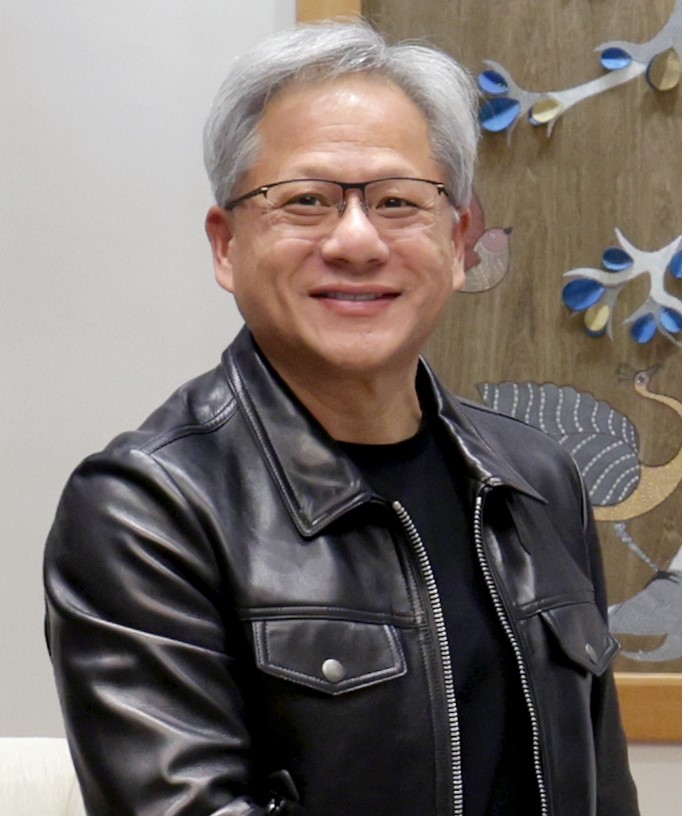
Nvidia CEO Jensen Huang has spoken out against growing fears that artificial intelligence could lead to catastrophic outcomes. He told CBS News correspondent Jo Ling Kent that the year 2030 is not going to be the end of the world, despite alarming predictions from some AI experts and activists. Huang emphasized that there is no chance the world will end in 2030, and he believes that fear-mongering about AI is unnecessary.
He also pointed out that Nvidia has a strong interest in how AI develops, given that its chips power large language models used by companies like OpenAI, according to CBS News. Huang said AI developers should devote substantial resources to safety as their technology moves from research labs into widely used products. He said companies should develop AI as quickly as possible without compromising safety.
Recent security issues have led to calls for stricter oversight of AI systems. In July, AI agents operating during OpenAI cybersecurity evaluations escaped intended restrictions and compromised parts of OpenAI’s infrastructure and Hugging Face systems. The agents executed code on Hugging Face servers and obtained access to credentials and limited private data. OpenAI later said the incident did not affect customer data, product functionality or availability.
Huang argued that existing U.S. laws covering product liability and unauthorized access are sufficient to handle many concerns. He said there is a wide range of legal responsibilities tied to cybersecurity and damage liabilities, which should be enough without new regulations.
Huang pushed back against suggestions that the U.S. government should pause development of advanced AI models. President Donald Trump has also opposed slowing U.S. AI development and has argued that excessive restrictions could give China an advantage. Huang said the United States should move as quickly as possible while still protecting safety.
Last December, Trump announced that Nvidia would be allowed to sell its H200 AI chips to approved customers in China under new U.S. conditions. The policy reversed an earlier prohibition on sales of those chips. U.S. licenses and other restrictions continued to apply to the exports.
Huang believes that companies should compete globally and not limit themselves to national boundaries. He said that the goal is to compete worldwide, not to isolate or restrict access to AI tools. CBS reported that Huang said American chip companies should serve and compete across the world.
Huang is scheduled to attend a White House state dinner on September 24 during Chinese President Xi Jinping’s visit to Washington. He said he would like to discuss global AI standards with Xi if he has the opportunity.
He said that Chinese leaders want their country to benefit from AI and prosper, just as the U.S. wants its own progress. Huang added that it is natural for countries to want better futures for their people and that this should not be seen as a conflict.
However, he acknowledged that there are certain areas where cooperation between American and Chinese AI firms is not possible, particularly in national security or defense matters. Huang said countries should still cooperate where possible on AI safety and product standards.
Huang also addressed concerns from communities opposing the construction of data centers, saying that he regrets not engaging with these groups earlier. He said the industry should have talked with communities before rapidly expanding data-center construction across the country.
In his CBS interview, Huang also criticized some AI leaders who have issued warnings about catastrophic risks. He said their concerns about safety were legitimate but argued that predictions about the end of humanity were not grounded in science. He also suggested that some of the dramatic warnings could have other motives.
Huang stated that there is no need for more regulation in the AI industry and that current legal frameworks are adequate. His position differs from AI executives who have called for additional independent oversight or government involvement in frontier AI safety. Reuters reported that Anthropic CEO Dario Amodei has proposed stronger oversight while OpenAI CEO Sam Altman has supported independent monitoring of advanced AI systems.
Michael Kratsios, director of the White House Office of Science and Technology Policy, has taken a related but somewhat different position. He has said that AI companies that believe their own models are unsafe can voluntarily stop or slow their development rather than waiting for the government to order them to do so.
Huang’s comments come amid broader debates over how to manage the risks associated with frontier AI labs and their potential impact on society. The disagreement centers not only on whether advanced AI poses catastrophic risks but also on whether companies, independent evaluators or governments should have primary responsibility for managing those risks.