

The Department of Health and Human Services has introduced new steps to decrease the use of animals in medical research. This effort marks the second time this year that HHS has announced strategies to shift toward human-based research techniques. Health Secretary Robert F. Kennedy Jr. said the department is entering a new phase in biomedical science. Kennedy emphasized that the focus is now on placing human biology at the center of scientific studies.
The Food and Drug Administration has issued a direct final rule allowing drug safety testing methods that do not rely on animals when those methods are appropriate. The rule states that alternative methods can be used when they are appropriate for evaluating drug safety.
This change supports the broader goal of moving away from traditional animal testing in favor of human-relevant models.
The initiative is part of a growing trend in the biotech industry to adopt more advanced and human-focused research methods, according to a report from STAT News.
The FDA rule changes several terms in federal regulations. References to “animal tests” and “animal studies” are being replaced with broader terms such as “nonclinical tests” and “nonclinical studies.”
The change does not ban animal studies. The FDA said traditional animal studies may still be used when appropriate. It also does not change the amount or quality of safety evidence that drug developers must provide.
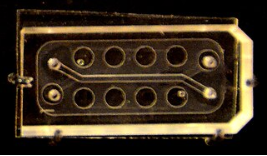
Instead, the rule makes clear that other methods may also provide acceptable evidence. These can include studies using human cells, organ-on-chip technology and computer models.
The FDA also launched a database containing 25 examples of New Approach Methodologies drawn from publicly available FDA review materials. The agency said the examples are intended to show how alternative testing methods can be used in practice.
The FDA's updated rule supports this shift by allowing for more human-based approaches in safety testing.
The announcement was part of a broader HHS effort involving several federal health agencies. HHS said its agencies have launched more than 20 initiatives since Kennedy became health secretary to expand human-based research and reduce unnecessary animal testing.
The National Institutes of Health announced more than $88 million for biomedical infrastructure projects around the country. The projects are intended to help researchers develop and validate human-based research methods.
NIH also announced plans for a laboratory at the NIH Clinical Center that will combine human organoid models with robotics, artificial intelligence and advanced data systems. Organoids are small laboratory-grown models designed to reproduce some characteristics of human organs.
The agency is also starting an effort to recruit grant reviewers with expertise in human-based science. NIH has requested public input on whether it should issue an annual report tracking the number of vertebrate animals used in NIH-funded research.
NIH has also closed its last intramural beagle laboratory. HHS said grant funding can now be used in some circumstances to retire or rehome research animals.
The Centers for Disease Control and Prevention is also reducing the size of its laboratory animal colony. HHS said the CDC has added additional reviews to determine whether proposed animal research is necessary for its public health mission.
The CDC is working to place healthy non-human primates in a qualified sanctuary. It is also conducting more than a dozen studies using alternative research methods.
The Advanced Research Projects Agency for Health is investing in artificial intelligence and computer modeling through its CATALYST program. HHS said the work is intended to improve predictions about drug safety and dosing while reducing dependence on animal testing.
This move could influence how future drugs are developed and tested across the industry. The change reflects a broader push to make research more relevant to human health outcomes.
It also aligns with growing interest in using human tissue and organ-on-chip models for testing. These newer tools may help reduce the need for animal experiments in early-stage drug development.
The new FDA rule gives researchers and drug developers more flexibility to use validated human-focused methods. Health officials say the goal is to use methods that can better predict how medicines will affect people while maintaining existing safety standards.
The direct final rule is still subject to public comment. The FDA said it could withdraw the rule if it receives significant adverse comments and continue the process through the standard rulemaking procedure.