

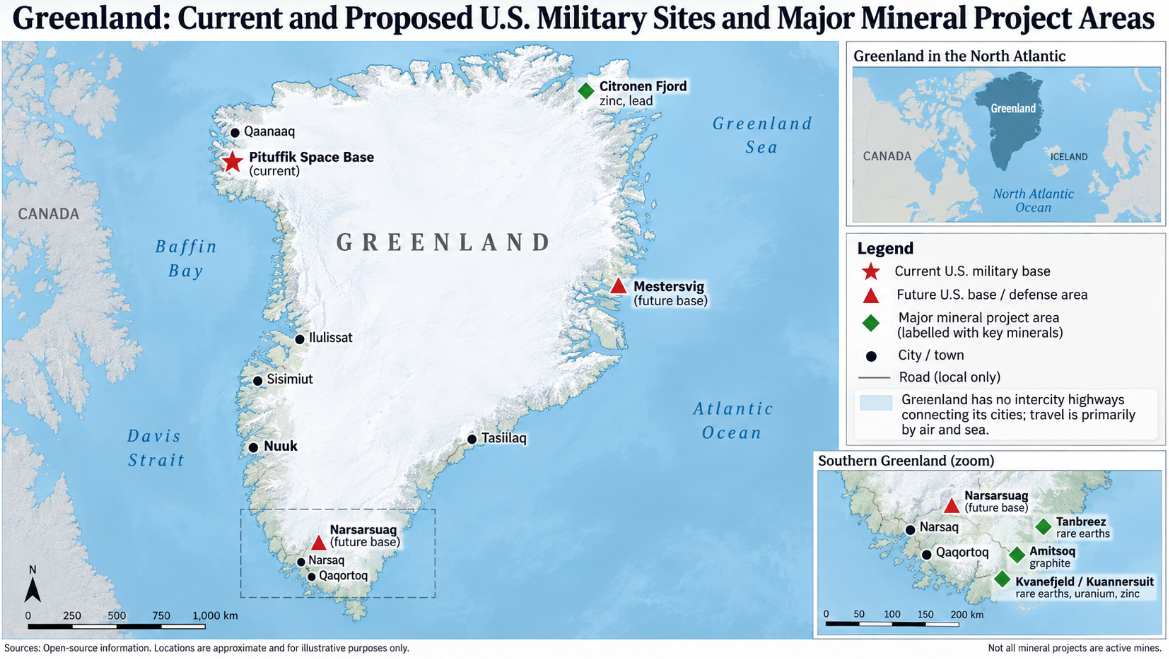
The United States, Denmark, and Greenland have come together to sign a new defense agreement that opens the door for two new military installations in the Arctic territory. This move strengthens the American military footprint in the region and builds on an existing defense agreement from 1951 that gave the United States broad military access to Greenland. The deal was finalized during a ceremony attended by US President Donald Trump, Danish Prime Minister Mette Frederiksen and Greenland Prime Minister Jens-Frederik Nielsen. Washington already operates Pituffik Space Base in the northern part of Greenland, but the new agreement allows for modernization and expansion of those activities.
The signing was described by Frederiksen as a significant step forward in long-standing cooperation between Denmark and the United States. She noted that the agreement marks a continuation of a partnership that began seventy-five years ago with an earlier defense pact.
The two new US defense areas will be located at Narsarsuaq in southern Greenland and Mestersvig on the east coast. Narsarsuaq was home to a major US military airfield during World War Two and the early Cold War. Mestersvig is currently a Danish military outpost used by the Sirius Dog Sled Patrol.
The agreement states that technical details for the two locations will be worked out jointly by the United States, Denmark and Greenland. It also provides a process that could allow additional US defense areas to be established in the future if the three governments agree.
While the deal brings an increased military presence to Greenland, it also includes provisions that address local interests and sovereignty. The agreement recognizes Greenlanders' economic, social and cultural rights and says military activities should respect hunting, fishing and other traditional activities.
The agreement has drawn criticism from some Greenlanders and European leaders who expressed concern over Trump’s public statements related to the region. Trump had previously suggested that the United States should take control of Greenland and at times declined to rule out military or economic pressure.
Despite these concerns, the signing brought an end to months of negotiations over defense arrangements in Greenland. Reuters reported that the agreement was intended in part to resolve tensions created by Trump’s previous push for US control of the island.
The US government views the Arctic region as strategically important for national security and missile defense systems. The agreement specifically refers to the possible establishment of a Golden Dome missile defense system in Greenland.
The agreement also calls for stronger NATO involvement in the Arctic. That includes additional planning, military presence, exercises and joint intelligence gathering.
The deal does not transfer sovereignty over Greenland to the United States. Greenland remains a self-governing territory within the Kingdom of Denmark and retains its right to self-determination.
Greenland’s leadership has emphasized that the arrangement brings both security and economic benefits to the island. The agreement says the United States should award contracts involving the new defense areas to Greenlandic businesses to the maximum extent possible when those companies have the ability to perform the work.
The agreement is expected to lead to more frequent military activity in the area, including training exercises and infrastructure upgrades. This marks a renewed focus on Arctic defense strategies by the United States, Denmark and other NATO members.
The United States will also be allowed to expand and modernize Pituffik Space Base. Pituffik is currently the only active US military base in Greenland and plays an important role in missile warning, missile defense and space surveillance.
US military aircraft will receive broad rights to fly over and land in Greenland under the agreement. American military vessels and forces will also have access between designated defense areas.
The agreement includes restrictions intended to prevent countries outside the Western alliance from gaining a sensitive military or strategic foothold in Greenland. Denmark and Greenland agreed to consult closely with the United States over security risks involving military facilities and certain investments.
Greenland is also important because of its large mineral resources, including rare earth elements. However, the new defense agreement does not give the United States ownership of Greenland's minerals or automatic rights to mine them.
The agreement has no expiration date and can only be changed by mutual consent. It also addresses the possibility that Greenland could become independent in the future.
If Greenland becomes independent, the agreement says the new country would assume the defense obligations in the pact and would remain in NATO or apply for membership if necessary.
The agreement was signed in New York on September 22 during the United Nations General Assembly. It will enter into force after Denmark and Greenland complete the required parliamentary procedures.