

Pennsylvania’s measles outbreak continues to grow, with health officials reporting hundreds of infections across much of the state and a fifth measles-associated death. The Pennsylvania Department of Health said the latest person who died was an unvaccinated resident of Lancaster County, one of the areas hit hardest by the outbreak. By September 30, the state had recorded 943 confirmed cases across 39 counties, up sharply from earlier in the year.
The outbreak has been especially severe in Lancaster and Mifflin counties, including agricultural communities where vaccination rates are lower than the statewide average. Pennsylvania reported that only four of its confirmed cases involved people who were appropriately vaccinated for their age. State officials have continued holding temporary vaccination clinics in affected communities while urging residents to check whether they have received the recommended measles, mumps and rubella vaccine.
Measles is one of the most contagious infectious diseases known. It spreads through the air when an infected person coughs, sneezes or breathes, and the virus can remain in the air for as long as two hours after an infected person has left an area. According to the Centers for Disease Control and Prevention, up to 90 percent of susceptible people who are close to someone with measles can become infected.
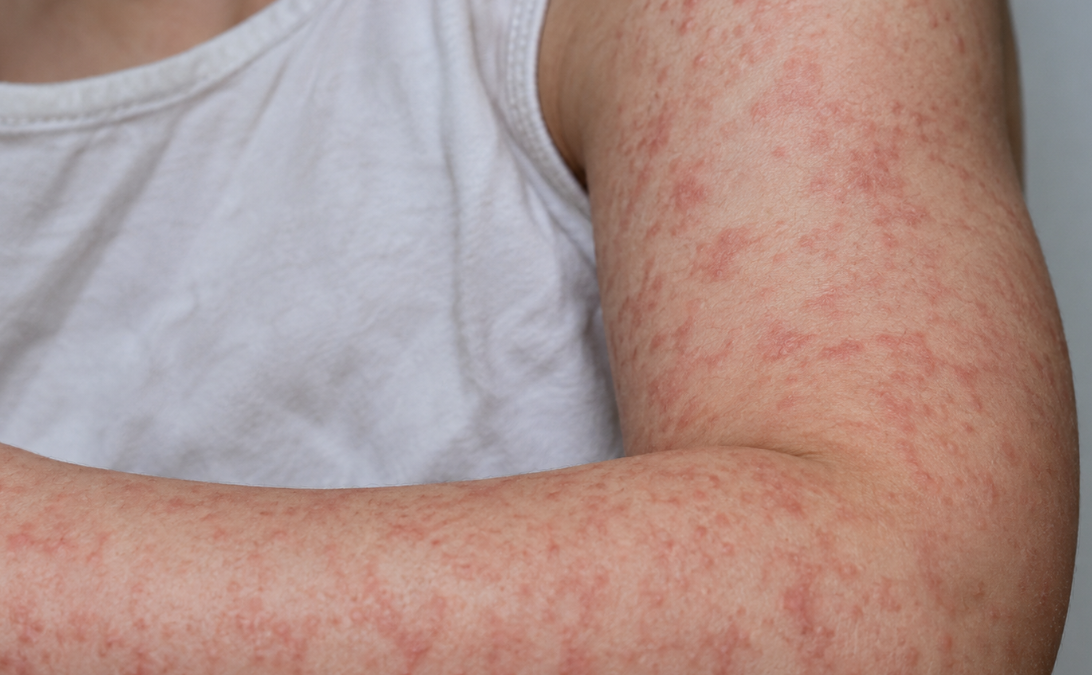
A person with measles can spread the virus before realizing they are sick. People are generally considered contagious beginning about four days before the characteristic rash appears and continuing for about four days afterward. Symptoms usually begin seven to 21 days after exposure and can include fever, cough, runny nose, red or watery eyes and a rash that typically begins on the face before spreading across the body.
The long period between exposure and symptoms can make outbreaks difficult to contain. Public health investigators must interview infected people and determine where they traveled while contagious. Officials may then issue public exposure notices for locations such as stores, airports, medical offices, restaurants or other places where an infected person spent time.
Travel has become an important concern because measles can move quickly between communities. A person may board an airplane, attend a large event or visit another state before developing a rash. Health officials recommend that travelers make sure they are protected against measles before leaving home, particularly when visiting an area experiencing an outbreak or traveling internationally.
The CDC generally recommends two doses of the MMR vaccine for children and other people who need full protection. Pennsylvania health officials say two doses are about 97 percent effective at preventing measles. People who are uncertain about their vaccination history can contact a doctor or other health care provider to determine whether they need vaccination.
The vaccination recommendation is especially important for people planning international travel. Measles continues to circulate in many countries, and international travel has frequently introduced the virus into U.S. communities. Once measles reaches an area with a large number of unvaccinated people, it can spread rapidly.
The Pennsylvania outbreak is part of a much larger national resurgence. The CDC reported 3,659 confirmed U.S. measles cases as of September 24, making 2026 the worst year for measles in the United States in decades. Cases have been reported across most of the country, although Pennsylvania has experienced one of the largest active outbreaks.
Health officials also believe the actual number of infections may be higher than the confirmed total. Some people with measles may not seek medical treatment, while others may have mild or unusual symptoms that are never tested. Confirmed case numbers therefore represent infections that have been identified and reported to public health authorities.
Measles is often remembered as a childhood illness involving fever and a rash, but complications can be serious. The virus can cause pneumonia, severe dehydration and inflammation of the brain. Young children, pregnant women and people with weakened immune systems face a greater risk of severe disease. Even otherwise healthy people can require hospitalization.
Pennsylvania has recorded five measles-associated deaths during the 2026 outbreak. All five people were unvaccinated, according to state officials. The deaths are the first measles-associated fatalities reported by Pennsylvania in approximately 35 years.
There is currently a disagreement between Pennsylvania and federal health officials over how some measles deaths should be counted nationally. Pennsylvania uses medical records, laboratory results and other information when identifying a measles-associated death. The CDC has shifted toward using death certificate information collected through the National Center for Health Statistics for its national count.
That difference has resulted in Pennsylvania reporting more measles-associated deaths than appear in the CDC’s national total. U.S. Health and Human Services Secretary Robert F. Kennedy Jr. has questioned whether all of the Pennsylvania deaths should be attributed to measles, while Pennsylvania officials have defended the state’s methods for identifying measles-associated fatalities. Federal and state health officials have been working to establish more consistent reporting standards.
For people considering travel to Pennsylvania, health officials have not recommended avoiding the state entirely. Instead, they emphasize knowing whether a traveler has immunity and paying attention to public exposure notices. Someone who has received the recommended doses of MMR vaccine has a much lower risk of becoming infected than someone who is unvaccinated.
People who believe they have been exposed to measles should contact a health care provider before walking into a medical office or emergency room. Calling ahead allows medical workers to take precautions so an infected person does not expose other patients in a waiting room. Depending on vaccination status and the timing of the exposure, health officials may recommend vaccination, immune globulin or monitoring for symptoms.
Unvaccinated people who have been exposed may also be asked to avoid schools, workplaces or public gatherings during the period when they could become infectious. Local health departments use those measures to reduce the chance that a single case will produce another group of infections.
Pennsylvania health officials continue to expand vaccination efforts in communities affected by the outbreak. Thousands of MMR doses have been administered through state health centers and temporary clinics since the outbreak began. Officials say vaccination remains the most effective way to prevent additional cases, hospitalizations and deaths as the outbreak continues.