

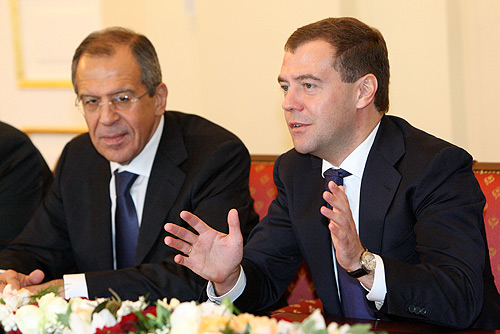
The United States cancelled a traditional group photograph at the G20 foreign ministers' meeting in Atlanta on Friday, October 30, 2026, after European diplomats refused to appear alongside Russian Foreign Minister Sergei Lavrov. The dispute exposed continuing divisions over Russia's war in Ukraine as senior officials gathered to discuss global security and economic problems.
U.S. Secretary of State Marco Rubio, who is hosting the two-day meeting, decided to remove the photograph from the official schedule. American officials said the decision was intended to prevent the disagreement from overshadowing the diplomatic discussions.
The cancelled photograph, commonly called a family photo at international summits, normally brings participating ministers together for a formal portrait. This year's event became controversial because several governments did not want their representatives photographed with Lavrov.
According to Reuters, approximately one-third of the participating delegations opposed the photograph, including representatives from Canada and Australia. European officials had considered arranging two separate pictures, one including Lavrov and another without him, before the United States cancelled the session entirely.
European Ministers Reject Photo With Lavrov
German Foreign Minister Johann Wadephul publicly defended the decision not to participate in a photograph with his Russian counterpart. He said diplomatic engagement remained necessary but warned against suggesting that relations with Moscow had returned to normal.
Wadephul emphasized that governments must still discuss disagreements directly, even when their political positions differ sharply. His comments reflected Europe's attempt to maintain diplomatic communication without appearing to accept Russia's continued military campaign in Ukraine.
Polish Foreign Minister Radosław Sikorski also welcomed the cancellation. He told journalists in Atlanta that other officials shared his reluctance to stand alongside Lavrov for an official photograph.
British Foreign Secretary Ed Miliband was among those opposing the photo session. The British government said its longstanding policy of avoiding direct bilateral engagement with Russian ministers remained unchanged.
Miliband later addressed Lavrov during the meeting and criticized Russia's continued attacks on Ukraine. He urged participating countries to increase economic and diplomatic pressure on Moscow in support of a lasting peace.
The objections did not prevent Lavrov from attending the formal discussions. Russia remains a G20 member, and its foreign minister participated alongside representatives from other major economies.
Rubio Calls for Cooperation Despite Disagreements
Rubio opened the Atlanta meeting by urging participating governments to work together despite growing international divisions. He described the current environment as one marked by interconnected economic and geopolitical crises.
The United States is chairing the G20 during 2026, with the Atlanta gathering intended to prepare for a leaders' summit scheduled for December in Miami.
The meeting includes discussions about international trade, energy supplies, food security and threats to major transportation routes. American officials have identified freedom of navigation as a particularly important priority.
Several areas have attracted attention, including the Strait of Hormuz, the Red Sea, the Black Sea and the South China Sea. Disruptions in these regions can affect oil shipments, commercial transportation and global supply chains.
The war in Ukraine remains another major obstacle to cooperation. European governments continue supporting Kyiv, while Russia rejects Western accusations concerning its military campaign.
Rubio's decision to cancel the photograph allowed the meeting to proceed without forcing ministers into a public confrontation over their participation in a ceremonial event.
However, the underlying disagreements remain unresolved. The G20 includes countries with sharply different positions on Russia, Ukraine, international sanctions and the use of military force.
Ukraine War Continues to Divide G20 Members
Russia launched its full-scale invasion of Ukraine in February 2022, beginning a war that has caused extensive destruction, widespread displacement and major international economic disruption.
European governments have imposed sanctions on Russia and provided financial and military assistance to Ukraine. They have also repeatedly called for Moscow to end attacks on civilian infrastructure and participate in negotiations toward a settlement.
The dispute in Atlanta followed renewed Russian missile and drone attacks against Ukrainian cities. European officials cited the continuing violence as a reason not to participate in an official photograph with Lavrov.
Ukraine is not a permanent G20 member, although it has participated in previous international meetings as an invited guest. It was not invited to the Atlanta gathering.
American officials said the invitation list was limited to formal G20 members and participating organizations. The decision attracted additional attention because Russia was represented while Ukraine was absent.
Lavrov's attendance was itself noteworthy. The Russian foreign minister has made relatively few visits to NATO member countries since the 2022 invasion and the sanctions imposed afterward.
Russia's Foreign Ministry said he would use the meeting to advocate reforms of international economic institutions and promote Moscow's vision of a world with several competing centers of power.
The ministry also complained about delays in obtaining visas for members of the Russian delegation, although those issues were resolved before the gathering.
Trump's Russia Policies Add to Diplomatic Tensions
The dispute occurred against a backdrop of changing relations between Washington and Moscow under President Donald Trump.
European governments have criticized recent American decisions involving sanctions and economic cooperation with Russia. Those concerns include Washington's decision to waive certain sanctions and an agreement involving purchases of Russian diesel fuel.
Ukraine has also objected to the changes, arguing that continued economic pressure is necessary to encourage Moscow to end the war.
Supporters of diplomatic engagement maintain that communication with Russia is important for addressing military conflicts and international economic instability. European critics argue that easing pressure without substantial Russian concessions could weaken efforts to secure an acceptable peace agreement.
The disagreements have complicated attempts to establish a common position among G20 members. Decisions involving the war in Ukraine remain especially difficult because Russia participates directly in the organization.
The controversy also comes shortly before the U.S. midterm elections and the planned December G20 leaders' summit. European governments are watching how Washington approaches its relationship with Moscow during both events.
South Africa's Absence Raises Additional Questions
Russia's participation was not the only disagreement surrounding the Atlanta meeting. South Africa, a founding G20 member and the group's 2025 president, was absent from the gathering.
South African officials said their country had not voluntarily withdrawn. They maintained that Pretoria remained entitled to participate equally in G20 activities.
The dispute follows months of tension between the Trump administration and South Africa. The United States did not participate at the highest level in meetings hosted by South Africa during its G20 presidency.
Some participating countries expressed concerns about South Africa's exclusion. Its absence added another diplomatic complication to an already difficult meeting.
The G20 was established to promote international economic cooperation among major developed and emerging economies. Its members represent a substantial share of the world's economic activity, making the organization an important forum for addressing financial and trade problems.
Although the group was originally focused on economic policy, its meetings increasingly involve security disputes that affect global markets and international stability.
The presence of governments with competing interests makes agreement difficult, particularly when discussions involve armed conflicts or sanctions affecting other participating countries.
G20 Talks Continue Without Traditional Photograph
The cancellation did not stop the Atlanta meeting from proceeding. Foreign ministers continued their scheduled discussions, including efforts to address transportation security and economic disruptions linked to international conflicts.
The United States hopes the gathering will produce practical areas of cooperation before the December leaders' summit. However, significant disagreements over Ukraine, Iran, trade restrictions and regional security remain.
The photograph dispute demonstrated the limits of diplomatic symbolism at a time when participating governments disagree over fundamental security questions.
European representatives were prepared to meet Lavrov across the negotiating table but rejected a formal image that could suggest normal diplomatic relations.
The Atlanta talks are scheduled to continue through Saturday, October 31. Whether the participating governments can agree on meaningful measures will depend on their ability to work through disputes that extend far beyond the cancelled photograph.