

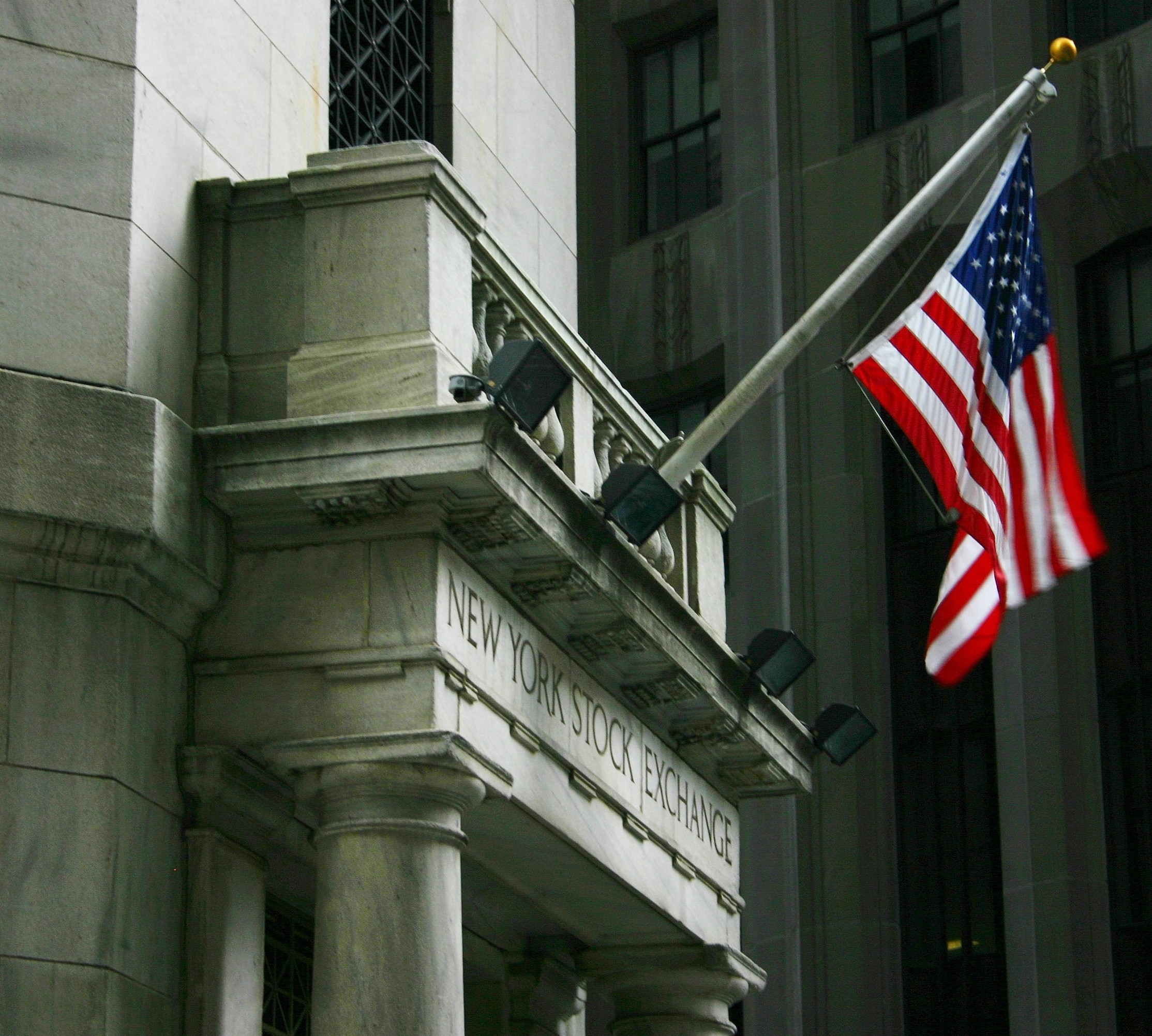
U.S. stocks suffered another sharp decline on Friday, November 20, 2026, as a widespread sell-off in artificial intelligence companies sent Wall Street into correction territory. The Nasdaq Composite plunged 5.3%, erasing its remaining gains for the year, while the S&P 500 and Dow Jones Industrial Average each fell more than 10% below their recent record highs. The losses capped a difficult week in which investors increasingly questioned the enormous spending and valuations associated with artificial intelligence.
The S&P 500 dropped 265.44 points, or 3.7%, to close at 6,910.39. The Dow Jones fell 949.73 points, or 1.9%, finishing at 48,147.33. The Nasdaq suffered the largest percentage decline among the three major indexes, losing 1,261.47 points to close at 22,617.73.
The downturn was especially severe for semiconductor companies and businesses connected to the construction of AI data centers. Nvidia, Broadcom, Micron Technology, and Advanced Micro Devices were among the companies affected as investors moved away from technology stocks.
Wall Street Records One of Its Worst Weeks of 2026
Friday's losses completed a week of substantial declines across the American stock market. The Nasdaq Composite lost 10% during the five trading sessions, while the S&P 500 fell 8.6% and the Dow declined 8%.
The S&P 500 recorded its seventh consecutive losing session, its longest such stretch since February 2020. All three major indexes experienced their worst weekly percentage declines since April 2025, when the Trump administration's tariff announcements caused widespread market uncertainty.
A market correction generally occurs when an index falls at least 10% from a recent high. The S&P 500 crossed that threshold after declining from its October 6 record, joining the Dow and Nasdaq in a broader market retreat.
The Nasdaq also slipped into negative territory for 2026, finishing Friday approximately 2.7% below its level at the beginning of the year. Its decline marked a sharp reversal for technology companies that had previously helped drive much of Wall Street's gains.
Despite the widespread losses, the performance of individual companies varied considerably. Investors continued to distinguish between businesses heavily dependent on AI spending and companies with more established sources of revenue.
Nvidia Leads Decline in Semiconductor Stocks
Nvidia was among the hardest-hit companies as investors reassessed the outlook for artificial intelligence infrastructure. Its shares fell approximately 14% on Friday, extending a prolonged period of weakness.
The company has faced uncertainty since Jensen Huang resigned as chief executive earlier in November following disclosures about his personal relationships. Nvidia's board subsequently rejected calls for his reinstatement and began searching for a permanent replacement.
Friday brought another complication when reports emerged that the Securities and Exchange Commission was examining Nvidia's accounting practices. Reuters reported that two people familiar with the matter described an investigation involving potential accounting issues.
The existence of an investigation does not establish wrongdoing. Nvidia had not publicly been found responsible for accounting violations in connection with the reported inquiry.
The combination of leadership uncertainty, regulatory scrutiny, and broader market concerns added pressure to Nvidia shares. The company's stock has lost substantial value despite continuing to report strong demand for its AI processors.
Other semiconductor companies also experienced sharp declines. Broadcom fell approximately 12% on Friday, while the wider semiconductor index dropped more than 10%.
The retreat extended to companies supplying equipment and infrastructure for AI development. Corning, which produces optical materials, and Bloom Energy, which provides electricity-generation technology, were among the businesses caught in the selling.
Strong Nvidia Earnings Fail to Reassure Investors
The market downturn occurred despite another strong financial report from Nvidia earlier in the week.
The chipmaker reported approximately $115.8 billion in quarterly revenue, more than double its total from the same period a year earlier. Demand for advanced processors used in artificial intelligence remained strong, and the company issued an optimistic revenue forecast.
Nevertheless, investors appeared increasingly concerned about whether technology companies could sustain their enormous infrastructure investments. Building AI data centers requires expensive processors, electricity, cooling equipment, networking systems, and specialized facilities.
Some analysts believe that AI spending will continue expanding but may grow more slowly than investors previously expected.
That distinction matters because many technology companies have been valued on expectations of rapid future growth. Even profitable businesses can experience falling share prices when investors reduce their expectations for future earnings.
Baird market strategist Michael Antonelli told CBS News that investors were beginning to reject the assumption that AI companies could continue spending without meaningful limits.
The change in expectations has affected companies throughout the technology supply chain, including chipmakers, cloud computing businesses, and energy providers.
Anthropic's Historic IPO Faces Immediate Test
Another major development was the stock market debut of Anthropic, the company behind the Claude artificial intelligence assistant.
Anthropic completed its initial public offering on Thursday, November 19, in one of the largest public listings in financial history. The company priced its shares at $83, raising approximately $81 billion through the offering.
Shares initially surged as investors welcomed the opportunity to buy stock in a major AI developer. The debut briefly pushed Anthropic's market valuation to approximately $2 trillion.
However, enthusiasm faded during Friday's technology sell-off. Anthropic shares dropped 8.5% to close at $88.91, after trading as low as $83.05 during the session.
The stock narrowly avoided falling below its $83 offering price. Its decline demonstrated how quickly investor sentiment had changed, even toward a company that had attracted exceptional interest during its public debut.
Anthropic's listing surpassed the previous record established by SpaceX earlier in 2026. SpaceX shares had also experienced considerable volatility following their own public offering.
The two companies operate in different industries, but their stock market performances illustrate the challenges facing newly public businesses with unusually large valuations.
Investors Shift Toward More Established Businesses
Not every company suffered equally during the market decline. Some consumer-oriented businesses demonstrated greater resilience as investors reconsidered the risks associated with rapidly growing technology companies.
Walmart reported strong quarterly results and raised its outlook for sales and earnings. Its performance suggested that consumer spending remained relatively stable despite the turbulence in financial markets.
Investors also showed interest in businesses whose earnings were less dependent on large-scale AI investments.
Reuters reported that the median company in the S&P 500 had gained nearly 7% during 2026, even as the overall index showed only a small increase for the year. That difference reflects the considerable influence of the largest technology companies on major market benchmarks.
When highly valued technology shares decline sharply, they can pull down an index even when many smaller companies perform relatively well.
The selling also affected overseas markets, particularly in countries with large semiconductor industries. Asian technology companies faced pressure as investors responded to uncertainty surrounding American AI spending.
Consumer Confidence Improves Despite Stock Market Losses
The market turmoil contrasted with more encouraging economic information released during the week.
The University of Michigan reported that its consumer sentiment index rose to 51.5 in November from 48.0 in October. The increase indicated that Americans had become somewhat less pessimistic about economic conditions.
Lower gasoline prices and expectations about future business conditions contributed to the improvement. However, consumer confidence remained relatively weak by historical standards.
Bond markets also responded to the stock market decline. Investors increased their demand for U.S. Treasury securities, pushing bond prices higher and yields lower.
The benchmark 10-year Treasury yield declined during the week as investors sought assets generally considered safer during periods of market uncertainty.
The Federal Reserve's future interest-rate decisions remain another concern for investors. Policymakers must balance persistent inflation risks against signs of economic weakness and financial market instability.
Changes in borrowing costs could influence both consumer spending and the financing of expensive technology projects.
Questions Remain About the AI Investment Boom
The November sell-off has renewed debate about whether artificial intelligence companies can generate enough revenue to justify their market valuations.
Supporters of the technology argue that AI will continue transforming industries and creating opportunities for businesses. They point to growing adoption of AI software, demand for advanced computing systems, and strong financial results from leading technology companies.
More cautious investors question whether the expected profits will arrive quickly enough to support the industry's current spending. The construction of increasingly expensive data centers has made that issue especially important.
A correction does not necessarily indicate that an economic recession or prolonged bear market will follow. Financial markets can recover from steep declines, although additional losses remain possible.
For investors, the immediate concern is whether technology companies can demonstrate that their AI investments will produce sustainable earnings.
Wall Street will be watching upcoming inflation data, Federal Reserve statements, and corporate earnings reports for signs that conditions are stabilizing. Following Friday's losses, the Nasdaq stands below its starting level for 2026, while the S&P 500 and Dow remain in correction territory.