

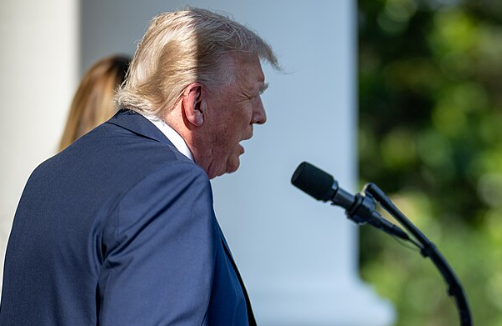
President Donald Trump threatened to impose heavy taxes on American companies building artificial intelligence data centers overseas during a White House news conference on Friday, November 20, 2026. The president said he wants the facilities constructed in the United States rather than in foreign countries, warning that businesses pursuing international projects could face substantial financial penalties. However, his administration has not released a formal proposal explaining how the restrictions would work.
The announcement comes as technology companies invest heavily in the infrastructure needed to develop and operate increasingly powerful artificial intelligence systems. These facilities require enormous amounts of electricity, advanced computer chips, and specialized cooling equipment. Trump's comments introduce another potential complication for an industry already facing questions about its spending, environmental impact, and future profitability.
The president made his remarks after returning from a diplomatic trip to Asia. He argued that keeping data center construction in the United States was important for maintaining the country's technological advantage over China.
Trump Calls for Data Centers to Remain in America
During the briefing, Trump said his administration would not support American companies moving major data center investments outside the country.
"We're not going to allow our companies to build data centers outside of our country," Trump told reporters.
He also threatened what he described as a "tremendous tax" on businesses that ignored his warning. The president compared the situation to the movement of semiconductor manufacturing overseas, arguing that the United States had suffered economic consequences from losing production capacity.
According to Reuters, Trump's comments were intended to strengthen America's position in its competition with China over artificial intelligence technology. The administration considers advanced computing infrastructure an important component of economic development and national security.
Trump acknowledged that he had not previously discussed the proposed restrictions with his staff. He provided no information about potential tax rates, the companies that would be covered, or the legal authority his administration might use.
That uncertainty makes it difficult to determine whether the announcement will become an enforceable policy. Any new federal tax would generally require congressional legislation, while other possible restrictions could involve existing executive or regulatory powers.
Global Technology Companies Face Uncertainty
Several major American technology companies already operate data centers across multiple continents. Their international facilities support cloud computing, business software, communications, and artificial intelligence services.
Companies frequently build data centers near the customers who depend on them. Shorter distances between users and computing facilities can improve response times, particularly for financial transactions, online services, and applications requiring rapid processing.
International operations also help businesses satisfy requirements governing where certain information must be stored. Some countries impose restrictions on transferring sensitive personal or commercial data across borders.
Data center operators such as Equinix and Digital Realty maintain extensive overseas networks. Their facilities serve customers who require computing infrastructure in specific geographic markets.
A broad restriction on foreign construction could complicate expansion plans for these businesses. It might also affect American cloud providers competing with companies headquartered in Europe, Asia, and other regions.
However, the potential impact depends on details that have not been announced. Existing overseas facilities, planned projects, joint ventures, and foreign subsidiaries could be treated differently under any eventual policy.
Administration Tightens Restrictions on Advanced AI Chips
Trump's comments follow another significant development involving American technology exports.
On November 16, the Commerce Department introduced restrictions designed to prevent companies in China and other targeted countries from accessing advanced American computing technology through overseas data centers.
The rules address situations in which foreign customers rent computing power from facilities located in countries that can legally purchase advanced American chips. Such arrangements can potentially provide access to restricted technology without physically importing the equipment into China.
The Associated Press reported that the new regulations require certain overseas data centers to identify their customers and comply with additional licensing requirements. The changes cover particular transactions involving countries considered at greater risk of unauthorized technology transfers.
The administration has increasingly focused on preventing advanced AI processors from reaching restricted users through indirect arrangements.
Unlike Trump's newly announced tax threat, these export controls are part of a formal regulatory action. The distinction is important because the rules governing overseas computing access have already been issued, while the proposed tax remains an undeveloped policy idea.
Public Opposition to Data Centers Creates Political Challenges
Trump's effort to encourage domestic construction comes at a time when many American communities are resisting new data center projects.
Residents have expressed concerns about electricity prices, water consumption, noise, and the use of land for industrial-scale facilities. Large projects can require substantial upgrades to local power networks, creating disputes over who should pay for the additional infrastructure.
An Associated Press-NORC survey conducted with the Energy Policy Institute at the University of Chicago found that approximately six in ten Americans supported limiting the construction of new data centers.
A separate Associated Press voter survey found that roughly three-quarters of voters in the 2026 midterm elections opposed having a new data center built in their own community.
Opposition crossed traditional political divisions and became an issue in several election campaigns. Candidates raised questions about whether promised jobs and tax revenue justified the potential costs to nearby residents.
Trump has taken a different approach, arguing that communities should negotiate financial benefits rather than reject development altogether.
He encouraged local officials to seek tax revenue, lower utility bills, educational funding, and other concessions from companies proposing large facilities.
The president's position creates a challenge for technology businesses. Companies may face pressure to build domestically while encountering resistance from the communities where they hope to locate their facilities.
AI Spending and Stock Market Volatility
The announcement arrived during another difficult trading session for American technology stocks.
Investors have become increasingly concerned about the enormous amounts of money being spent on artificial intelligence infrastructure. Much of that investment involves purchasing advanced processors, constructing facilities, and securing reliable electricity supplies.
The S&P 500 has declined considerably since the November 4 election period, reflecting several overlapping concerns about corporate valuations, technology spending, and economic conditions.
NBC News reported that growing political opposition to data centers has become another issue for investors evaluating the industry's expansion plans. However, the market decline cannot be attributed solely to Trump's latest remarks.
Technology companies have faced pressure over whether the revenue generated by AI services will eventually justify their capital investments. Some businesses have reported strong demand, but questions remain about the timing and size of future profits.
New restrictions on international construction could introduce additional costs or limit companies' flexibility in choosing locations.
At the same time, greater domestic investment could benefit certain American construction firms, equipment suppliers, and regional economies. The actual effects would depend on how a policy is written and implemented.
Data Center Expansion Raises Economic Questions
The administration argues that domestic AI infrastructure can create construction jobs, attract private investment, and strengthen America's technological position.
Building a major data center requires electricians, engineers, construction workers, and specialized contractors. Operating the facility also creates permanent jobs, although staffing requirements vary considerably between projects.
The financial benefits to surrounding communities depend on local tax arrangements, employment opportunities, and the cost of supporting infrastructure.
Some communities may receive substantial property tax revenue. Others could face higher electricity or infrastructure expenses if utilities and local governments do not recover the full costs from developers.
International construction presents a different set of considerations. Companies often select foreign locations because of available energy supplies, proximity to customers, or access to growing markets.
Requiring those investments to remain in the United States could benefit some domestic businesses while making certain international services more expensive or difficult to provide.
These competing considerations make the details of any proposed tax especially important.
Congress and the White House Face Next Decisions
The president's announcement also comes as Congress considers legislation addressing energy infrastructure and the rapid growth of data centers.
On November 19, the Senate approved legislation intended to accelerate permitting for energy projects while addressing the costs associated with expanding electricity supplies. The measure now requires consideration by the House of Representatives.
Trump praised the legislation as a way to encourage construction and support the country's growing energy requirements.
However, that measure is separate from his newly announced threat to penalize companies building data centers overseas.
As of November 20, the administration has not specified a proposed tax rate, identified a timetable, or released legislation establishing the threatened penalties. Companies therefore have no definitive guidance about how the president's remarks might affect existing international investments.
The next development will depend on whether the White House turns the warning into a formal proposal and how Congress, technology companies, and affected communities respond.