

The United Nations COP31 climate summit ended on Sunday, November 22, 2026, without an overarching agreement on how countries should strengthen their response to climate change. Negotiations in Antalya, Turkey, broke down after nearly two weeks of discussions and approximately 50 hours of overtime.
Disagreements over fossil fuels and financial assistance for developing countries prevented delegates from adopting the proposed Antalya Pact. Although several smaller agreements were reached, the absence of a major political declaration represented a significant setback for international climate diplomacy.
The conference became the longest United Nations climate summit on record.
Deep Divisions Over Fossil Fuels
One of the central disagreements involved whether the final agreement should explicitly address the future use of coal, oil and natural gas.
At COP28 in Dubai in 2023, countries agreed to support a transition away from fossil fuels in energy systems. That agreement represented an important milestone in international climate negotiations.
However, governments have struggled to build upon that commitment. Several fossil fuel-producing countries opposed language in the Antalya Pact that would establish stronger expectations for reducing reliance on their energy exports.
Some delegations argued that cutting greenhouse gas emissions should not necessarily require countries to abandon fossil fuels altogether. Their position allows greater emphasis on technologies designed to capture carbon emissions.
The European Union and several developing countries rejected that approach. They argued that an international climate agreement must directly address the primary sources of greenhouse gas emissions.
Irish Climate Minister Darragh O'Brien, speaking on behalf of the European Union, described the omission of fossil fuels from the proposed agreement as unacceptable.
Panama and France also helped organize opposition to the draft, receiving support from countries across several regions.
International Tensions Complicate Negotiations
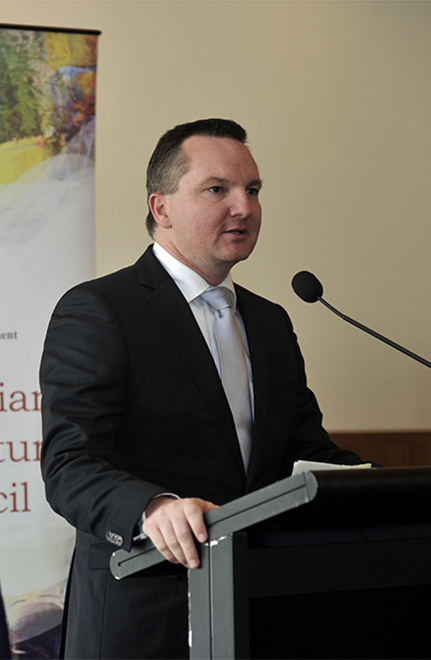
Australia's climate and energy minister, Chris Bowen, served as president of negotiations alongside COP31 President Murat Kurum, Turkey's environment minister.
Bowen acknowledged that international political tensions had made reaching an agreement exceptionally difficult. Governments arrived at the conference facing economic uncertainty, international conflicts and concerns about energy security.
Kurum ultimately acknowledged that the proposed agreement lacked the necessary support to be adopted.
United Nations climate conferences generally operate through consensus. This means objections from individual countries or negotiating groups can prevent the adoption of major decisions.
The absence of an official United States delegation also changed the diplomatic environment.
The United States had previously played an important role in international climate negotiations. However, the Trump administration withdrew the country from the Paris Agreement, and no official American delegation attended COP31.
The absence left other governments attempting to resolve longstanding disagreements without the involvement of one of the world's largest economies and greenhouse gas emitters.
Climate Financing Remains a Major Obstacle
Disputes over financial assistance contributed to the breakdown of negotiations.
Developing countries have repeatedly argued that wealthier nations should provide more funding to help them adopt cleaner energy technologies and protect communities from extreme weather.
Many poorer countries face growing costs associated with floods, droughts, rising sea levels and other climate-related challenges. Their governments often have limited resources available to respond.
Another concern involves the structure of international climate financing. Developing countries have criticized the reliance on loans instead of grants because borrowing can increase existing national debt.
These concerns reflect a broader disagreement over how responsibility for addressing climate change should be distributed.
Developing countries frequently point to the historical emissions of industrialized nations. Wealthier governments, meanwhile, face domestic economic and political pressures over additional international spending commitments.
Negotiators in Antalya were unable to resolve these differences within the proposed overarching agreement.
Some Climate Agreements Survived
Despite the failure of the Antalya Pact, COP31 did not end without any progress.
The United Nations Framework Convention on Climate Change confirmed that delegates adopted decisions concerning climate finance, adaptation and a fair transition toward cleaner energy systems.
Adaptation involves preparing communities for climate-related changes that are already occurring or are expected in the future. A fair energy transition seeks to protect workers and communities affected by changes in energy production.
Countries representing approximately half of the global economy also expressed support for a goal of increasing electrification to 35 percent by 2035 or achieving that target earlier.
Increasing electrification can help reduce direct fossil fuel consumption when electricity is generated from low-emission sources.
These developments provide areas for continued international cooperation, even though governments failed to agree on the summit's central political declaration.
The outcome also leaves previous international climate commitments in place. The failure to adopt the Antalya Pact does not cancel the Paris Agreement or the fossil fuel transition language adopted in Dubai.
Calls Grow for Changes to Climate Negotiations
United Nations Secretary-General António Guterres expressed disappointment following the breakdown of negotiations.
He emphasized that disagreements among governments do not change the scientific evidence concerning global warming or the risks associated with continued greenhouse gas emissions.
UN climate chief Simon Stiell also acknowledged the need to improve the international negotiating process.
The difficulties in Antalya have renewed discussions about whether the current consensus-based system can effectively address increasingly complex international disagreements.
Some advocates of procedural reform argue that alternative decision-making methods could prevent a small number of countries from blocking widely supported proposals. Others maintain that consensus protects national sovereignty and encourages governments to remain committed to negotiated agreements.
Changing those procedures would present its own diplomatic challenges.
Turkish President Recep Tayyip Erdoğan said on Monday that the conference had established a foundation for future discussions despite the absence of a final pact.
Governments must now continue implementing existing climate commitments while addressing the unresolved disputes over emissions reductions, fossil fuels and financial assistance before the next United Nations climate conference.