

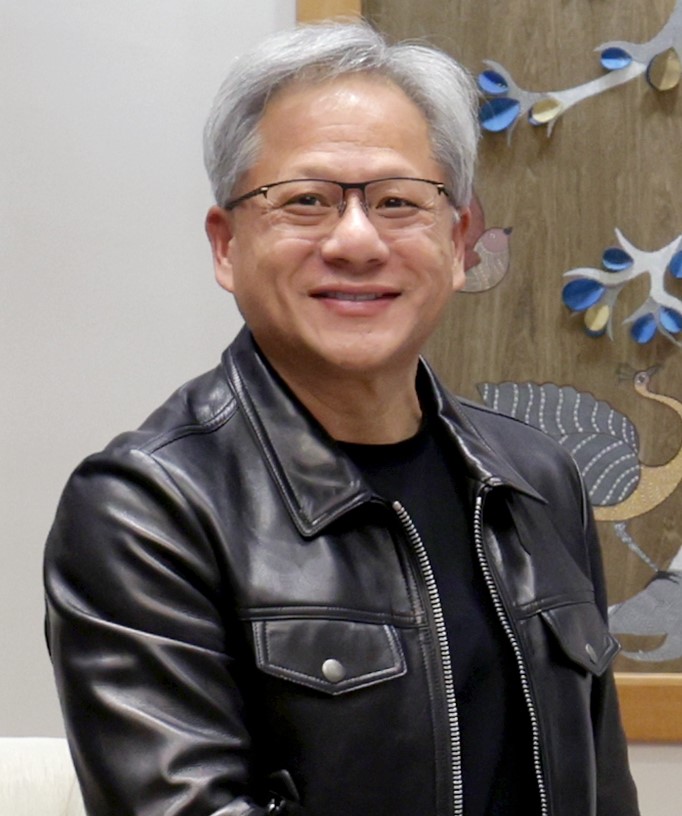
Nvidia reinstated Jensen Huang as president and chief executive officer on Monday, November 23, 2026, less than two weeks after his resignation amid controversy surrounding his personal conduct. The decision followed intervention from President Donald Trump, support from technology industry leaders and discussions between Huang and the company's board.
The board unanimously approved his return as chief executive and board member. Nvidia shares closed 31.5 percent higher following the announcement, recovering a substantial portion of the market value lost since Huang's departure.
However, investigations into the circumstances surrounding his resignation remain ongoing, and several lawmakers have questioned the decision to restore him to leadership.
Nvidia Board Reverses Earlier Decision
Huang resigned on November 12 following reports of extramarital relationships, including one involving a businesswoman suspected by American authorities of having connections to Chinese intelligence.
The allegations concerning foreign intelligence activities have not been established in court. Beijing has denied the spying allegations.
Nvidia previously said Huang's personal conduct was inconsistent with its corporate standards. His departure created considerable uncertainty for a company that has become central to the global artificial intelligence industry.
Chief Financial Officer Colette Kress temporarily assumed responsibility for leading the company while the board considered potential successors.
As recently as November 17, Nvidia board chairman Harvey Jones said the company did not intend to restore Huang to his former position.
That position changed following further discussions with Huang and consultations with senior American government officials.
In its official announcement, Nvidia said the board was satisfied with Huang's openness during those discussions and his ability to lead the company. It also expressed confidence that his return did not present a national security risk.
Jones will remain chairman of the board, while Kress will continue serving as chief financial officer.
Trump Takes Credit for Huang's Return
President Donald Trump publicly supported Huang's reinstatement and acknowledged his involvement in discussions surrounding the board's decision.
During an interview with CNBC, Trump said his intervention played an important role in securing Huang's return. He also expressed confidence that restoring Huang to leadership would benefit Nvidia and the broader American economy.
Nvidia confirmed that its board received guidance from senior government officials before reaching its decision. However, the company did not disclose the full details of those communications.
Support for Huang also came from technology executives and investors concerned about the company's future without its longtime leader.
A petition requesting his reinstatement attracted more than 180,000 signatures, according to Reuters. Tesla chief executive Elon Musk was among those supporting his return.
The board's reversal has raised questions about the relationship between corporate governance and government influence, particularly when companies operate in industries considered important to national security.
National Security Investigation Continues
Although Nvidia has expressed confidence in Huang's return, the company has not ended its investigation into reports that he was targeted by a foreign intelligence operation.
A committee consisting entirely of independent board members will continue overseeing that investigation with assistance from outside legal counsel.
Huang has agreed to cooperate with the investigation.
Nvidia has also established a National Security and Export Control Committee to oversee risks associated with international trade restrictions and national security requirements.
The committee will receive assistance from legal advisers and specialists with relevant national security experience.
American lawmakers from both major political parties have raised concerns about Nvidia's reinstatement decision.
Republican Senator Pete Ricketts emphasized that Huang's return does not eliminate the company's responsibility to address questions about export controls and potentially diverted computer chips.
Democratic Senate Minority Leader Chuck Schumer also criticized Trump's involvement in the decision.
The controversy comes amid continuing efforts by American authorities to prevent restricted advanced semiconductors from reaching unauthorized customers in China.
Nvidia Shares Surge Following Announcement
Investors responded positively to Huang's reinstatement, sending Nvidia's shares sharply higher during Monday's trading session.
The stock finished the day with a gain of 31.5 percent, adding nearly $1 trillion to the company's market capitalization. The increase returned Nvidia to second place among the world's most valuable publicly traded companies, behind Apple.
However, the gains did not fully reverse the losses recorded following Huang's resignation.
Nvidia supplies advanced computing hardware used to train and operate artificial intelligence systems. Its products support major technology companies, research institutions and businesses developing new applications.
Huang co-founded Nvidia in 1993 and helped transform it from a graphics technology business into a leading supplier of advanced computing systems.
His lengthy involvement with the company helps explain why his unexpected departure generated significant concern among investors and business partners.
Nvidia Expands Into Brain-Computer Interface Technology
Separately from the leadership controversy, Nvidia is expanding its involvement in medical technology through a collaboration with brain-computer interface developer Paradromics.
The companies announced their technical partnership on November 23. Their work aims to improve computing systems that translate neural activity into communication for people with severe speech impairments.
Brain-computer interfaces use implanted or external sensors to detect signals associated with intended movements or communication. Computer systems then process those signals to generate usable outputs.
Wired reported that a Michigan woman named Mary has received a Paradromics brain implant that supports speech decoding. The existing system requires substantial external electronic equipment.
Paradromics intends to use Nvidia's Jetson computing modules to reduce the size of that equipment. The company will also use Nvidia's Holoscan software to process neural signals with minimal delay.
The research aims to make communication systems more portable and practical for everyday use. Future improvements could also allow users to communicate through more expressive synthetic voices.
However, these systems remain under development, and their widespread availability will depend on further clinical research and regulatory requirements.
Huang Faces Continued Scrutiny
Huang's reinstatement restores leadership continuity at a company whose technology supports much of the expanding artificial intelligence industry.
Nevertheless, his return does not resolve the questions surrounding his resignation, the company's export controls or the influence of government officials on the board's decision.
Nvidia must now demonstrate that its strengthened oversight procedures can address those concerns while maintaining its position in the technology industry.
The independent investigation into the reported foreign intelligence operation remains active, and Nvidia has not announced when its findings will become available.