

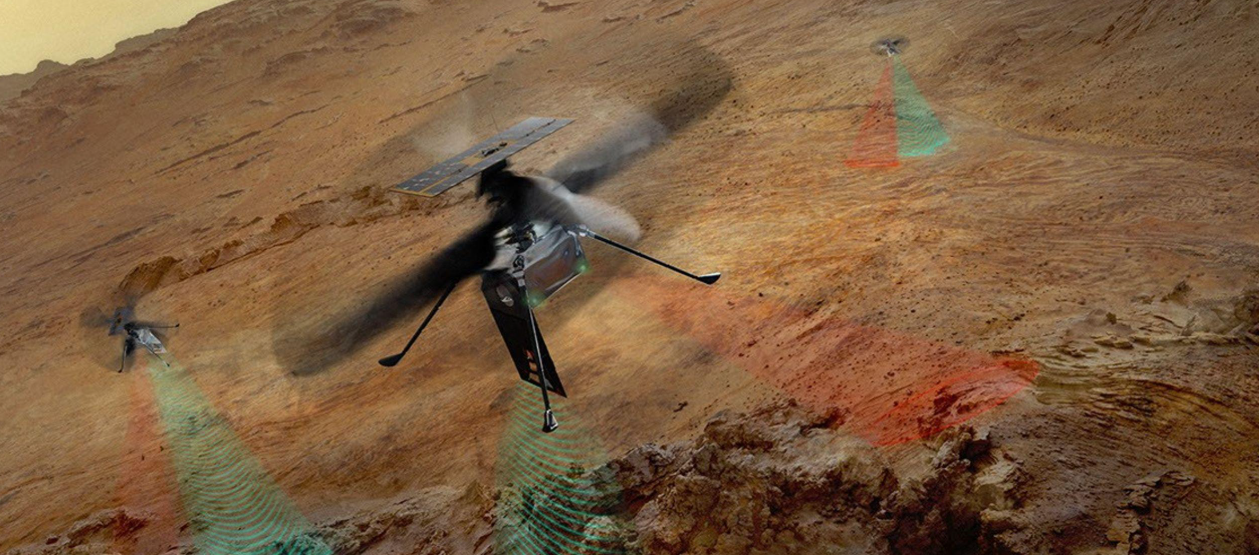
NASA has completed a major design review for its Space Reactor-1 Freedom mission, bringing the agency closer to testing nuclear electric propulsion in deep space. Announced on November 24, 2026, the latest engineering decisions support a planned launch in late 2028. The spacecraft will also transport three robotic helicopters designed to investigate the surface of Mars.
The uncrewed mission combines a technology demonstration with scientific exploration. If successful, it will help NASA develop more capable spacecraft for future missions, including those supporting human exploration of Mars.
NASA Moves Toward a Defined Spacecraft Design
Engineers and specialists gathered at NASA's Glenn Research Center in Cleveland in October to review the mission. Participants included representatives from the Department of Energy and private companies involved in spacecraft development.
The review established several important design choices while leaving other engineering questions open. NASA is still determining the final electrical output of the reactor, its operating duration, and the number of cooling panels required.
The project is led by program director Steve Sinacore. He described the mission as an opportunity to establish technology that subsequent nuclear-powered spacecraft could build upon.
Combining Nuclear Energy With Solar Power
Conventional spacecraft frequently rely on sunlight to generate electricity. That approach becomes less practical as spacecraft travel farther from the Sun or operate in environments where sunlight is unavailable.
Nuclear electric propulsion offers an alternative. A fission reactor produces heat that can be converted into electricity to operate electric thrusters. These engines produce relatively small amounts of thrust but can operate efficiently over extended periods.
SR-1 Freedom is intended to demonstrate this technology during interplanetary travel. NASA's current mission overview describes a power conversion system rated at 20 kilowatts of electricity, although final power requirements remain under evaluation.
Solar panels will also provide electricity during portions of the journey. The combined approach will allow engineers to evaluate reactor performance without relying on continuous nuclear operation throughout the mission.
Managing Heat and Protecting Spacecraft Equipment
NASA has shortened the structure separating the reactor from the main spacecraft. Improvements in radiation protection have made this change possible, reducing the complexity and weight of the vehicle.
Managing waste heat presents another engineering challenge. Unlike equipment operating on Earth, spacecraft cannot rely on surrounding air to carry heat away.
Johns Hopkins University's Applied Physics Laboratory has received a $39.3 million NASA contract to develop the reactor's cooling system. The laboratory will work with Advanced Cooling Technologies to produce equipment that releases unwanted heat into space.
The spacecraft will also receive upgraded communications equipment capable of transmitting information over the considerable distances separating Earth and Mars.
Three SkyFall Helicopters Will Explore Mars
The scientific payload builds on the accomplishments of Ingenuity, NASA's pioneering Mars helicopter. Ingenuity completed 72 flights, demonstrating that controlled, powered flight is possible in the planet's thin atmosphere.
SkyFall will carry three more advanced aircraft, developed through a collaboration between NASA's Jet Propulsion Laboratory and AeroVironment. Each helicopter is expected to weigh approximately six pounds.
The aircraft will carry cameras, radar, and environmental monitoring instruments. Scientists intend to investigate buried ice, examine geological formations, and gather information about Martian weather.
The helicopters will also help identify promising locations for future exploration. Finding accessible water ice could be especially valuable because future astronauts might use locally available resources rather than transporting everything from Earth.
SkyFall will attempt an unusual arrival procedure. Instead of deploying from a rover or conventional landing platform, the aircraft will separate from their descending carrier and fly to the surface independently.
Reactor Testing Will Continue Beyond Earth Orbit
NASA plans to begin operating the reactor after SR-1 Freedom has departed Earth orbit. Engineers will monitor the initial demonstration before transitioning the spacecraft to solar power for its cruise toward Mars.
Following delivery of SkyFall, NASA intends to restart the reactor and gather further performance measurements. The experiment will provide information about operating nuclear-powered spacecraft far from Earth.
The current mission schedule calls for an initial encounter with Mars in 2029. NASA's SkyFall mission overview identifies fall 2030 as the planned landing period, following a second approach to the planet.
Preparing for Future Human Exploration
SR-1 Freedom is a technology demonstration rather than a mission carrying astronauts. Its findings could support the development of future spacecraft capable of transporting equipment and supplies across the solar system.
NASA also expects the program to inform Lunar Reactor-1, a separate initiative intended to provide dependable electricity for future operations on the Moon. Nuclear surface power could support equipment during extended periods of darkness when solar generation is limited.
The agency still faces substantial engineering, testing, and integration work before launch. With the spacecraft's basic design taking shape, the next stages of development will focus on completing its remaining systems and meeting the late 2028 launch target.