

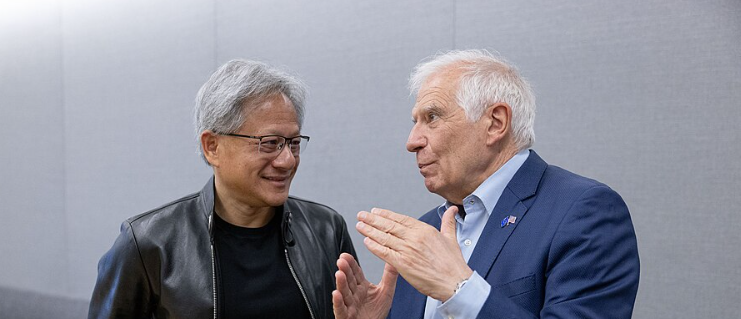
Jensen Huang has returned to Nvidia as president and chief executive officer following a brief departure that raised questions about workplace conduct, corporate governance, and national security. Employees gathered at the company's headquarters in Santa Clara, California, on Monday, November 23, 2026, to welcome back the executive who helped establish Nvidia in 1993.
Videos circulating online showed hundreds of employees applauding and chanting Huang's name. However, the enthusiastic reception did not reflect the views of everyone working at the semiconductor company.
Huang's reinstatement has divided employees and raised concerns among lawmakers about corporate accountability. His return also comes as several investigations involving Nvidia remain active.
Nvidia Board Reverses Its Earlier Decision
Nvidia announced Monday that its board of directors had voted unanimously to reinstate Huang as chief executive, president, and board member.
The announcement represented a significant reversal from the board's position less than a week earlier. During Nvidia's November 17 earnings announcement, board chairman Harvey Jones indicated that the company did not intend to bring Huang back.
Nvidia had also begun searching for a permanent replacement, while chief financial officer Colette Kress served as interim CEO.
Following additional discussions with Huang and senior government officials, the directors determined that his return was appropriate. Jones expressed confidence in Huang's leadership and thanked Kress for managing the company during the transition.
Kress will continue serving as chief financial officer, while Jones will remain chairman.
The reinstatement ended a period of uncertainty over who would lead one of the world's most influential technology businesses.
Employees Express Mixed Reactions
Huang received considerable support from employees, investors, and prominent figures within the technology industry following his departure.
An open letter advocating his reinstatement attracted more than 200,000 signatures, including approximately 10,000 current Nvidia employees, according to TechCrunch.
However, interviews with employees suggest that significant disagreements remain within the company.
WIRED reported that some workers questioned whether Huang's business accomplishments should outweigh concerns about his personal and professional conduct.
Other employees expressed frustration over the message that reinstating a powerful executive could send to workers who are expected to follow the same corporate policies.
The contrasting reactions illustrate a difficult challenge for Nvidia. The company must address employee concerns while maintaining the confidence of investors and customers who strongly associate its success with Huang.
Workplace Conduct Allegations Draw Attention
The controversy has also brought renewed scrutiny to Huang's management practices.
An investigation published by The New York Times examined court records and interviewed current and former Nvidia employees. Some described occasions when Huang reportedly insulted or embarrassed workers in front of their colleagues.
The reporting also raised concerns about whether employees felt comfortable bringing complaints to management.
Separately, employees have questioned the influence of Huang's family members within the organization. His daughter, Madison Huang, holds a prominent position at Nvidia, and some workers have alleged that her management practices resemble those attributed to her father.
A spokesperson for Jensen Huang disputed certain former employee allegations, describing them as false.
The reported workplace incidents have not all been independently established, and the presence of family members in executive positions does not itself demonstrate misconduct.
Huang Acknowledges Mistakes During Staff Meeting
Huang addressed employees on Tuesday, November 24, during his first companywide meeting since returning as chief executive.
Reuters reported that Huang acknowledged violating parts of Nvidia's code of conduct and making serious mistakes. The information came from a person familiar with the meeting.
He also told employees that he was attending therapy and expressed appreciation for the opportunity to return.
His comments followed earlier promises to improve his leadership. However, the company has not publicly detailed every change Huang intends to make or established how those changes will be evaluated.
For employees concerned about workplace accountability, Nvidia's response will involve more than Huang's personal statements. The company's policies, complaint procedures, and independent oversight will also remain important.
President Trump Supports Huang's Return
President Donald Trump publicly welcomed Nvidia's decision to reinstate Huang and acknowledged communicating with the company's board.
Trump has emphasized Nvidia's importance to American competitiveness in artificial intelligence. Its advanced processors are widely used in systems that train and operate AI models.
The president's involvement has nevertheless raised questions about the relationship between government officials and the leadership decisions of publicly traded companies.
California Attorney General Rob Bonta expressed concern about whether political intervention could affect impartial enforcement of federal laws. California authorities are separately examining matters involving Nvidia.
Huang thanked the administration for its assistance in addressing national security concerns during his meeting with employees.
National Security Investigation Remains Open
Huang's earlier departure followed reports of extramarital relationships, including one involving a Chinese businesswoman suspected by American intelligence officials of having connections to Chinese intelligence.
Those suspicions should not be confused with an established finding of espionage or wrongdoing by Huang.
Nvidia's directors said they received government input supporting their assessment that his reinstatement presented no national security risk. However, that assessment did not end the company's existing investigations.
A committee of independent directors is continuing to examine the reported foreign intelligence effort involving Huang, with assistance from outside legal counsel.
Nvidia has also established a separate committee responsible for national security and export control oversight. The company is seeking a chief compliance officer who will report to a board committee.
These measures are particularly significant because restrictions on advanced semiconductor exports have become central to American technology policy.
Huang Defends Nvidia's Leadership Structure
The recent disruption has also renewed questions about Nvidia's preparations for an eventual leadership transition.
During Tuesday's staff meeting, Huang reportedly defended the company's relatively flat management structure. He argued that its existing executives can manage different areas of the business without creating additional layers of authority.
He also expressed opposition to conventional succession planning, suggesting that it could introduce unnecessary hierarchy.
The remarks come after Nvidia's board spent part of November attempting to identify a potential successor.
Although Huang's approach has accompanied decades of commercial growth, the recent leadership interruption demonstrated the practical importance of preparing for an unexpected executive departure.
Congressional Hearings Scheduled for December
Huang's reinstatement has not removed the requirement for him to answer questions from lawmakers.
He is expected to participate in congressional proceedings on December 1 involving House committees responsible for intelligence, foreign affairs, and relations with China.
The Senate Banking Committee has also scheduled a public hearing for December 3 titled Protecting America's AI Advantage: Oversight of U.S. Export Controls.
Huang is listed as a witness in his capacity as Nvidia's president and chief executive officer.
The upcoming hearings will provide lawmakers with an opportunity to examine semiconductor export restrictions and national security concerns. Meanwhile, Nvidia's independent investigations will continue despite Huang's return to the company's leadership.