

Researchers at Chiba University in Japan have identified an enzyme that contributes to kidney damage when blood flow is temporarily interrupted and then restored. The discovery could eventually lead to treatments that protect patients undergoing kidney transplantation and other surgical procedures.
The enzyme, known as glutaminase 2 (GLS2), appears to contribute to a chain of events that damages and destroys kidney cells. Experiments involving mice and laboratory-grown cells showed that interfering with this process reduced tissue damage.
The study was led by Dr. Sawako Suzuki of Chiba University's Graduate School of Medicine, with Dr. Kazuki Ishiwata as its first author and Dr. Koutaro Yokote as its senior author.
The findings became available online on October 10, 2026, and are scheduled to appear in the December 2 edition of the journal Free Radical Biology and Medicine.
Why Restoring Blood Flow Can Damage the Kidneys
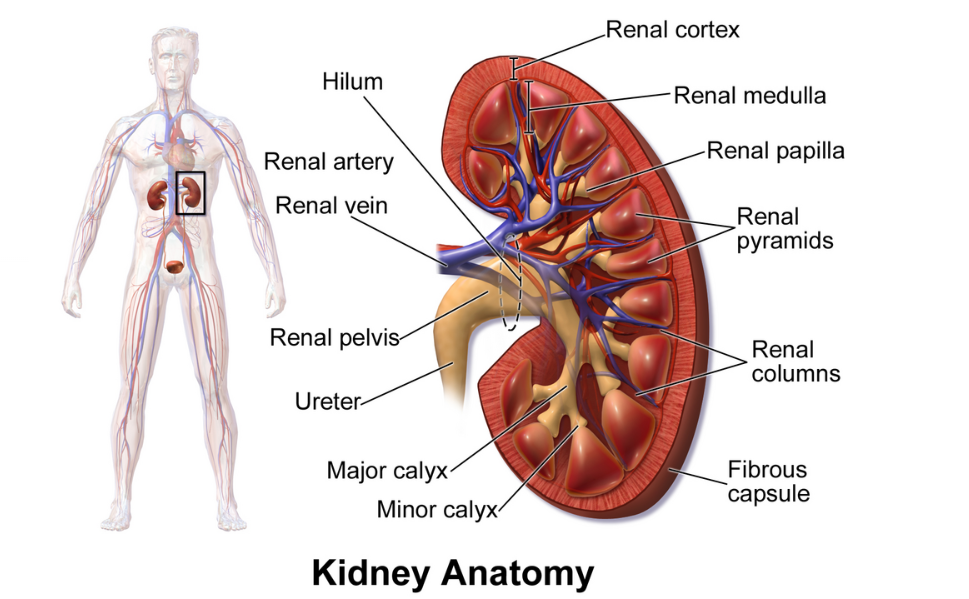
The kidneys depend on a continuous supply of oxygen-rich blood to function properly. They remove waste from the bloodstream, regulate fluid levels and help maintain the body's chemical balance.
During some surgical procedures, blood circulation to the kidneys may temporarily decrease or stop. This interruption, known as ischemia, deprives cells of the oxygen needed to produce energy.
Although restoring circulation is essential, it can also trigger damaging chemical reactions. The resulting condition is called ischemia–reperfusion injury, or IRI.
The injury can affect the tiny structures within the kidneys responsible for processing filtered blood. When enough of these structures become damaged, kidney function can decline rapidly.
This condition can contribute to acute kidney injury (AKI). Some patients recover completely, while others experience lasting damage that increases their risk of chronic kidney disease.
Kidney transplantation presents a particular challenge because a donated organ experiences interrupted circulation before being connected to the recipient's blood supply.
How GLS2 Contributes to Cell Damage
GLS2 participates in the metabolism of glutamine, an amino acid involved in several normal cellular functions.
The enzyme converts glutamine into glutamate. Other biochemical reactions can then convert glutamate into a substance called alpha-ketoglutarate, which participates in cellular energy production.
The Chiba University researchers examined how this metabolic pathway affects kidney cells under stressful conditions.
Their experiments indicated that GLS2 can promote ferroptosis, a form of regulated cell death involving iron and the oxidation of fats within cell membranes.
When these fats become damaged faster than the body's protective systems can repair them, cells may lose their ability to function and survive.
Ferroptosis has attracted increasing scientific attention because of its potential involvement in numerous kidney disorders.
A separate review published in Nature Reviews Nephrology examined evidence connecting this process to acute kidney injury, chronic kidney disease and other conditions.
Genetically Modified Mice Experienced Less Kidney Damage
The Japanese research team compared mice carrying the normal Gls2 gene with genetically modified mice that lacked it.
After temporarily interrupting and restoring renal circulation, the researchers examined the resulting tissue damage.
The genetically modified animals experienced less injury to their kidney tubules. Their cells also displayed fewer structural changes associated with cellular damage.
Additional experiments using cultured kidney cells helped the researchers investigate the biochemical processes behind these differences.
Cells lacking GLS2 accumulated fewer harmful products of fat oxidation when exposed to conditions resembling ischemia–reperfusion injury.
Together, these experiments suggest that glutamine metabolism can influence how severely kidney cells respond to interrupted circulation.
Researchers Discover a Connection Between Two Forms of Cell Death
The study also investigated apoptosis, another regulated process through which cells die.
Unlike ferroptosis, apoptosis involves a different set of cellular mechanisms. It normally helps the body remove unnecessary or damaged cells, but excessive apoptosis can contribute to tissue injury.
The researchers observed ferroptosis during the earlier stages of kidney damage. At later stages, cells containing GLS2 showed more evidence of apoptosis.
They also detected increased activity involving p53, a protein that helps regulate cellular responses to stress and damage.
The findings suggest that early ferroptosis may contribute to conditions that encourage apoptosis later. Interrupting the initial damage could therefore help limit subsequent tissue destruction.
However, the relationship between these processes requires further investigation.
Experimental Treatment Offers a Possible Surgical Application
The scientists also investigated whether drugs that interfere with these cellular processes could protect kidney tissue.
They tested a ferroptosis inhibitor and a separate glutaminase inhibitor in mice. Both approaches reduced cellular injury, according to the published study.
One experiment involved delivering the glutaminase inhibitor directly to the affected kidney using treated surgical gauze.
This approach is particularly interesting because surgeons can sometimes anticipate when interrupted blood flow will occur. A preventive treatment could potentially be administered before significant tissue damage develops.
However, the experimental technique has not been established as safe or effective for human surgery.
Researchers would need to determine whether inhibiting glutaminase interferes with important cellular functions elsewhere in the body. Appropriate treatment timing, delivery methods and potential side effects would also require evaluation.
Human Kidney Data Provides Preliminary Support
Although the treatment experiments involved animals and cultured cells, the team examined existing human genetic activity data to investigate whether similar biological changes occur in people.
The analysis identified increased expression of GLS2 and another gene, PTGS2, in human kidney tissue following ischemia–reperfusion injury.
This finding provides a reason to investigate whether the mechanisms observed in mice also contribute to human kidney damage.
However, increased gene expression alone cannot establish that GLS2 causes the injury in humans. It also does not demonstrate that inhibiting the enzyme would improve patient outcomes.
The researchers did not administer their experimental treatment to patients.
Potential Benefits for Kidney Transplant Recipients
A donated kidney sometimes takes longer than expected to begin functioning after transplantation. This complication can require temporary dialysis while the organ recovers.
According to the National Institute of Diabetes and Digestive and Kidney Diseases, patients may require dialysis if their transplanted kidney does not begin working immediately.
A treatment that limits tissue damage during transplantation could potentially improve recovery. It might also reduce the likelihood of lasting complications associated with severe kidney injury.
Suzuki and her colleagues hope that targeting GLS2 or ferroptosis early could prevent some cases of acute kidney injury from progressing to chronic kidney disease.
Reducing the future need for dialysis remains a long-term research objective, not an outcome demonstrated by the current experiments.
The next challenge is determining whether the protective effects observed in mice can be reproduced safely in humans without disrupting the kidney's normal metabolic functions.