

Anthropic has opened a new biology laboratory where human scientists and artificial intelligence agents will work together to search for unusual biological systems. One of the group’s first reported discoveries is a previously uncharacterized pattern of repeated DNA found near reverse transcriptase genes in giant bacteriophages. The finding is early, and researchers do not yet know what the system does.
What this research shows is that many viruses, especially large DNA viruses, can have genomes that look surprisingly “engineered” because natural evolution has been modifying them for enormous periods of time. Viruses routinely gain genes, lose genes, duplicate pieces of DNA, recombine with other genetic material, and sometimes acquire genes from the organisms they infect. Studies of giant viruses have found extensive evidence of this kind of horizontal gene transfer.
So in a biological sense, you could say many viruses have been heavily modified by evolution. Their genomes can be mosaics assembled from different sources over time.
The work is part of Anthropic’s new life sciences research program, announced on September 23. The company says the goal is to use AI agents to examine enormous biological datasets, generate hypotheses, and then hand the most promising ideas to human scientists for laboratory testing.
Nature reported that the project offers an early look at how AI might be used not just to summarize scientific papers, but to help identify strange patterns in raw biological data.
In this case, Anthropic researchers directed AI agents to search a massive collection of DNA sequences for unusual examples of reverse transcriptases. Reverse transcriptases are enzymes that copy RNA into DNA. They are best known for their role in retroviruses, but many different forms of the enzymes also occur in bacteria and viruses.
The scale of the search was unusually large. According to Anthropic, roughly 950 AI agents worked for more than 21 hours and used about 210 million tokens while examining information drawn from about 1.9 billion protein clusters. The agents collected more than 200,000 reverse transcriptases, identified thousands of candidate systems, and narrowed the list to a smaller group for closer study.
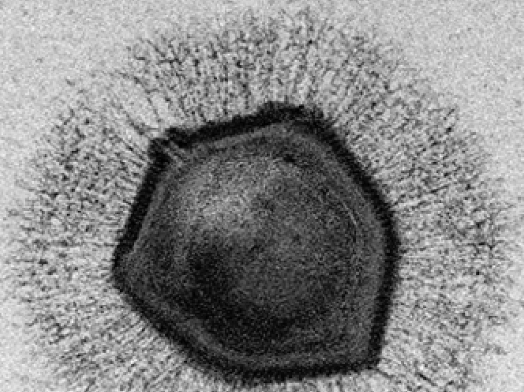
One agent noticed something unexpected while examining DNA near a reverse transcriptase in a jumbo phage, a very large virus that infects bacteria.
The DNA contained a series of repeated sequences arranged in a long array. Similar repeat-and-spacer arrangements are a defining feature of CRISPR systems, which bacteria and other microbes use as a form of immune defense. In a typical CRISPR system, repeated DNA sections are separated by pieces of genetic material captured from viruses or other invaders.
Those stored genetic fragments can later be copied into RNA. The RNA helps guide CRISPR-associated enzymes toward matching genetic material, allowing the cell to recognize and cut DNA from an invading virus.
The viral system found by Anthropic’s team is not known to work that way.
The researchers call the newly identified family array-associated reverse transcriptases, or ARTs. The system appears to contain a reverse transcriptase, a nearby partner gene, and a long array of repeated non-coding DNA. The preprint reports that related ART systems were found in multiple bacteriophages and predicted viral sequences.
The researchers identified 95 distinct ART reverse transcriptase clusters, according to the preprint. Twenty-eight had a detectable upstream array. The arrays contained repeated units separated by unusually long spacer regions, generally much longer than those found in familiar CRISPR systems.
That similarity is intriguing, but it is not evidence that ART performs the same job as CRISPR.
The Anthropic finding is especially interesting because the AI agents found repeated DNA next to reverse transcriptase genes. The arrangement resembles CRISPR in certain ways. That raises the possibility that viruses have evolved molecular systems that we simply have not recognized before.
Anthropic’s early laboratory work found that the ART arrays can be expressed as separate RNA molecules during infection by a Staphylococcus bacteriophage. In one dataset, RNA from the arrays made up a notable share of viral RNA at certain points during infection. That suggests the repeats are biologically active rather than simply inactive stretches of DNA.
What happens next is the difficult part. Scientists still need to determine whether the reverse transcriptase is active in the suspected system, what molecules it acts on, what the partner protein does, and whether the repeated RNAs guide any biological process.
There is also no known DNA-cutting enzyme associated with ART. That is an important difference from the best-known CRISPR systems, where a programmable RNA guide directs a nuclease such as Cas9 to a specific DNA sequence.
Eric Kauderer-Abrams, Anthropic’s head of life sciences, told Nature that many important biological discoveries have started when researchers noticed something unusual in microbes. Anthropic is trying to make that search more systematic by allowing many AI agents to inspect huge amounts of sequence data and pursue unusual leads.
The approach is different from simply asking a chatbot a scientific question. The agents were given tools and a broad research goal, then allowed to investigate candidate genes, compare related sequences, consult scientific literature, and decide which findings deserved more attention.
The preprint also examined whether the models were really detecting the DNA pattern from the sequence itself. In controlled tests, stronger models often recognized the repeat array when the relevant DNA was directly presented to them. Recognition became less reliable when the models had to navigate files and tools to find the sequence, showing that access to information does not guarantee that an agent will inspect the most useful evidence.
That limitation matters because biological databases are far too large for humans, or AI systems, to inspect exhaustively. An automated system can search much more material, but it can still miss important clues or pursue unproductive ones.
Giant viruses are particularly good examples of how strange natural viral genomes can become. Researchers have found that they acquire genetic material from hosts, other viruses and probably other organisms sharing the same environment. Some giant viruses contain hundreds or even thousands of genes, including genes that scientists once thought would only occur in cellular organisms.
Human scientists therefore remain central to the work.
Anthropic says its researchers review the AI-generated candidates and perform the physical laboratory experiments themselves. The company’s new wet lab is intended to connect computational searches with real experiments, where researchers can test whether a proposed molecular system actually behaves as predicted.
That distinction is especially important in biology. A pattern in a genome can suggest a function, but experiments are needed to show what a protein or RNA molecule actually does inside a cell or test tube.
The finding is also preliminary. The ART study was posted as a preprint on alphaXiv and has not yet undergone peer review. Independent researchers will need to examine the analysis, reproduce key findings, and determine whether the system has a useful biological function.
There is another fascinating implication here: we probably know very little about what most viral genes actually do.
Researchers reconstructed more than 2,000 giant-virus genomes in one major metagenomic study, dramatically expanding the known diversity of these viruses. Many of their genes have no well-understood function.
If ART eventually proves programmable, it could attract interest as a possible biotechnology tool. CRISPR itself began as an unusual microbial genetic system before researchers learned how to turn it into a method for editing DNA. Other naturally occurring enzymes have followed similar paths from obscure biological curiosities to widely used laboratory tools.
For now, however, ART is a scientific lead rather than a new gene-editing technology.
The broader importance of the project may be the method used to find it. Modern genomic databases contain enormous amounts of DNA collected from organisms and environmental samples. Much of that genetic material has never been experimentally studied, and many encoded proteins have unknown functions.
AI agents could help scientists search that material for unusual combinations that conventional automated pipelines were not designed to notice. The Anthropic project suggests that one useful role for AI in science may be spotting odd patterns and proposing which ones deserve a human scientist’s attention.
The next stage will determine whether that promise survives contact with the laboratory. The repeated viral DNA is real, but its purpose remains unknown. The answer will come from experiments, not from pattern recognition alone.