

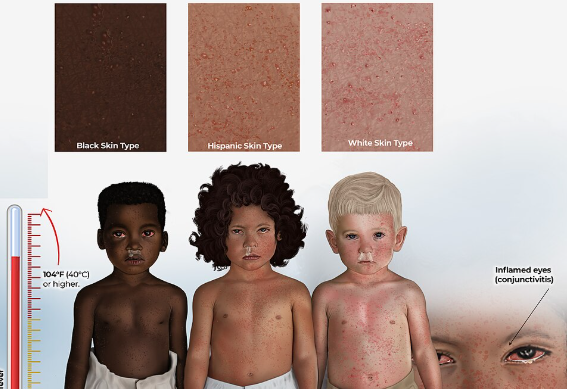
The United States is facing its largest measles year in decades, with 3,471 confirmed cases reported through September 17. The outbreak has spread across 47 jurisdictions and has hit Pennsylvania especially hard. Health officials are urging people to check their vaccination status as cases continue to rise.
The Centers for Disease Control and Prevention said 95 percent of this year’s confirmed cases are linked to outbreaks. The agency has counted 39 new outbreaks in 2026. That is far above the level seen in most recent years.
The national total has also passed the 2,289 cases reported during all of 2025. Measles was declared eliminated in the United States in 2000, meaning there was no continuous domestic spread of the virus for at least 12 months.
The current resurgence shows how quickly measles can return when the virus reaches communities with gaps in vaccination.
Pennsylvania has become the center of the largest active outbreak. The Pennsylvania Department of Health reported 835 confirmed cases across 39 counties as of September 23. The state also reported 164 hospitalizations and four measles-associated deaths.
State officials said only four of Pennsylvania’s confirmed cases were in vaccinated people. That was less than 1 percent of the state total.
The CDC’s national death count is different from Pennsylvania’s tally. The federal agency listed one measles-related death for 2026 as of September 23. Pennsylvania has classified four deaths as measles-associated.
Reuters reported that the CDC and the Council of State and Territorial Epidemiologists are working on a standardized definition for measles deaths. The goal is to make sure states and federal officials use the same rules when deciding whether a death should be counted as caused by or associated with measles.
That difference in reporting does not change the number of confirmed infections in Pennsylvania. It does show that national death figures may change as cases are reviewed.
Measles is one of the most contagious diseases known. It spreads through the air when an infected person coughs or sneezes. The virus can remain in the air of a room for up to two hours after an infected person leaves.
Symptoms usually begin seven to 14 days after infection. Early signs often include a high fever, cough, runny nose and red or watery eyes.
A rash usually appears several days later. It often begins on the face and then spreads down the body.
Measles can be much more serious than a rash and fever.
The CDC says about one in five unvaccinated people in the United States who get measles may need hospitalization. Pneumonia can occur in as many as one in 20 children with the disease. About one in 1,000 children who develop measles may suffer encephalitis, or swelling of the brain.
The disease can also cause rare long-term complications. One of them is subacute sclerosing panencephalitis, or SSPE. This fatal nervous system disorder can appear years after a person seems to have recovered from measles.
Researchers have also found that measles can weaken part of the body’s immune memory. This effect is sometimes called immune amnesia. It can leave a person more vulnerable to other infections for months or even years after the original illness.
Vaccination remains the main tool for preventing measles.
The CDC recommends two doses of the measles, mumps and rubella vaccine for children. Two doses of the MMR vaccine are about 97 percent effective at preventing measles. One dose is about 93 percent effective.
High vaccination rates also help protect people who cannot receive the vaccine or who may not develop a strong immune response.
The CDC says community protection is strongest when more than 95 percent of people are vaccinated. However, MMR coverage among U.S. kindergartners has fallen in recent years.
Coverage dropped from 95.2 percent during the 2019-2020 school year to 92.4 percent during the 2025-2026 school year. The CDC estimates that about 280,000 kindergartners were at risk during the most recent school year because they were not fully protected.
Local vaccination rates can be even more important than a national average.
A state may have a relatively high overall vaccination rate while still containing neighborhoods or communities with much lower coverage. If measles reaches one of those areas, the virus can spread rapidly.
Pennsylvania has responded with a large vaccination campaign. The state said it had provided nearly 5,200 MMR vaccinations at 156 pop-up clinics since the outbreak began in late April.
More than 38,000 MMR doses were administered by health care providers across Pennsylvania during the first three weeks of September. A typical month brings about 25,000 doses, according to the state health department.
The national outbreak is also occurring during a period of high measles activity around the world.
The CDC reported in September that major outbreaks were occurring in every global region. Bangladesh, Guatemala, India, Yemen, Pakistan and Mexico were among the countries reporting large numbers of cases in recent surveillance data.
International travel can bring measles into the United States. The CDC counted 17 cases among international visitors in the 2026 national total.
Imported cases alone do not necessarily create large outbreaks. The greater danger comes when an infected traveler enters a community where many people are not protected.
Before a measles vaccine became available in 1963, the disease was extremely common in the United States. The CDC estimates that 3 million to 4 million people were infected each year before widespread vaccination.
Vaccination changed that pattern dramatically. U.S. cases fell so far that health officials declared measles eliminated in 2000.
Elimination does not mean that no cases can occur. It means the virus is not continuously spreading within the country. Travelers can still bring measles into the United States, and outbreaks can follow.
The present case count is a reminder that elimination can be difficult to maintain when immunity gaps grow.
Health officials recommend that people who are unsure about their vaccination history speak with a health care provider. Travelers should also make sure they are protected before leaving the country.
People who believe they have been exposed to measles should contact a health care provider before arriving at a clinic or hospital. Calling ahead allows medical staff to take precautions and reduce the chance of exposing other patients.
The 2026 outbreak has already surpassed last year’s national total by more than 1,100 cases. Pennsylvania continues to report new infections, and the CDC updates its national numbers weekly.
The outbreak is still active.
For public health officials, the immediate goal is to stop chains of transmission before the virus reaches more communities with low vaccination coverage. For families, the main protection remains the same vaccine that helped make widespread measles uncommon in the United States for more than two decades.