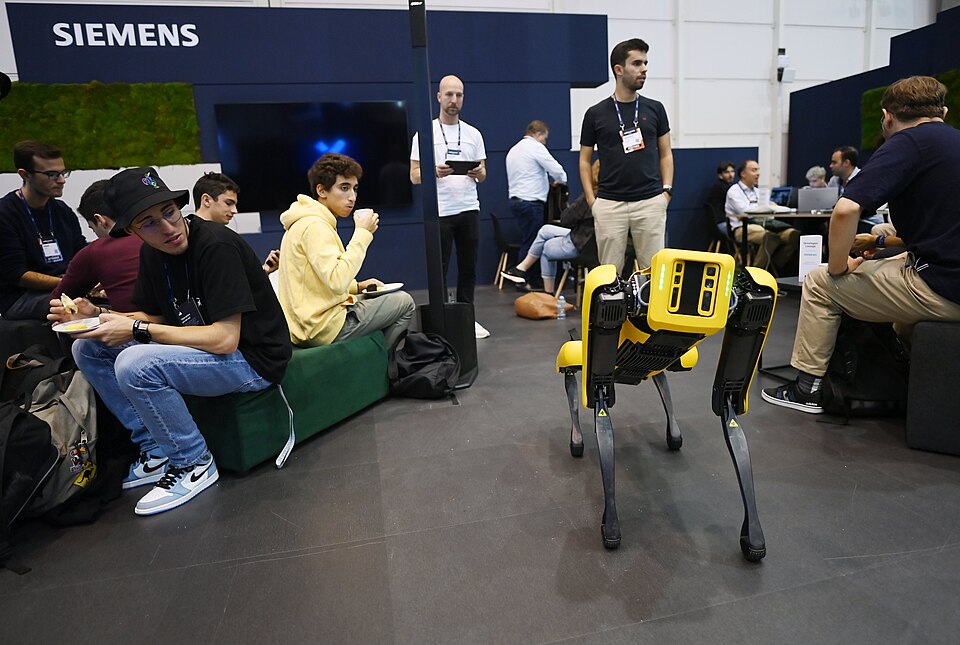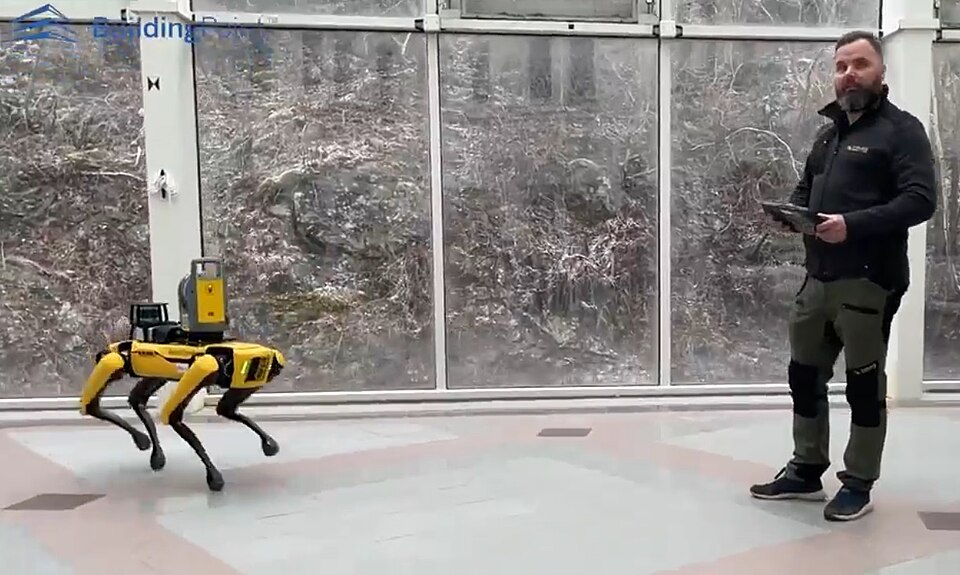
Boston Dynamics announced Monday that its Spot quadruped robot is now running Google DeepMind's Gemini Robotics-ER 1.6, an embodied reasoning model designed to let the four-legged machine handle complex inspection tasks without step-by-step human instruction.
Robots are no longer limited to factory lines and science fiction. They are moving into hospitals, warehouses, farms, homes, schools, disaster zones and nursing facilities, not as magical replacements for people, but as practical tools that can handle repetitive, risky or physically demanding work. The real question is not whether robots can “take care of” everything. They cannot. The better question is where robots can assist, and where artificial intelligence can make that assistance more useful, safer and more responsive.
Healthcare is one of the clearest examples. In hospitals, robots can deliver medicine, carry linens, move supplies between floors and disinfect rooms with UV systems. That kind of work matters because it frees nurses and support staff from constant back-and-forth trips. In surgery, robotic systems can help doctors perform highly precise movements. But even there, the robot is not the decision-maker. It is a tool guided by a trained human. AI can strengthen these systems by helping analyze scans, flag possible complications, monitor patient vital signs for early warning signs and organize clinical information faster than a person could sort it by hand. In elder care, robotic assistants may remind patients to take medication, detect falls, monitor movement patterns and provide a simple way to call for help. What they should not replace is human presence. A machine can track a schedule. It cannot fully provide comfort, patience, judgment and emotional connection the way a skilled caregiver can.
The target application is industrial inspection, one of the few commercial uses where legged robots have demonstrated reliable value. Spot already patrols factories, refineries and other facilities. The new AI layer gives it the ability to autonomously scan for debris or spills, read gauges and sight glasses, and call on additional vision-language-action models when it encounters something it needs help interpreting.
"Capabilities like instrument reading and more reliable task reasoning will enable Spot to see, understand, and react to real-world challenges completely autonomously," said Marco da Silva, vice president and general manager of Spot at Boston Dynamics.
Boston Dynamics has deployed several thousand Spot units commercially, making it one of the few companies operating legged robots at that scale. The Gemini Robotics-ER 1.6 integration represents an attempt to close the gap between what Spot can physically do and what it can be told to do in plain language rather than code.
The partnership surfaces a persistent challenge in robotics: the gap between human understanding and machine understanding. Carolina Parada, head of robotics at Google DeepMind, described the standard the system is measured against. "The benchmark we measure ourselves against when it comes to understanding is that the system should answer the way a human would," she said.
A demonstration video released alongside the announcement showed the gap that still exists. When instructed to "recycle any cans in the living room," Spot completed the task but gripped a can sideways, a method that would spill any liquid inside. A person would avoid that grip instinctively, drawing on years of experience. Spot did not.
Parada said Gemini Robotics-ER 1.6 incorporates safety reasoning to address similar problems. "If you ask the robot to bring you a cup of water, it will reason not to place it on the edge of a table where it could fall," she said. Boston Dynamics tracks this through what it calls an ASIMOV benchmark, a collection of natural language examples describing actions the robot should not take. The current version of Spot does not yet apply those semantic safety models to object manipulation, but the companies said future versions will reason about how to hold objects safely.
The question of what "reasoning" and "understanding" actually mean for robots in practice remains contested. Toyota Research Institute's Gill Pratt has publicly noted the terms are applied inconsistently across the industry, and the can-gripping episode in Boston Dynamics' own video illustrates why the distinction matters in commercial settings where errors carry real costs.
Boston Dynamics did not announce a specific rollout timeline for the Gemini Robotics-ER 1.6 update across its existing Spot fleet.
Home assistance is another growing area. Robots already vacuum floors, mow lawns and monitor homes through connected devices. More advanced systems may help older adults stay independent longer by assisting with basic daily routines such as reminders, reaching items, checking doors or alerting family members if something seems wrong. AI is what makes these machines more adaptive. A basic machine can follow instructions. An AI-enhanced system can learn the layout of a room, recognize common objects, understand simple voice requests and adjust to changes in routine. That makes a major difference in homes where the needs of one person may be very different from another. Still, there are limits. Home robots can support daily living, but they are not substitutes for family, home health aides or medical professionals.
In rehabilitation and physical therapy, robots can play a useful supporting role. Robotic exoskeletons and assisted movement devices can help people relearn walking or strengthen muscles after injury or stroke. AI can help by tracking progress over time, adjusting resistance levels and identifying patterns in recovery that might be missed in a quick visual check. That kind of support can make therapy sessions more consistent and data-driven. It can also help therapists spend more time motivating patients and less time handling routine measurements. But the therapy itself still depends on human expertise, because recovery is not only mechanical. It is physical, emotional and highly individual.
Robots also make sense in dangerous environments. They can inspect collapsed buildings after disasters, search hazardous industrial sites, examine pipelines, assist bomb squads and help firefighters gather information before humans enter. In agriculture, robots can monitor crops, identify weeds, sort produce and help with harvesting. AI makes these systems more capable because it helps them interpret what they “see.” A robot in a field is far more useful if it can distinguish between a healthy plant, a diseased one and a weed. A disaster-response robot is more valuable if AI helps map debris, spot heat sources or identify signs of human life. In these fields, the purpose is simple: send machines where risk is high, visibility is poor or conditions are exhausting.
Warehousing and logistics may be where many people already interact with robotics without realizing it. Automated systems move shelves, sort packages and track inventory. Delivery robots and drones are still uneven in adoption, but the concept is clear. Robots handle movement and repetition well. AI helps optimize routes, forecast inventory demand, reduce waste and detect bottlenecks before they become expensive problems. In retail, AI-powered robots can scan shelves for out-of-stock products or pricing errors. In grocery and hospitality settings, service robots can assist with deliveries, cleaning and routine customer support. That does not mean stores or hotels become human-free. It means some of the low-value repetitive work shifts to machines while staff focus on exceptions, service and problem-solving.
Education is another field where robotics and AI can assist, though carefully. Robots can be used in classrooms for hands-on STEM learning, language practice and support for children who respond well to structured interactive tools. In special education, some systems are designed to help students practice communication or routines in a calm, predictable way. AI can personalize lessons, adapt difficulty levels and identify where a student may be struggling. But education is not just information transfer. It involves trust, encouragement, culture and social development. A machine may support a lesson. It should not define childhood or replace the role of teachers.
Companionship is often discussed, especially in elder care and mental health support. Social robots can provide reminders, conversation prompts, music, games and a sense of routine. For isolated people, that may have real value. AI can make these tools feel more responsive by recognizing speech patterns, preferences and moods. But this is one of the most sensitive areas. A machine can simulate conversation. It does not truly understand human suffering in the full sense. Used well, it can reduce loneliness at certain moments. Used poorly, it can become a cheap substitute for real care. The line matters.
Then there is the issue of judgment. In almost every field, robotics handles the body of the task while AI helps with perception, pattern recognition and prediction. But prediction is not wisdom. If an AI system flags a medical concern, a clinician still has to interpret it. If a robot detects unusual behavior in an older adult at home, a caregiver still needs to decide what action to take. If a warehouse system predicts staffing needs, managers still need to weigh safety, fairness and real-world conditions. The best systems are not built around the fantasy of total replacement. They are built around assistance.
That may be the most realistic way to think about the future. Robots can help lift, carry, clean, inspect, transport, sort, monitor, remind and respond. AI can help those robots recognize patterns, interpret data, adapt to changing conditions and communicate more naturally. Together, they can reduce strain on workers, expand access to support and improve efficiency in places where time and labor are constantly stretched.
But the most important work in many of these fields is still deeply human. Caring for a patient. Reassuring a frightened child. Noticing pain behind a smile. Weighing ethics in a medical decision. Recognizing when a person needs compassion more than efficiency. Machines can assist with taking care of people, homes, farms, goods and infrastructure. They can even assist with parts of companionship. What they are best at is support. What people are still best at is care.