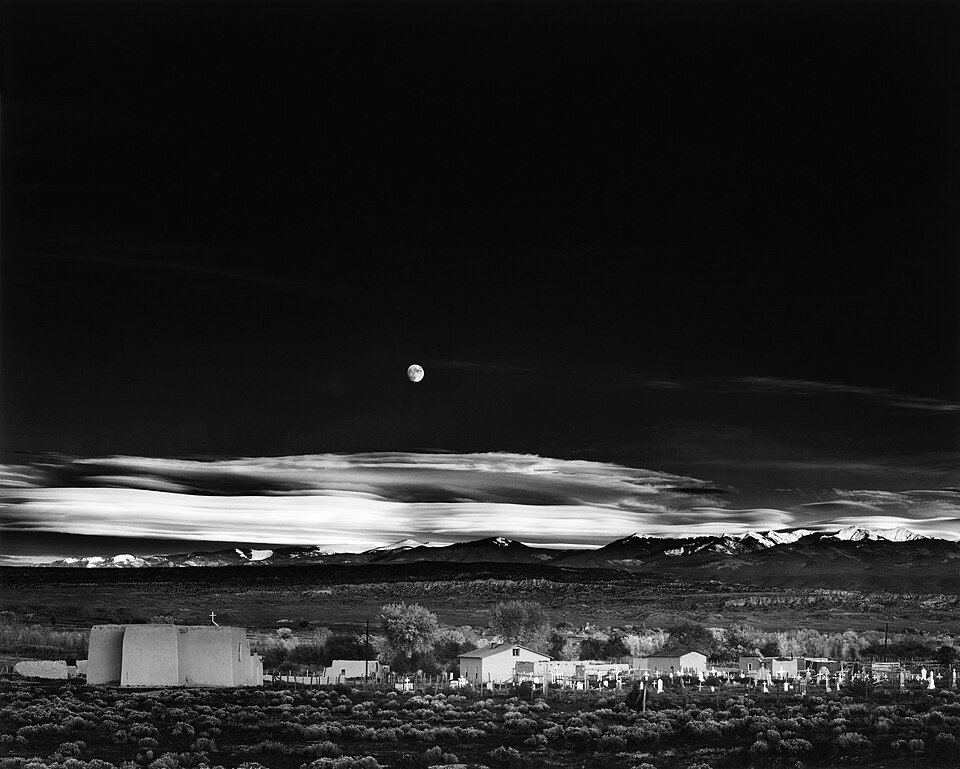
An AI-generated color version of one of Ansel Adams' most recognized photographs was displayed and offered for sale at a major photography fair last month without the knowledge or consent of the Adams estate. The Ansel Adams Publishing Rights Trust released a public statement this weekend condemning what it called a serious ethical and professional failure.
According to Engadget, the colorized image was a version of Adams' "Moonrise, Hernandez, New Mexico," a black-and-white photograph that has become one of the most reproduced images in the history of American photography. The work appeared at The Photography Show, hosted by the Association of International Photography Art Dealers, known as AIPAD, where it was presented by Danziger Gallery.
The trust's statement said the exhibit "exploited Ansel's name, reputation, and his most iconic image, while failing to identify any human artist responsible for its creation."
The trust says it was not informed before the work appeared. "The Trust was not consulted or notified before the work appeared," the statement reads. "Once alerted, we reached out to James Danziger in real time, notifying him of the Trust's rights, and asking for the work to be removed. Correspondence shared with the Trust shows that, despite our formal notice, Mr. Danziger subsequently leveraged Ansel's name, 'Moonrise,' and the AIPAD presentation while pursuing a proposed commercial AI colorization venture involving other artists' estates."
The trust's objection was not to artificial intelligence as a tool. The statement noted that Adams "was remarkably prescient about — and excited by — the potential of computers to transform photography." The dispute centers on consent and commercial exploitation. The trust described the incident as "a gross failure of ethical and professional judgment."
The case arrives at a moment when questions about AI-generated art, artist rights, and the use of deceased creators' names and likenesses for commercial purposes are being actively debated across the art world and in courts. The Adams situation is notable in part because the trust drew a clear line: the problem is not the technology, it is the use of an artist's identity and work for profit without permission or attribution.
Danziger Gallery has not issued a public response as of the time of publication.