Astronomers have identified 77 previously unknown dust-buried quasars, more than doubling the total number of these hidden objects ever confirmed. The findings, uploaded to the preprint server arXiv on May 7, represent what researchers describe as the strongest observational support yet for a key theory of how galaxies grow and change over billions of years.
According to a report by Phys.org, the discovery was led by Matthew Stepney of the Center of Excellence in Astrophysics and Related Technologies in Chile. His team used infrared data and spectrophotometry collected by NASA's SPHEREx telescope to locate the objects, which are known as heavily reddened quasars, or HRQs.
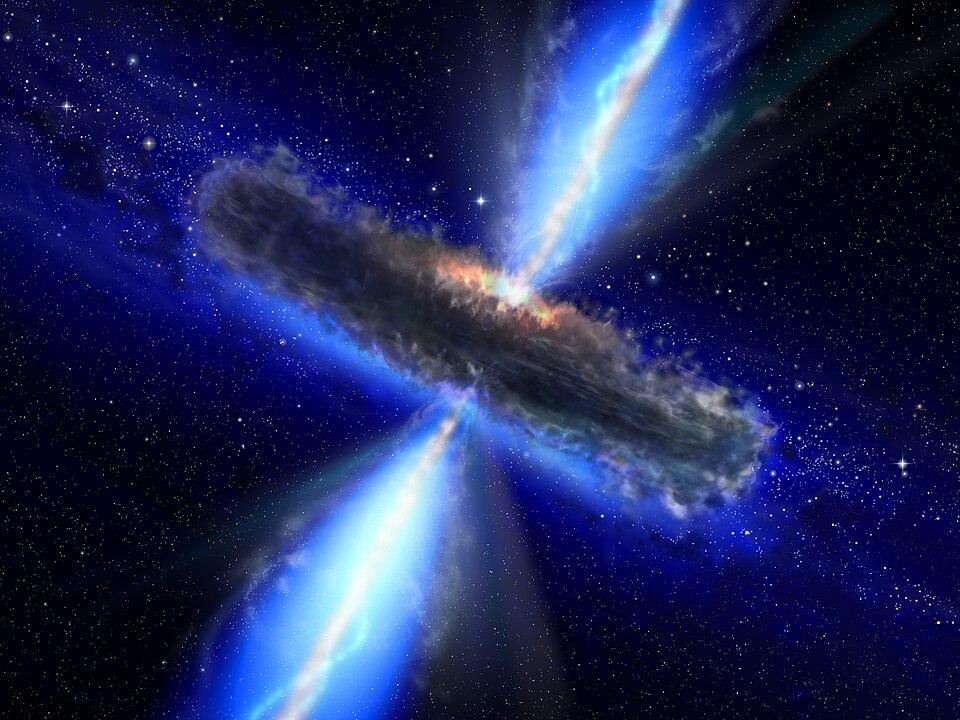
At the center of most large galaxies sits a supermassive black hole. When these black holes are actively consuming surrounding material, they become extraordinarily luminous objects called quasars. But some quasars are wrapped in thick clouds of dust, which scatter and absorb their light, making them appear faint and extremely difficult to detect with conventional optical telescopes. Standard sky surveys that observe at optical wavelengths miss these heavily dust-obscured quasars almost entirely.
Before this study, only around 50 heavily reddened quasars had ever been confirmed. Finding them required a slow, labor-intensive process of hunting them down individually using single-target infrared telescopes. With samples that small, scientists could not answer key questions about this phase of galactic development with any real confidence.
The new sample changes that. The 77 newly found quasars were active when the universe was between 1.6 billion and 4.3 billion years old. Among them are the first seven heavily reddened quasars ever identified at redshifts above 3, meaning they existed within the first 2.1 billion years after the Big Bang.
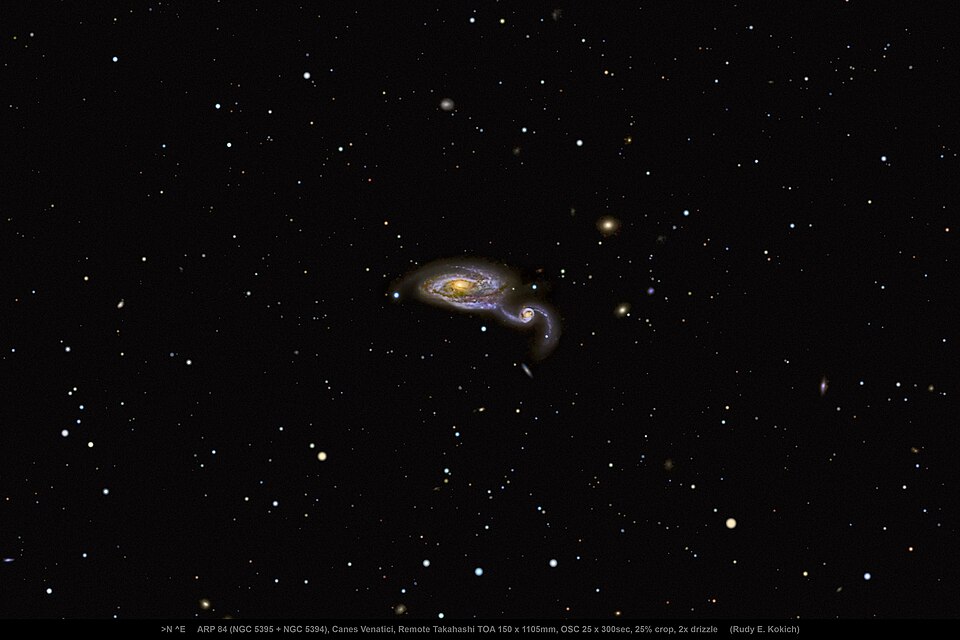
The leading theory of galaxy evolution holds that supermassive black holes go through a brief but violent dust-obscured growth phase triggered by galaxy mergers. When two galaxies collide, gas floods inward, simultaneously sparking intense star formation and feeding the central black hole. The dust surrounding this process makes radiation-driven winds even more powerful, turning these objects into engines of extreme feedback before the dust is eventually cleared away.
To put the new findings in context, Stepney's team compared the heavily reddened quasars against two other known populations. Hot Dust-Obscured Galaxies, known as Hot DOGs, are among the most deeply buried objects known, with their emission dominated by hot and warm dust. Blue quasars sit at the opposite extreme, representing fully unobscured objects whose dust has already been cleared, though they still host a dusty torus around the black hole that glows in infrared. Heavily reddened quasars occupy the middle ground in terms of how buried they are.
One unexpected finding emerged from that comparison. Despite sitting between the two extremes in terms of obscuration, the heavily reddened quasars were found to be deficient in hot dust compared to even the unobscured blue quasars. That result adds new detail to the picture of how these transitional objects behave and what physical conditions define this brief phase in a galaxy's life.
The research supports the idea that heavily reddened quasars represent a fleeting moment in cosmic history, a stage when a galaxy's central black hole is growing rapidly behind a veil of dust before powerful winds eventually blow that material outward, revealing the quasar in full. With a sample now large enough to study statistically, researchers will be better positioned to test that model in detail.