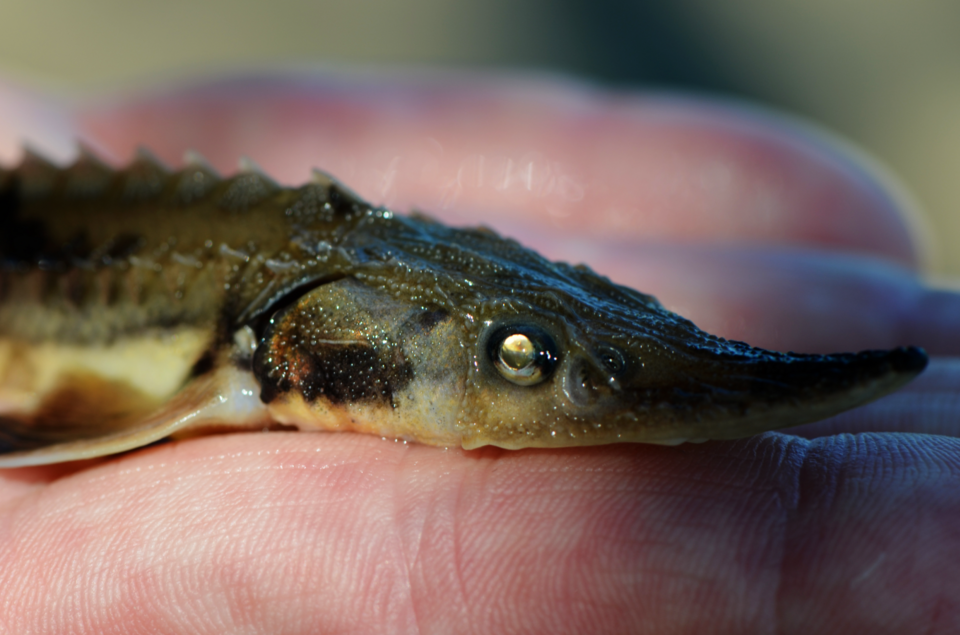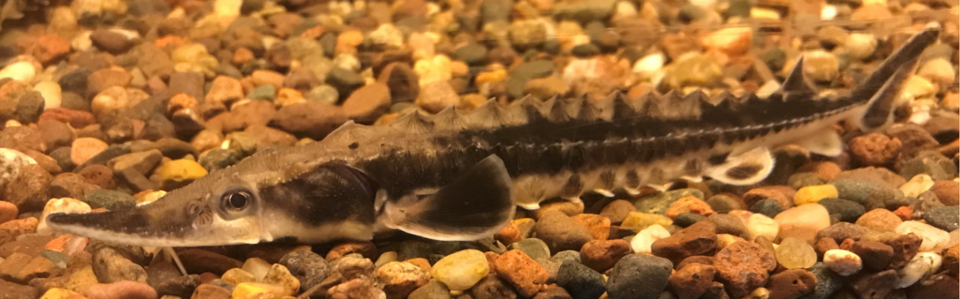
Most juvenile lake sturgeon stocked in Ohio's Maumee River made their way into Lake Erie within days to weeks of release, according to a new study tracking the state's first-ever sturgeon reintroduction program. The fish moved fast, but whether they will return to spawn years from now remains the real question.
The findings come from a telemetry study published in the Canadian Journal of Fisheries and Aquatic Sciences, as reported by Phys.org. Researchers tracked 120 acoustically tagged sturgeon released across three years: 2018, 2019, and 2021. The fish were monitored using a network of underwater receivers placed through the river and into the lake.
Lake sturgeon were once widespread across the Great Lakes region but were driven to near collapse by overfishing, pollution, and habitat destruction. The reintroduction program is a collaboration among the Ohio Department of Natural Resources, the U.S. Fish and Wildlife Service, the U.S. Geological Survey, the University of Toledo, Michigan State University, and the Toledo Zoo. Annual stocking of baby sturgeon in the Maumee River began in 2018. The long-term goal is to establish 1,500 naturally spawning adults in the river.
The program used two different methods to raise the young fish before release. One was a traditional hatchery approach at the Genoa National Fish Hatchery in Wisconsin. The other was a streamside facility at the Toledo Zoo that used actual Maumee River water. The idea behind the streamside method was to expose fish to local water chemistry early in life, potentially strengthening imprinting, the process by which fish learn to recognize their home river and return to it as adults to spawn.
Of 94 sturgeon detected by the receiver network, 74, or 79 percent, moved from the Maumee River into Lake Erie after release. Fish spent anywhere from three to 47 days in the river before heading to the lake, then spent between 54 and 207 days in the western basin of Lake Erie. Most traveled along the south shore, moving toward the Lake Erie islands region.
The key finding for program managers was that rearing method made no measurable difference at this stage. Researchers found no statistically meaningful differences in river residency time, distance traveled, or habitat area between the hatchery-raised and streamside-raised groups.
That result is useful for planning purposes, but the researchers are careful not to read too much into it yet. Co-author Dr. William Hintz, an associate professor of ecology at UToledo's Lake Erie Center, said: "While we found no difference between rearing strategies at this age, the real test of our work will come when these fish are old enough to spawn."
The timeline for that test is long. Sturgeon take a decade or more to reach reproductive maturity. Hintz noted that the team "won't know for years whether the sturgeon return to the Maumee River to spawn and whether rearing strategy matters as sturgeon age, but we will continue to focus on that long-term goal."
Stocking and tracking continue. Researchers plan to monitor the fish as they age, watching for any sign that the animals imprinted on the Maumee River and will eventually return to complete the cycle the program was built around.