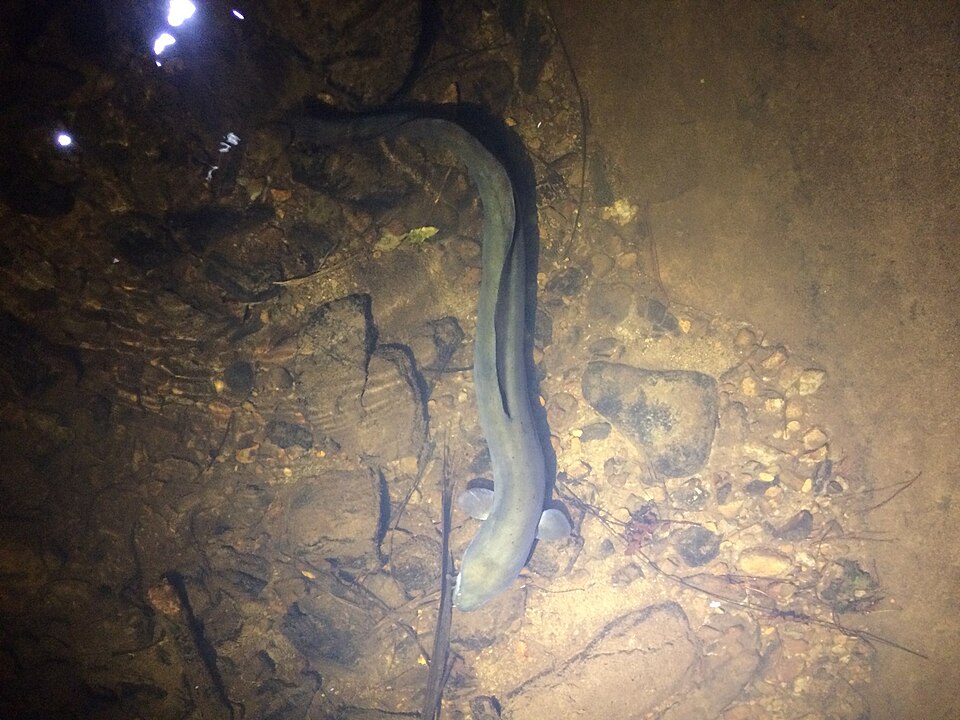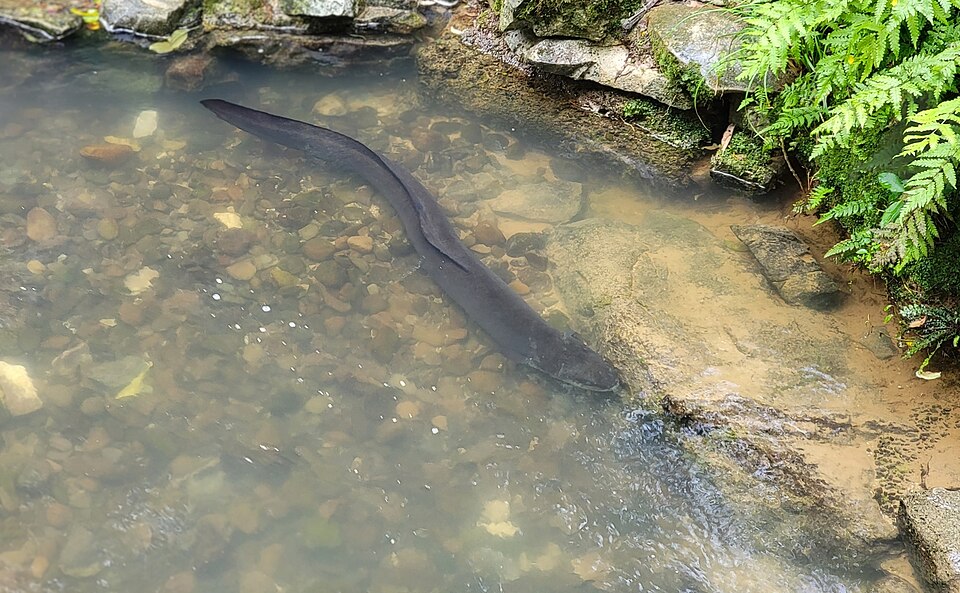
A study of New Zealand's endangered longfin eels has found that their growth rates depend heavily on the availability of a small migratory fish called inanga, which floods into a southern lagoon when the water opens to the sea.
According to Phys.org, the research focused on Waituna Lagoon, a site in the South Island recognized under the Ramsar Convention as an internationally important wetland. The lagoon is formed by a barrier beach. When it overflows that barrier, either naturally or through excavation, it stays open to the sea until large swells block the opening again. That process can take anywhere between a month and a year.
When the lagoon is open, inanga, the small fish that make up the majority of whitebait, run freely from the ocean and become extremely abundant. That influx supercharges the wider food web, including eel populations living upstream in surrounding creeks.
The research team analyzed otoliths, which are fish ear bones, collected from local iwi, or tribal groups. Otoliths contain annual rings that record age and growth rates in the same way tree rings record a tree's history. The data showed that eels in Waituna Creek grew faster during open years, when inanga were plentiful, than during closed years, when the prey fish were scarce.
Large inanga runs also boosted overall eel numbers to levels far higher than typically found in coastal streams without large downstream wetlands. Waituna Creek produces almost 10 times the biomass of eels per year and kilometer of stream length compared to streams within New Zealand's conservation estate, where the main eel conservation strategy focuses on protecting eels from fishing.
The findings carry direct implications for conservation. Longfin eels are classified as at risk, with declining populations. They reproduce only once, migrating to spawning grounds in the equatorial Pacific Ocean. Larger eels are more likely to complete that journey, and larger females produce more eggs, sending more juveniles back toward New Zealand's rivers.
The researchers argue that restoring food webs, not just protecting eels from predators or fishing pressure, must be part of any serious conservation plan. That may require ecological restoration across multiple connected sites that link threatened species with their prey.