NASA announced Wednesday a new public-private partnership with Relativity Space to send a suite of atmospheric science instruments to Mars, a step the agency says is essential to eventually landing humans safely on the planet's surface.
According to NASA, the agency will provide the instruments while Relativity Space supplies the spacecraft, rocket, and cruise operations needed to get them there. The arrangement is part of what NASA describes as a growing commitment to commercial partnerships that can speed up how often the agency conducts missions.
The instrument package is called Aeolus. It consists of four complementary tools designed to measure Martian winds, temperatures, dust, and clouds on a daily, global scale. No mission has done that before. Scientists say that kind of regular, comprehensive data is exactly what engineers need to reduce the risk of landing on Mars, whether the craft carries robots or people.
"Public-private partnerships like this are a force multiplier for science," said NASA Administrator Jared Isaacman. "By pairing NASA's world-class instruments with commercial innovation and investment, we can deliver more science, more often, and reduce the time it takes to get essential data into the hands of researchers preparing for future human missions to Mars."
The four instruments each target a specific layer or property of the Martian atmosphere. The Doppler Wind and Temperature Sounder measures wind and temperature profiles from the surface up to roughly 37 miles, or 60 kilometers, in altitude. A second instrument, the Thermal Limb Sounder, provides vertical temperature readings. Together, the instruments are designed to build environmental models precise enough to guide entry, descent, and landing systems for future crewed missions.
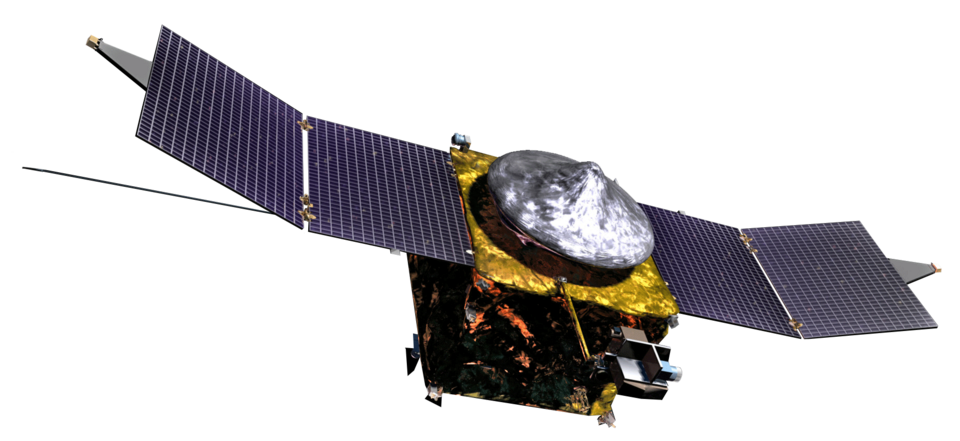
Engineers at NASA's Ames Research Center in California's Silicon Valley will design, build, and integrate the payload. Relativity Space will handle spacecraft development and mission operations. Aeolus builds on more than two decades of Mars atmospheric research from orbiters including MAVEN, the Mars Reconnaissance Orbiter, and Mars Odyssey, but the daily global coverage it promises would go beyond anything those missions produced.
"As NASA's Innovation Center of Excellence, Ames is committed to delivering the technologies, capabilities, and creative partnerships that enable the agency's boldest missions," said Dr. Eugene Tu, center director at Ames. "Aeolus reflects how innovative collaboration accelerates science and strengthens the foundation needed for one day landing humans on Mars."
The launch is scheduled for 2028. If it proceeds on schedule, it would give scientists several years of Martian atmospheric data before any crewed mission would realistically attempt the journey.