

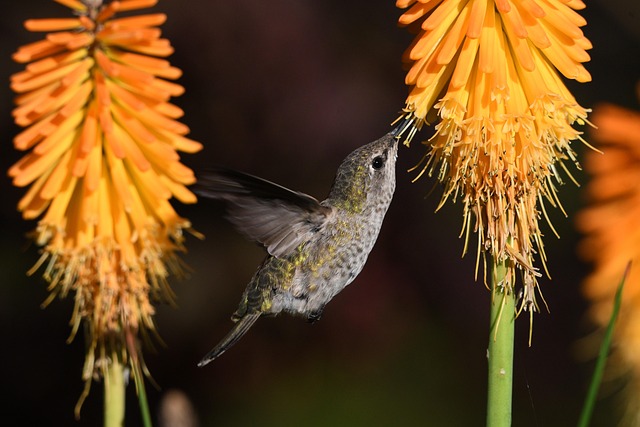
When a hummingbird visits a bromeliad, it does more than drink nectar. Over millions of years, those visits have been splitting one plant species into two at a rate no other pollinator can match.
Scientists at the University of Reading studied 403 types of bromeliad, the plant family that includes pineapples and more than 3,700 species worldwide. Three out of four of those plants, they found, are visited by hummingbirds. The research was published in the Botanical Journal of the Linnean Society.
Hummingbird-pollinated bromeliads formed new species at a rate of 2.77 per million years. Plants pollinated by bees, bats or moths came in at 1.46 per million years. That gap is roughly double, and researchers say the geography of hummingbird feeding behavior explains much of it.
"Hummingbirds seem to act like an engine for new species," said Dr. Jamie Thompson, a Leverhulme research fellow and senior author from the University of Reading. "They feed high in the mountains, where plants grow in small patches split apart by valleys and peaks. Cut off from their neighbors, those groups drift apart over time until they become species in their own right."
The relationship between hummingbirds and bromeliads was not established all at once. Lead author Elizabeth Forward, a Ph.D. researcher at the University of Reading, said that bees and wasps pollinated bromeliads first, and hummingbirds arrived later.
"Bees and wasps were the first to pollinate bromeliads, the plant family that gave us the pineapple, but hummingbirds muscled in later, and not just once. Time and again, different branches of the family swapped one pollinator for another, and that swapping is still going on today," Forward said.
She added that the pace of this diversification is notable given how recently these lineages appeared. "Our findings are particularly striking because hummingbirds and bromeliads are relatively young evolutionary lineages. Much of their modern diversity arose over the past 20 million years, which is the blink of an eye on evolutionary timescales."
Pineapples belong to this family, though they look different from most of their relatives. Most other bromeliads are smaller plants growing on tree branches or rocks, and many form water-filled leaf clusters that create small ecosystems for frogs and other animals. Air plants, found in homes around the world, are also bromeliads.
The close relationship between hummingbirds and bromeliads now carries a risk. Eighty-one percent of bromeliads may be at risk of extinction as mountain forests are cleared for farming or altered by a warming climate. At the same time, one in ten hummingbird species faces extinction and six in ten are declining. Because so many bromeliads depend on hummingbirds to reproduce, the two groups face linked threats.