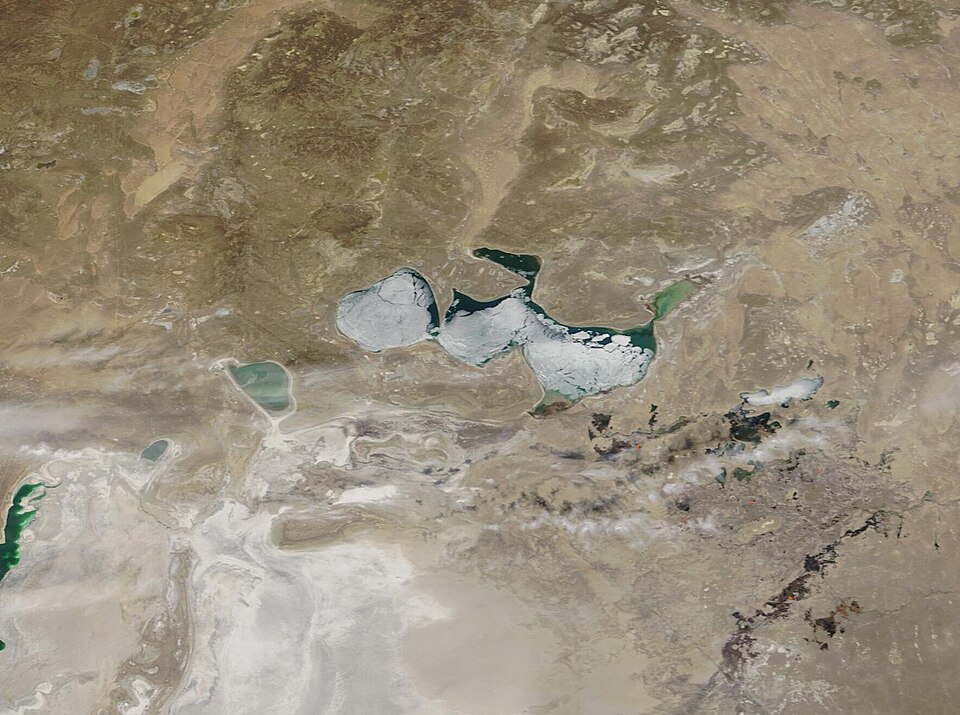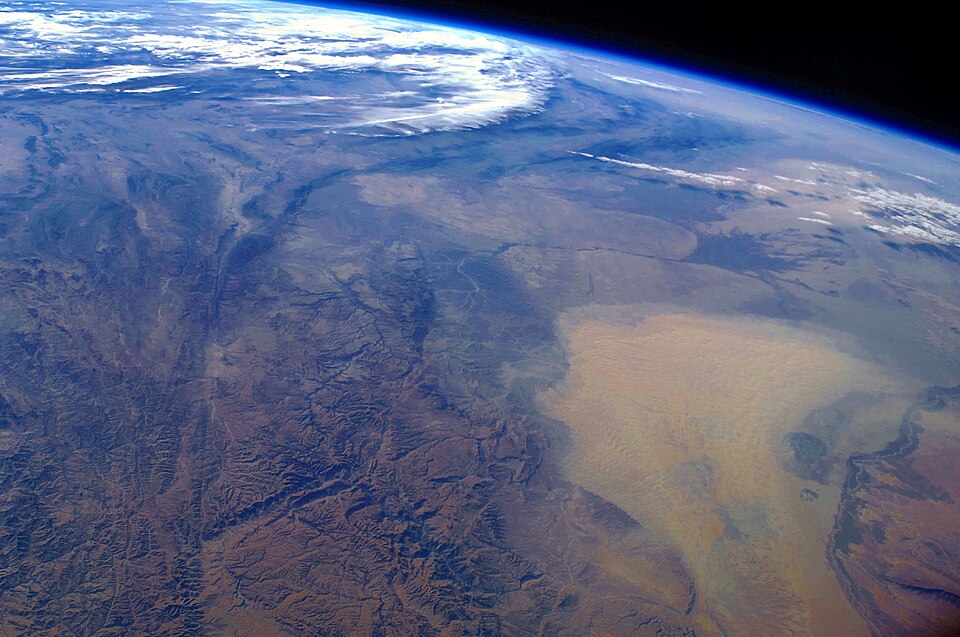
The Aral Sea has lost roughly 90 percent of its water since the 1960s. Now researchers say reflooding it could prevent the release of 605 megatons of carbon dioxide, an amount roughly equal to nearly three years of Spain's total greenhouse gas emissions.
According to a study published in the journal Science and led by scientists at the Centre for Advanced Studies of Blanes (CEAB-CSIC), the dried lakebed has already released 748 megatons of CO2 into the atmosphere since 1960. The Leibniz Institute of Freshwater Ecology and Inland Fisheries also participated in the research.
Once the fourth-largest lake in the world, the Aral Sea began disappearing after Soviet-era irrigation projects diverted the rivers that fed it. What remains today is largely a saline desert. The environmental and social consequences have been severe, affecting communities across Kazakhstan and Uzbekistan for decades.
The science behind the carbon loss is straightforward. Lakes and inland seas trap organic matter in their sediments over long periods, effectively storing carbon that plants and algae originally pulled from the atmosphere. When a lake dries out, those sediments are exposed to air, the organic matter breaks down, and the stored carbon returns to the atmosphere as CO2. The Aral Sea has been doing exactly that for more than 60 years.
Lead author Rafael Marcé, a researcher at CEAB-CSIC, described the stakes plainly. "There is a hidden carbon treasure beneath the Aral Sea. If these sediments remain exposed, carbon will continue to be released into the atmosphere. If the sea is reflooded, that same carbon could shift from being a source of emissions to becoming part of the climate solution."
The researchers also calculated the potential economic value of preserving that buried carbon. In voluntary carbon markets, the avoided emissions could generate between $3.6 billion and $18 billion in tradable carbon credits, depending on market conditions. That figure adds a financial argument to what has largely been framed as an environmental and humanitarian issue.
The study does not detail exactly how reflooding would be accomplished, but the scale of what is at stake is clear. Hundreds of megatons of carbon still sit in the former lakebed, and the research team argues that this represents a climate mitigation opportunity that has gone largely unnoticed by policymakers focused on other regions. Central Asia's role in the global carbon balance, they say, deserves far more attention.
The full study appears in the journal Science, with contributing researchers from both Spain and Germany.