For decades, scientists searching for signals from extraterrestrial civilizations have focused on a narrow slice of the radio spectrum called the water hole, a frequency range between 1.42 and 1.66 GHz that sits between the natural emissions of hydrogen and hydroxyl. A new study suggests they may have been ignoring a large part of the dial.
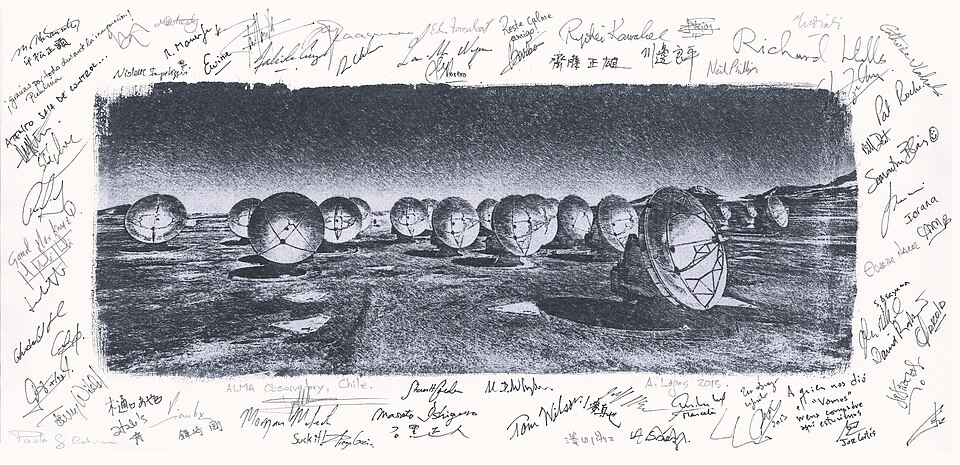
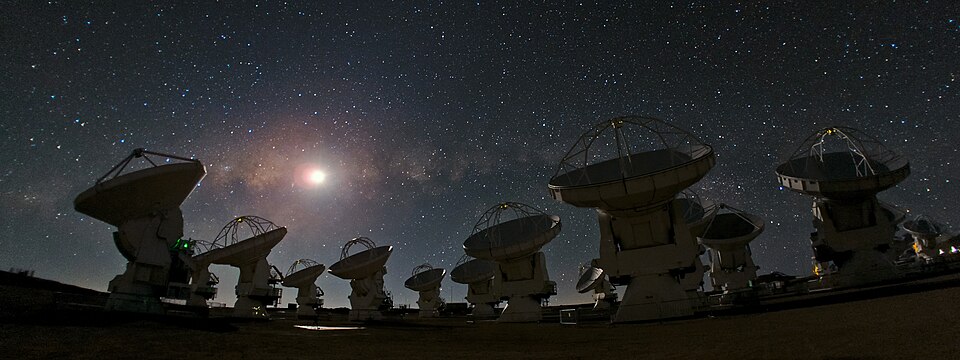
According to a report by Phys.org, astronomer Louisa Mason, a doctoral researcher at the University of Manchester, has conducted the first SETI survey using the Atacama Large Millimeter/submillimeter Array, known as ALMA, located in the Chilean desert. Her findings were presented this week at the Royal Astronomical Society's National Astronomy Meeting in Birmingham, known as NAM 2026.
The water hole has long been considered the most logical place to listen for alien transmissions. Scientists have reasoned that any technologically advanced civilization would recognize the chemical significance of hydrogen and hydroxyl, two molecules that combine to form water, and would think to broadcast or monitor those frequencies.
Mason's research challenges that assumption by looking far higher on the spectrum, into the millimeter and submillimeter radio bands. These ranges have almost never been searched for signs of technology.
"For decades, SETI searches have concentrated on a relatively small part of the radio spectrum. We wanted to ask what might happen if we looked somewhere very different," Mason said.
"The millimeter and submillimeter radio bands remain almost completely unexplored for SETI, so this is really about opening up a new area of parameter space to search."
Rather than collecting new observations, Mason analyzed archived ALMA data originally gathered for unrelated astronomical research. She searched two small frequency windows within ALMA's Band 3 observations and looked for narrowband radio signals, the kind most likely to indicate technology rather than a natural astrophysical process. She found no candidate technosignatures above her detection thresholds across the four archived observations she examined.
The absence of a detection is not the point. Mason argues that the method itself is what matters, showing that existing archives from high-frequency radio telescopes hold untapped potential for SETI research.
The study also draws attention to what Mason calls stellar bycatch. When a telescope is pointed at one target, it inevitably captures many other stars within its field of view. Most SETI researchers account for this using standard star catalogs such as Gaia. Mason instead applied the Besançon Galactic Model, which estimates the full stellar population in a given field, including stars that are too distant, too faint, or too difficult to identify in standard catalogs. Applying this method to a previous SETI survey of 1,327 telescope pointings produced a significantly expanded count of stars actually observed.
The practical implication is that SETI surveys may be covering far more stars than researchers currently credit. Mason's work suggests that both the frequency range being searched and the number of stars being monitored may be underestimated, and that future programs could address both gaps by mining existing telescope archives.