A cosmic explosion first detected in 2019 has turned out to be one of the strangest ever recorded, displaying a combination of properties that do not fit neatly into any existing category of astronomical event.
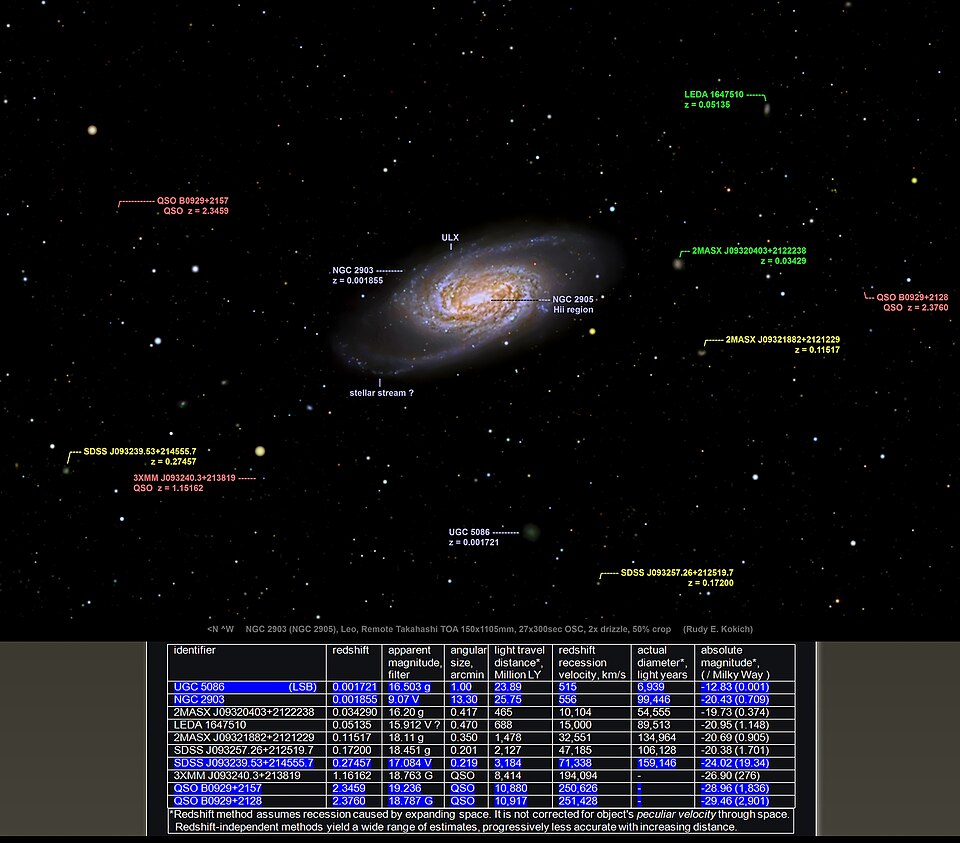
The event, designated AT2019ijn, was first identified on May 31, 2019, by the Zwicky Transient Facility as an optical transient occurring in the nucleus of a dwarf galaxy at a redshift of 0.27. A team of astronomers led by Hucheng Ding of Anhui Normal University in China has now completed a multi-wavelength analysis of the event. Their findings were published July 6 in The Astrophysical Journal Letters, as reported by Phys.org.
AT2019ijn belongs to a class of events called fast-evolving blue optical transients, or FBOTs. These are among the rarest transients in astronomy, defined by a rapid rise to peak brightness within 10 days, distinctly blue colors near that peak, and a fast exponential decay within a month.
AT2019ijn rose to a peak luminosity of minus 21.05 magnitudes in just 5.26 days, consistent with that profile. But then it deviated sharply. Instead of fading quickly, it declined slowly over more than a month, a behavior more typical of superluminous supernovae or tidal disruption events, in which a star is torn apart by a black hole's gravity.
The radio emission from the event was even more unusual. It kept growing after the optical peak, reaching its maximum in the radio band 641 days after the original optical discovery. That peak radio luminosity was more than one order of magnitude higher than any other known fast-evolving blue optical transient or superluminous supernova, though it was comparable to what is seen from so-called jetted tidal disruption events.
The research team concluded that the delayed radio peak is best explained by an off-axis relativistic jet that spread into the line of sight over time. They estimate the jet's kinetic energy at 700 sexdecillion ergs. That figure, combined with the event's bright optical emission, points to what the researchers call an active central engine driving the explosion.
The authors favor the explanation that AT2019ijn was a jetted tidal disruption event involving an intermediate-mass black hole with a mass of roughly 132,000 times that of the sun. They do not fully rule out the possibility that it could instead be a jetted magnetar, a type of rapidly spinning neutron star with an extremely powerful magnetic field.
The researchers write in their paper that the peculiar properties of AT2019ijn suggest it may represent a new class of cosmic explosion, one that shares traits with multiple known categories without matching any of them cleanly.