More than 120 fish species have crossed from the Red Sea into the Mediterranean Sea since the Suez Canal opened more than 150 years ago. Researchers at Tel Aviv University have now built a statistical model that ranks which species are most likely to make that journey next.
According to a report by Phys.org, the study was led by Dr. Shahar Chaikin as part of his doctoral research under the supervision of Prof. Jonathan Belmaker of the School of Zoology, the Wise Faculty of Life Sciences and the Steinhardt Museum of Natural History. Additional contributors included Dr. Tal Gavriel, doctoral student Avery Deveto and Shahar Malamud. The findings were published in the Journal of Animal Ecology.
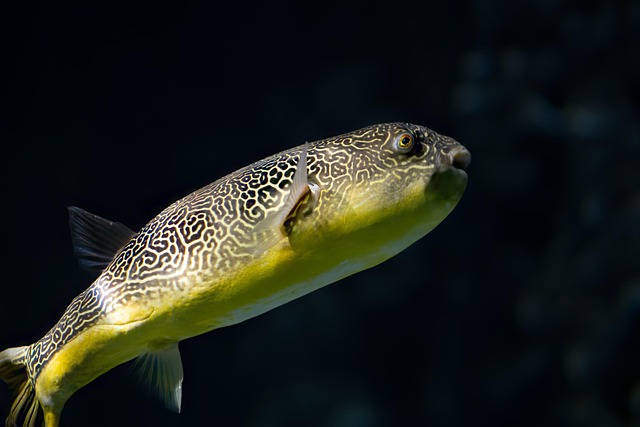
Among the top candidates identified by the model are the stellate pufferfish, the cinnabar goatfish and the yellowspotted trevally. The model is designed not just to explain past invasions but to help scientists and environmental authorities anticipate future ones, which makes it a potential tool for early detection and conservation planning. Rising sea temperatures are making the Mediterranean increasingly hospitable to tropical species, which adds urgency to that kind of forecasting.
To build the model, the team deployed stereoscopic baited remote underwater video systems, known as stereo-BRUVs, at depths ranging from 5 to 150 meters in both the Gulf of Eilat and along Israel's Mediterranean coast. They analyzed 179 fish populations using hundreds of hours of underwater footage, comparing species that had already invaded the Mediterranean with closely related species that remained in the Red Sea.
A key difference from earlier research was that this study examined the source populations in the Red Sea before the invasion occurred, rather than only looking at species that had already completed the crossing. That allowed the team to identify traits that predicted success rather than simply describing it after the fact.
The strongest predictor turned out to be unexpected. Fish most likely to invade were not ecological generalists capable of surviving across many conditions. Instead, they were species least dependent on coral reefs.
Chaikin explained the reasoning directly. "The Suez Canal and the Mediterranean contain very few coral reefs like those found in the Red Sea. Species that depend on coral reefs are therefore unlikely to complete the journey. The fish that succeed in invading are those that do not rely on coral reefs for survival in the first place."
The study also found that fish change their behavior after crossing into the Mediterranean, though the model's primary value lies in identifying which species are most likely to attempt the crossing before it happens. As sea temperatures continue to shift, that predictive capacity could prove useful for marine conservation efforts across the region.